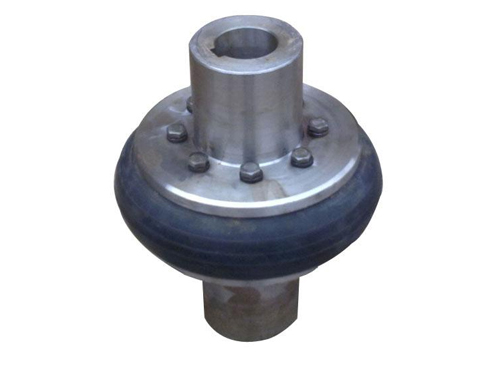
Detailed introduction to the structure and selection of plum-shaped elastic coupling
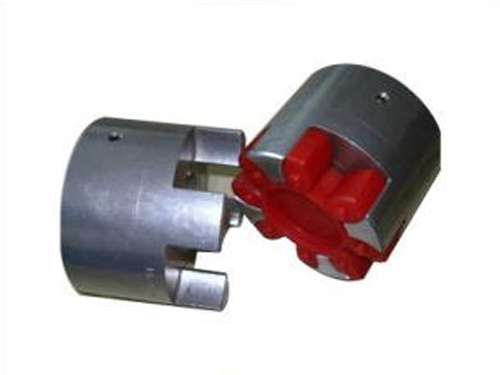
The quincunx-shaped elastic coupling has a simple structure, a small number of parts, a small radial dimension, and no need for lubrication; the elastic element has a high load bearing capacity under pressure.Except for the double-flange quincunx elastic coupling, the half-coupling must be moved axially when replacing the vulnerable quincunx elastic parts.This kind of elastic coupling has the ability to compensate the relative deviation of the two shafts.The quincunx-shaped elastic coupling is to install an integral plum-shaped elastic ring between the convex claws of two half-couplings of the same shape to realize the connection of the two halves of the coupling.The power is transmitted through the squeezing between the claw and the elastic ring, and the relative deviation of the two shafts is compensated by the elastic deformation of the elastic ring to realize vibration reduction and buffering.This kind of elastic coupling has been standardized, GB/T5272-2002 made five structural forms: LM type (basic type), LMD type (single flange type), LMS type (double flange type), LMZ-I type (Split brake wheel type) and LNZ-II (Full brake wheel type).There are 14 specifications for each type. The applicable shaft hole diameter d=12-160mm, the shaft hole length L=35-135mm, the nominal torque T=25-25000N.m, and the allowable speed [n]=1500- 15300r.min.The mechanical characteristics of the power machine have an impact on the entire transmission system. For different types of power machines, due to their different mechanical characteristics, the corresponding power machine coefficient KW should be selected and the coupling suitable for the system should be selected.The type of power machine is the basic factor to choose the type of plum-shaped elastic coupling; the power of the power machine is one of the main basis for determining the size of the coupling, and it is proportional to the torque of the coupling.
The two shafts connected by the plum coupling have relative displacement due to various factors such as manufacturing error, assembly error, installation error, shaft load and deformation, base deformation, bearing wear, temperature change, relative movement between components, etc. .Under normal circumstances, the relative displacement of the two shafts is unavoidable, but the direction of the equilibrium displacement generated by the shafting transmission under different working conditions, that is, the axial, radial angular direction and the magnitude of the displacement are different.Only the flexible coupling has the performance of compensating the relative displacement of the two shafts. Therefore, a large number of flexible couplings are selected in practical applications.Rigid couplings do not have compensatory application range and are limited, so the amount is very small.Universal couplings should be used for shafting transmissions with large angular displacement; shafting transmissions with axial movement and need to control axial displacement should be selectedDiaphragm coupling; Rigid coupling should only be selected when the alignment accuracy is high.
Our company uses modern management methods to make the products have, product, model,Compliments from users.In order to meet the needs of customers, we also undertake surveying, mapping and manufacturing of other couplings, and we have accumulated rich experience in this regard.The tenet of our company is "Seek development by science and technology, survive by quality, profit by customers, and strive to provide users with production management and strict qualityProducts and satisfactory service".