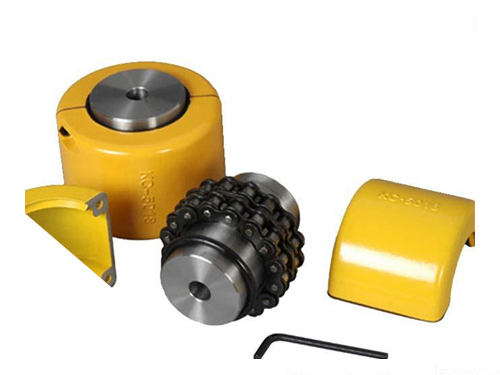
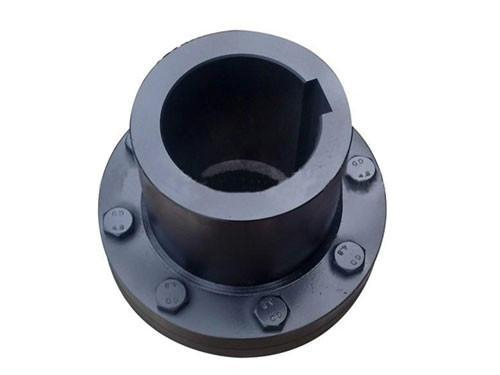
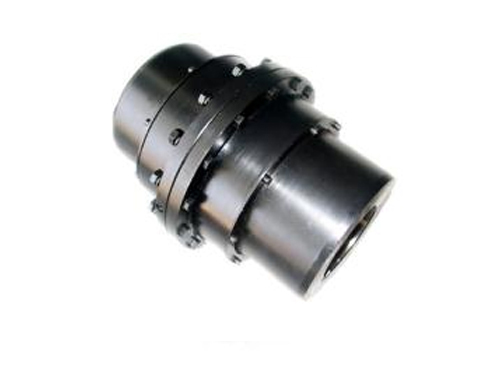
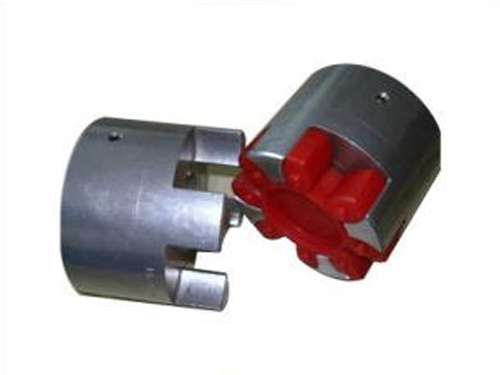
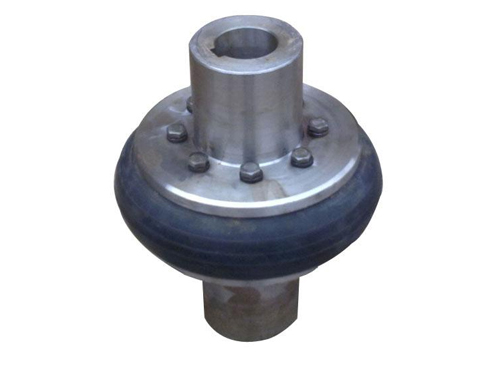
The relationship between the development of the coupling industry and the development of the steel industry
Couplings are increasingly used in machinery controlled by servo systems. The difference between these couplings and general manufacturing machinery is that they require a high degree of follow-up of the output relative to the input. In recent years, because of the servo motor industry The development of adapting to high-speed and control requirements is increasingly exaggerated.
Proximal couplings are increasingly being used in machine tools and semiconductor system manufacturing machines that are controlled by servo systems.Among these, different from general manufacturing machinery, the coupling requires its output to have a high followability with respect to the input.
Especially when used on machine tools that require high-frequency forward and reverse rotation, positioning, and high-speed rotation above 20000r/min, the coupling not only has high rigidity, but also has the ability to withstand repeated torsional loads and high elastic fatigue limits. , To adapt to high-speed operation.Therefore, the coupling originally has the characteristics of high torque rigidity, zero rotation clearance, and the elastic body compensates the radial, axial, angular deviation, and clockwise and counterclockwise rotation characteristics of the two shafts produced by the manufacturing machinery during the transmission process.
In the past, people only considered the coupling as a mechanical part. However, with the diversification of the use of the mechanical device using the coupling, in order to achieve the function, familiarity with the coupling has changed from a simple mechanical part. Transform into an important mechanical element that can influence the function of the entire mechanical system.
Therefore, it is becoming more and more difficult to meet the requirements of users by only relying on the unique products of the coupling manufacturers.Now, users and manufacturers work together to jointly meet the requirements of mechanical system couplings has become a trend.The direct metal material of the coupling is steel, so the development situation of the steel industry has a direct impact on the coupling manufacturing industry.
For the development of the steel industry in 2011, the situation is relatively complicated.The main factor affecting the development of the steel industry is investment. In the second half of 2010, the implementation of policies for energy conservation, emission reduction and control of newly started projects, especially high-energy-consuming projects, led to an increase in investment.Although 2011 is the first year of the "Twelfth Five-Year Plan", it is possible for local investment to show a degree of rebound, but overall, the work during the "Twelfth Five-Year Plan" period is transformation. Prudent and flexible”, so high investment growth after 2011 is unlikely to recur; secondly, the project structure of investment growth may undergo major changes.Since the financial crisis, large-scale investment trends focusing on infrastructure construction will undergo major changes. Transformation investment represented by investment in strategic emerging industries will become prominent; real estate investment has uncertainties. On the one hand, housing construction will suffer. The promotion of the policy will continue to increase. On the other hand, there is greater uncertainty in the further control measures for commercial housing, and the prospect of commercial housing investment is still difficult to predict.