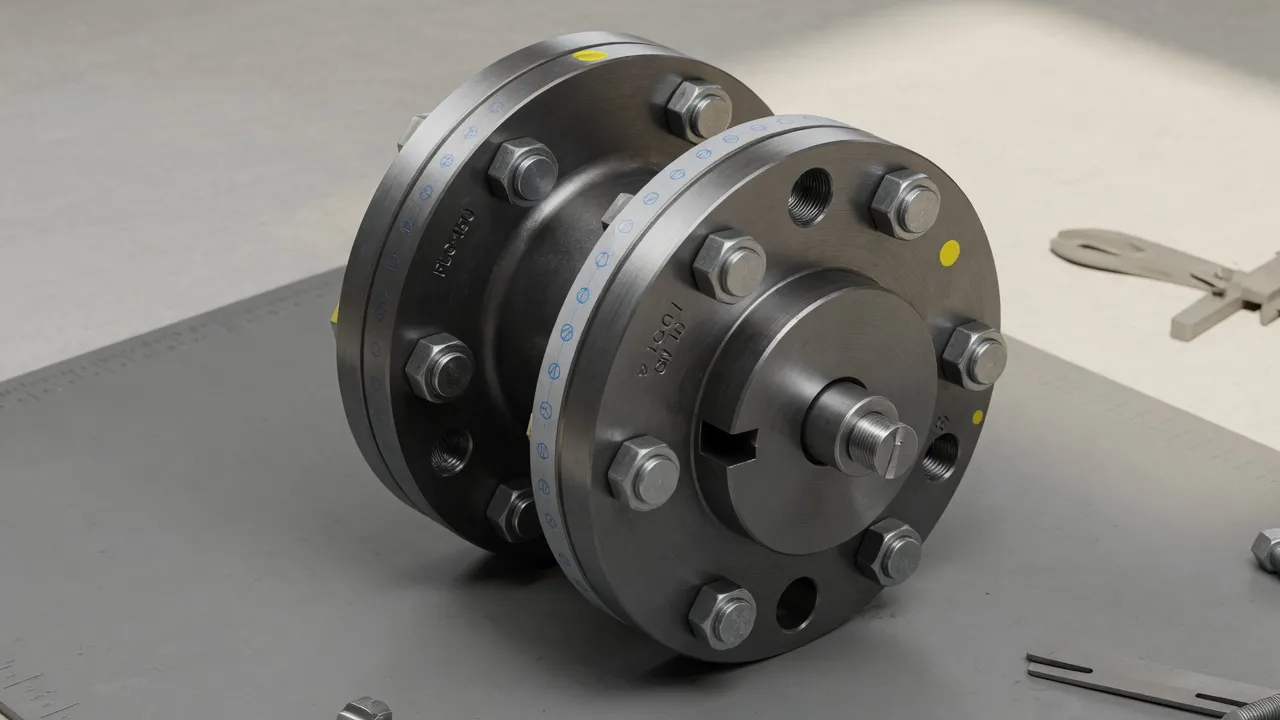
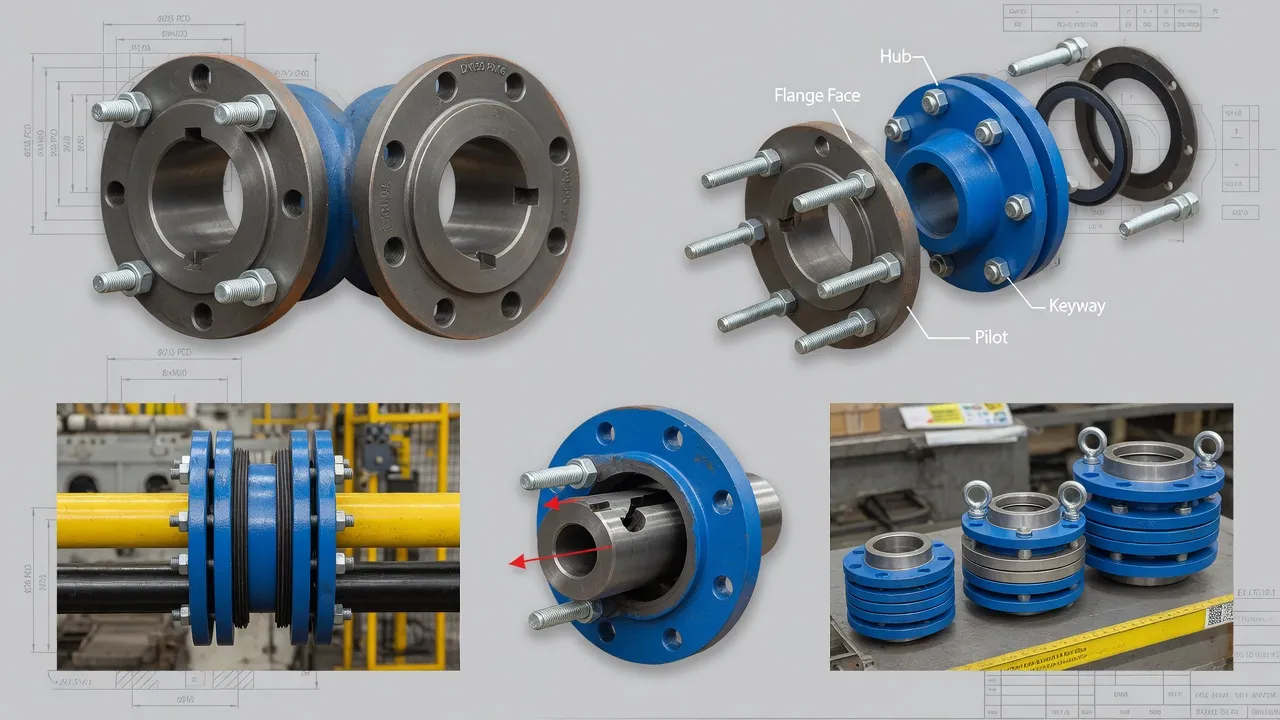
Wet and corrosive environments accelerate coupling degradation through mechanisms that are not always obvious during the specification phase. A coupling selected correctly for its torque rating and bore size but without consideration for the chemical and moisture environment can fail in months from corrosion of the hub bore, degradation of the elastomeric element from chemical contamination, or fretting corrosion at the flange face from moisture ingress into the bolt preload zone. The marine-grade flange coupling range and the F-type flexible tyre coupling with appropriate elastomeric element specification address these failure modes for the most demanding wet and corrosive environments encountered in Australian industrial and maritime applications.
How Moisture and Corrosion Attack a Coupling
The coupling failure sequence in a wet or corrosive environment follows a predictable pattern that differs from the elastomeric fatigue and misalignment failures seen in clean industrial environments:
Stage 1 — Surface Corrosion of Exposed Metal
Rust formation on hub flanges, coupling bolts, and guard surfaces. Initially cosmetic — does not affect torque capacity. If left untreated, rust expansion under bolt heads and in keyways begins to apply mechanical stress to the hub bore, and surface pitting under the flange face friction surface reduces the effective friction coefficient.
Stage 2 — Elastomeric Element Chemical Attack
If the elastomeric element is not specified for the chemical environment, progressive degradation begins. Natural rubber swells and softens in oil-contaminated environments. Standard PU crazes in chemical splash. The element loses torque capacity as its mechanical properties change, and the vibration isolation it provided is progressively lost.
Stage 3 — Fretting at Bore-to-Shaft Interface
Moisture ingress between the hub bore and shaft OD disrupts the anti-corrosion film, initiating fretting corrosion. The resulting iron oxide debris expands in the bore-shaft annulus, progressively loosening the fit. Once the fit is loose enough, micro-slip occurs on every torque cycle, further accelerating fretting until hub slip and torque loss follow.
Stage 4 — Bolt Corrosion and Preload Loss
Corroded coupling bolts lose cross-sectional area and can no longer achieve the specified preload without fracturing the thread. Under-preloaded bolts allow flange face slip, which generates more moisture ingress and more corrosion — a self-accelerating cycle. The first indication is often coupling knock from flange slip under torque peaks.
Corrosion-Resistant Coupling Specification by Environment
Environment
Hub Material
Fastener Spec
Elastomer Grade
Guard Material
Indoor, clean water (water treatment)
GG25 cast iron + epoxy paint
Grade 8.8 zinc-plated
PU 92A
Mild steel painted
Outdoor, coastal (within 1 km of sea)
Ductile iron + epoxy + PU topcoat
316 stainless steel
EPDM
316SS or galvanised steel
Marine (vessel engine room, offshore)
Ductile iron or C45 steel + 2-pack epoxy
316 stainless steel, sealed
Neoprene (CR) or EPDM
316SS, fully sealed with drain
Chemical plant (acid / alkali splash)
C45 steel + chemical-resistant coating
316SS or Hastelloy
Verify per chemical — EPDM broadest resistance
316SS or FRP
Sewage / wastewater (H2S atmosphere)
Ductile iron + epoxy primer
316SS
EPDM (ozone and H2S resistant)
316SS or HDPE
Underground mine (wet heading)
Ductile iron + epoxy
316SS
Neoprene or EPDM
316SS or stainless-clad steel
Practical Protection Measures During Installation
1
Prepare All Mating SurfacesClean all hub flange faces, bore surfaces, and shaft ODs of any rust, scale, or contamination before assembly. Apply a thin film of anti-seize compound to the shaft OD before fitting the hub — this is the most cost-effective corrosion prevention measure for the bore-to-shaft interface in wet environments.
2
Apply Thread Compound to All FastenersAll coupling bolts in wet or corrosive environments should have their threads coated with copper-based anti-seize or zinc-rich compound before installation. This prevents thread galling when bolts are later removed and protects the thread form from corrosion during service.
3
Seal the Coupling GuardAfter completing the coupling assembly and installing the coupling guard, apply a bead of neutral-cure silicone sealant at all guard joints and seams. Ensure drain points are clear. In high-pressure washdown environments, a sealed guard with a gasket between guard halves is required — not just a sealant bead.
4
Record a Corrosion BaselineAt the first installation inspection (annual), photograph the coupling assembly with the guard removed and note the condition of all metal surfaces. Use this as a baseline for future inspections — the rate of corrosion progression between annual photos tells you whether the corrosion protection specification is adequate or needs upgrading.
Frequently Asked Questions
What is the best coupling material for a saltwater environment?+
For saltwater and marine environments, the coupling specification should include: 316 stainless steel fasteners (not 304 — the higher molybdenum content in 316 grade provides meaningfully better pitting resistance in chloride environments); ductile iron or steel hubs with a two-pack epoxy primer and polyurethane topcoat for corrosion protection; neoprene (CR) or EPDM elastomeric elements (not natural rubber, which degrades in ozone-rich marine atmospheres); and sealed coupling guards with stainless or galvanised fasteners. Hot-dip galvanised coupling guards provide better long-term protection than painted mild steel in marine environments.
Does coupling corrosion affect torque capacity?+
Yes, significantly. Corrosion on hub flanges can increase surface roughness and reduce the effective friction coefficient between mating flange faces, reducing the transmitted torque capacity in friction-dependent bolted couplings. Corrosion on hub bores enlarges the bore and converts an interference fit into a clearance fit, eliminating the interference-fit torque contribution. Rust expansion in the keyway slot can crack the hub bore. And corrosion on coupling bolts reduces their effective cross-section, reducing the maximum bolt preload achievable without fracture.
How do I protect coupling bolts from corrosion in wet environments?+
For wet industrial environments, specify 316 stainless steel fasteners as standard. Apply a thin film of petroleum jelly, copper-based anti-seize, or zinc-rich thread compound to all bolt threads before installation — this protects the thread form during service and prevents galling when the bolts are later removed for maintenance. For submerged or high-salinity applications, replace standard hex head bolts with socket head cap screws (which can be covered with a protective plug) and apply a bead of neutral-cure silicone sealant around the bolt head seating surface after tightening.
Can rubber coupling elements degrade in chemical plant environments?+
Yes. Different elastomeric materials have different chemical resistance profiles. Natural rubber (NR) degrades in the presence of petroleum-based fluids, strong oxidising acids, and ozone. Standard polyurethane (PU) degrades in ketones (acetone, MEK), esters, and strong alkalis. Neoprene (CR) is resistant to petroleum fluids but not to aromatic solvents. EPDM is broadly chemical-resistant but degrades in petroleum and aromatic solvents. Identify the specific chemicals in your environment and verify compatibility before specifying an elastomeric element material — do not assume that any one grade is universally resistant.
Does a coupling guard prevent corrosion damage to the coupling?+
A coupling guard provides meaningful corrosion protection if it is designed and maintained correctly — specifically, if it prevents direct liquid ingress to the coupling element, blocks UV radiation from elastomeric elements in outdoor installations, and does not trap water inside (which accelerates corrosion of internal metal surfaces). A guard with drain points at the lowest position is critical for wet environments. A guard with damaged seals or joints actually worsens corrosion by trapping moisture inside against the coupling surfaces. Inspect coupling guards as part of every coupling maintenance visit and replace any guard with compromised seals or drain points.
Need Expert Coupling Advice?
Our engineering team in Condell Park NSW is ready to help — free of charge.