
Pharmaceutical plant coupling specification is governed by a set of requirements that have no parallel in standard industrial engineering. Product contamination — by particles shed from coupling materials, by lubricant that escapes from a gear coupling, or by biofilm accumulated in a coupling’s surface crevices — is not merely an engineering inconvenience. In a pharmaceutical manufacturing environment, contamination is a regulatory event that can result in batch rejection, facility shutdown, FDA or TGA audit, and in the worst case, patient harm from contaminated medicinal product. The coupling specification for pharmaceutical drives must address contamination risk from first principles, not by adapting standard industrial coupling designs. The disc coupling and the MH coupling with hygienic hub design represent the two Ever Power products most suitable for pharmaceutical plant coupling applications.
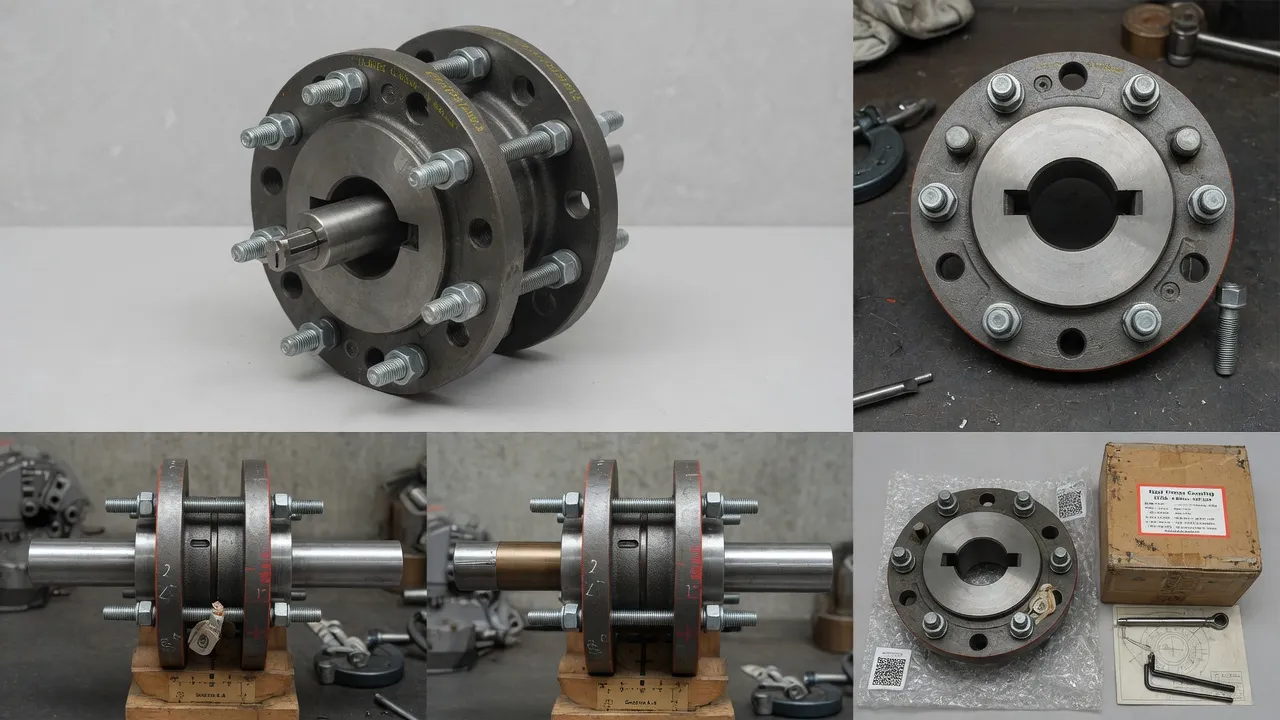
The Pharmaceutical Plant Coupling Design Requirements
Four requirements govern pharmaceutical coupling specification, all derived from the product contamination risk:
The coupling must not generate particles that could contaminate the product. This means: no elastomeric elements that shed rubber dust or debris during normal wear; no lubricant (grease or oil) from gear or chain couplings that could contaminate surfaces or air; no exposed corrosion that could shed rust particles. Disc couplings and all-metallic coupling designs meet this requirement. Elastomeric couplings are acceptable if the element material is certified not to shed particles at pharmaceutical-grade levels and the coupling is in a location where particles cannot reach the product.
All coupling surfaces that are in the cleaning zone must be cleanable by the plant’s CIP/SIP system without disassembly. This requires: smooth surfaces with no crevices, threads, or blind holes that trap cleaning solution or residue; materials compatible with CIP chemicals (316L stainless steel, food-grade EPDM, PTFE — not standard carbon steel, standard PU, or natural rubber); and a coupling guard design that allows complete drainage of cleaning solution.
GMP (Good Manufacturing Practice) guidelines require that all materials in contact with or near the product boundary be documented, traceable, and covered by a material specification. Coupling hubs must be accompanied by a mill certificate confirming material grade and heat number. Elastomeric elements must be covered by a material compliance declaration confirming FDA 21 CFR Part 177 or EU 10/2011 compliance. This documentation must be retained as part of the facility’s change control records.
Any coupling requiring periodic lubrication — gear coupling, chain coupling, or some grid couplings — is not acceptable in pharmaceutical production areas where the lubricant could contact product surfaces through drips, aerosol, or cleaning water carry-over. Only no-lubrication coupling designs (disc, elastomeric, beam) are acceptable in product zones and CIP-cleaned areas.
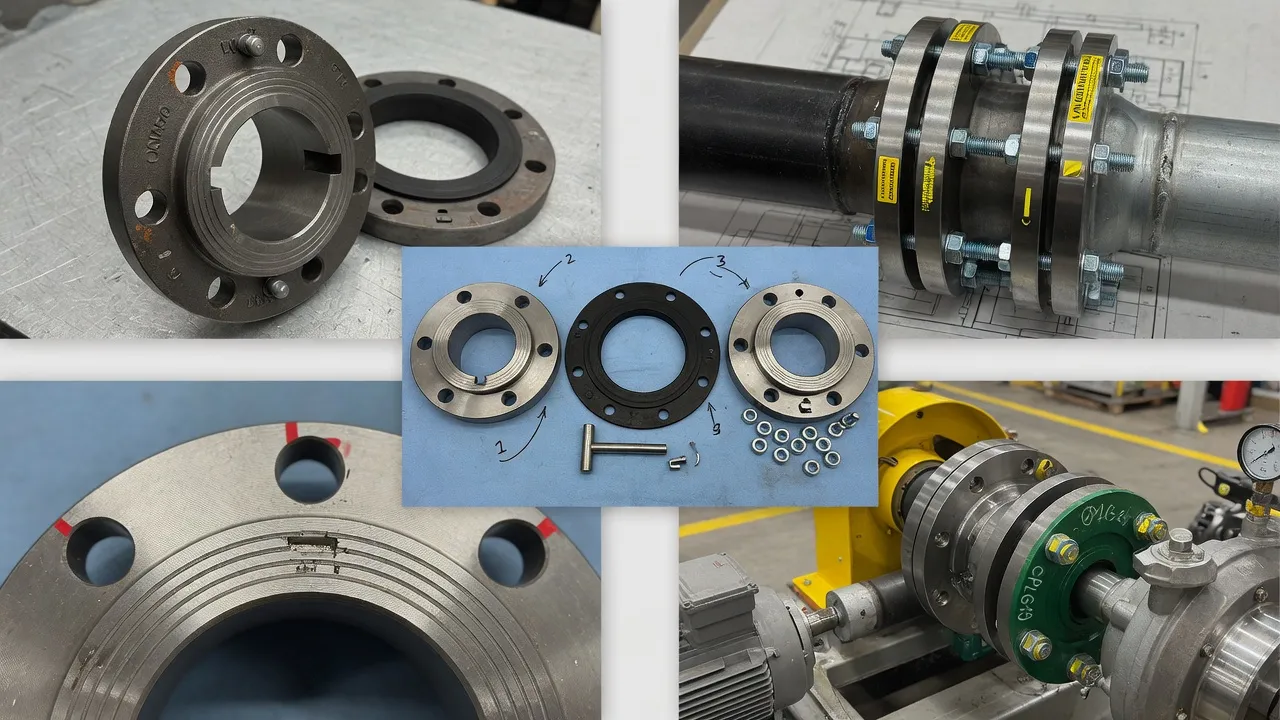
Coupling Selection by Pharmaceutical Plant Zone
| Zone | Description | Coupling Type | Material Spec | Documentation Required |
|---|---|---|---|---|
| Non-process utility area | External drives, chillers, cooling towers | Standard flexible tyre or disc coupling | Standard cast iron or carbon steel acceptable | Standard datasheets only |
| Clean utility room | WFI water, purified water pump drives | Disc coupling or 316SS flexible coupling | 316L stainless steel hubs; food-grade element | Material certificate on request |
| CIP-cleaned production area | Mixing, transfer, filling equipment drives | 316L SS disc coupling or MH coupling (food-grade) | 316L SS electropolished; FDA-compliant element | Material cert + compliance declaration |
| SIP-exposed area (steam sterilisation) | Autoclave, fermenter, bioreactor drives | Disc coupling only (metallic — no elastomers) | 316L SS; no elastomeric element | Material cert; SIP temperature confirmation |
| Isolator / containment area | Potent compound handling, cytotoxic API | Disc coupling or sealed flexible coupling | 316L SS; verified particle-free design | Full GMP documentation package |
Change Control Documentation for Coupling Replacement in Pharmaceutical Plant
In a GMP-regulated pharmaceutical facility, coupling replacement is a change control event that requires documentation under the facility’s quality management system. The replacement coupling must be qualified as equivalent to the original — or documented as a planned change with the appropriate engineering assessment and regulatory notification where required. The documentation package for a coupling change in a pharmaceutical plant typically includes:
Technical equivalence assessment: Confirmation that the replacement coupling meets the same or better specification as the original for torque rating, bore size, material grade, and contamination risk profile.
Material certification: Mill certificate for hub materials; FDA or EU food contact compliance declaration for elastomeric elements.
Installation record: Date of installation, person performing, laser alignment readings (before and after), coupling serial number (if traceable), and final torque values.
Maintenance record update: Update the equipment file in the facility’s quality management system (QMS) or CMMS to reflect the coupling change, including the next scheduled inspection date.
Frequently Asked Questions
Need Expert Coupling Advice?
Our engineering team in Condell Park NSW is ready to help — free of charge.