Motor bearing failure is the most common unplanned maintenance event in rotating machinery — and reducing its frequency is one of the highest-leverage reliability improvements available to any maintenance organisation. The connection between motor bearing failure and coupling condition is well established in rotating machinery engineering literature, yet it remains under-utilised in maintenance practice because the causal chain is indirect and the time lag between cause (misalignment, wrong coupling type) and effect (bearing failure) can be months or years. This guide provides a clear, engineering-based explanation of how coupling selection directly influences motor bearing life, and the practical steps that translate this understanding into fewer bearing failures and lower maintenance costs. The F-type flexible tyre coupling and a structured approach to spacer coupling deployment for rapid seal access are the two coupling engineering interventions with the greatest demonstrated impact on motor bearing life in Australian pump drive applications.
The Engineering Link Between Coupling and Motor Bearing Life
Motor bearings carry two types of radial load simultaneously. The first is the inherent load from the motor rotor’s weight and from the magnetic pull between rotor and stator — this is the designed working load that determines the bearing’s nominal L10 life. The second is the misalignment-induced radial load imposed by the coupling connecting the motor to the driven machine.
When two misaligned shafts are forced to rotate together by a coupling, the coupling imposes cyclic bending forces on both shafts. These forces are transmitted to the motor’s drive-end bearing as an additional radial load that cycles at 1× and 2× running speed. The bearing does not distinguish between the designed working load and the misalignment-induced addition — it carries the combined load, and the combined load determines its fatigue life per the L10 equation.
How Much Does Coupling Type Reduce Motor Bearing Load?
Coupling Type
Misalignment Level
Motor DE Bearing Radial Load Increase
Resulting L10 Life % of Rated
Rigid coupling — 0.1 mm parallel offset
Well-aligned
+15%
61% of rated
Rigid coupling — 0.3 mm parallel offset
Moderate misalignment
+45%
33% of rated
Flexible tyre coupling — 0.1 mm parallel offset
Well-aligned
+5%
86% of rated
Flexible tyre coupling — 0.3 mm parallel offset
Moderate misalignment
+18%
60% of rated
Flexible tyre coupling — 0.5 mm parallel offset
At coupling tolerance limit
+28%
44% of rated
Values are illustrative estimates based on coupling stiffness and bearing load equations; actual values vary with coupling size, element grade, and bearing specification.
The Motor Bearing Failure Prevention Programme
1
Audit Current Coupling Types Across the PlantFor every motor-pump drive, record the coupling type (rigid or flexible), the last laser alignment date, and the motor DE bearing replacement history. Drives with: rigid coupling AND no annual alignment check AND more than one DE bearing failure in 3 years are the priority candidates for coupling and alignment programme intervention.
2
Replace Rigid Couplings With Flexible Tyre Types Where JustifiedFor any motor-pump drive where the audit in step 1 identifies a rigid coupling with a history of premature DE bearing failures, upgrade to the appropriate F-type flexible tyre coupling (sized for the motor power and shaft dimensions). The cost of the coupling upgrade is typically recovered at the first bearing failure it prevents.
3
Implement Annual Laser Alignment ProgrammeSchedule laser alignment checks for all coupled motor-pump drives. Record readings in the equipment file. For machines where alignment has never been formally checked and documented, the first check often reveals misalignment that explains the bearing failure history.
4
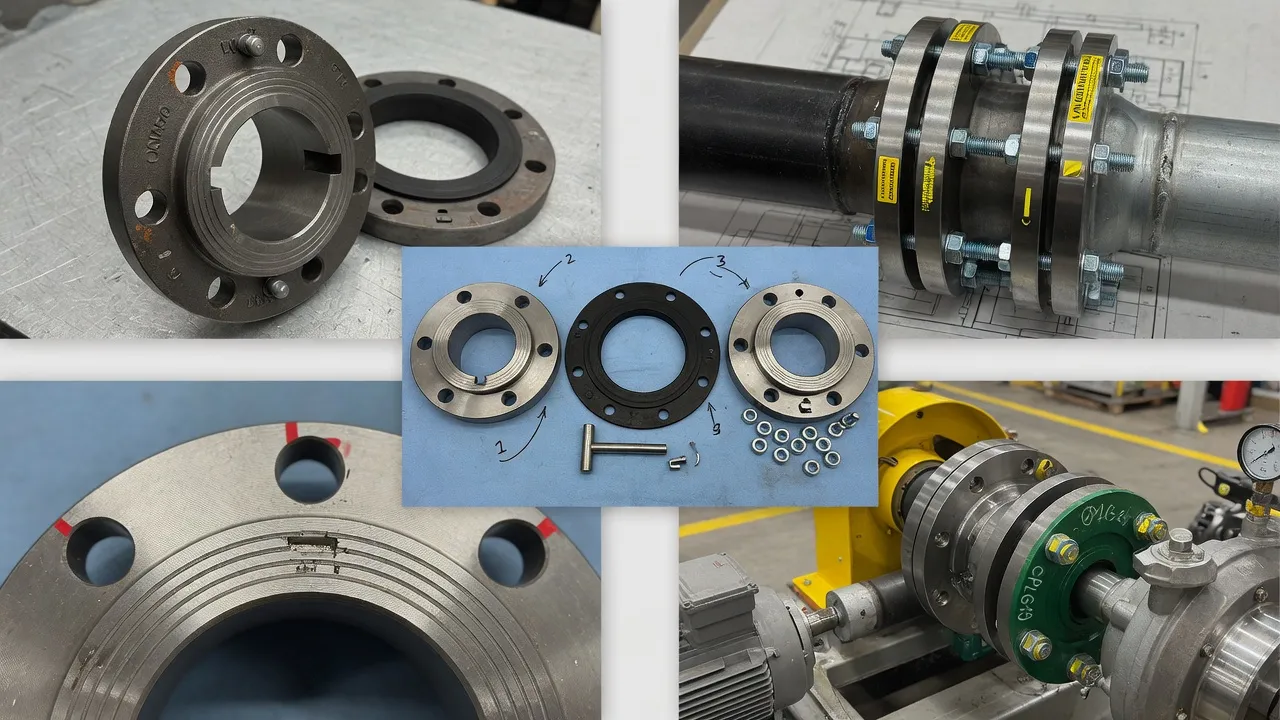
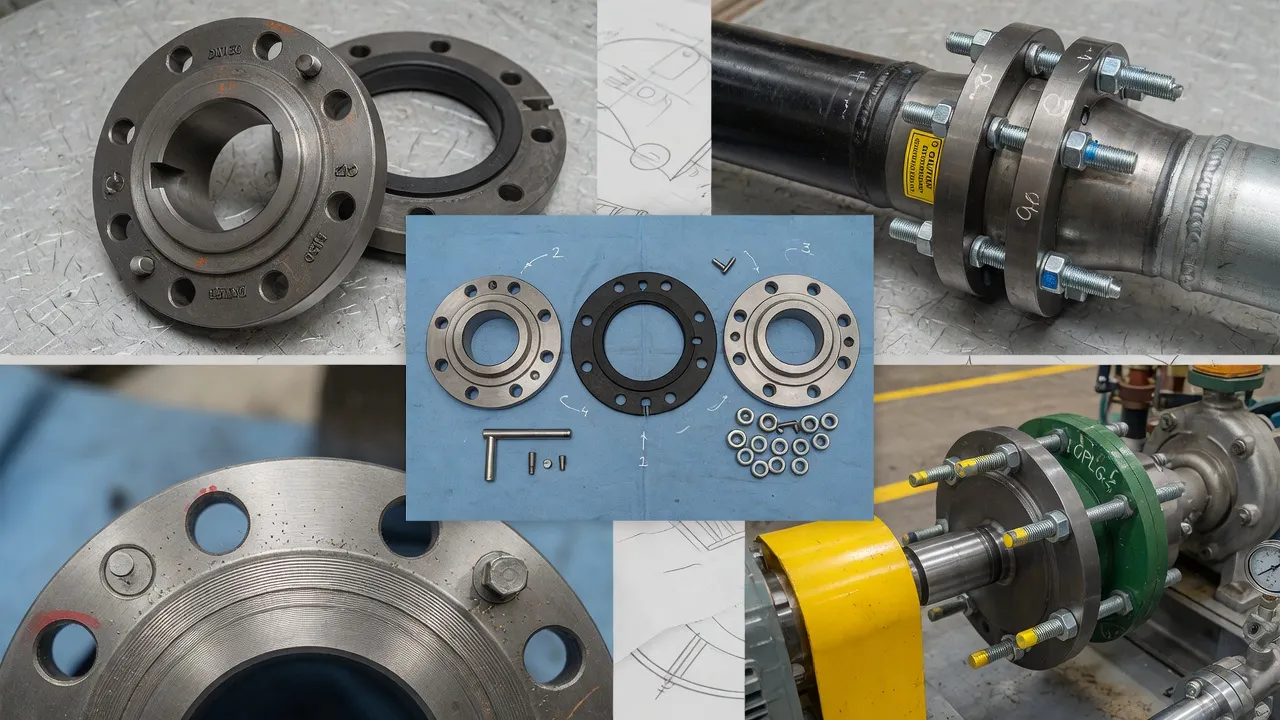
Fit Drop-Out Spacer Couplings on High-Maintenance PumpsFor pumps with frequent mechanical seal replacements, fitting a {spacer} allows seal changes without motor dismounting — which means alignment is not disturbed at each seal change, and the motor bearing is not exposed to the re-commissioning misalignment that occurs when alignment is imprecisely restored after motor removal.
5
Track Motor DE Bearing Life After InterventionRecord the date of each coupling change and alignment correction. Track the interval between subsequent DE bearing replacements on each machine. A successful intervention produces a measurable increase in bearing replacement interval — this data justifies the programme investment and identifies any machines where further intervention is needed.
Return on Investment: Quantifying the Bearing Life Improvement
Example calculation — pump station with 10 motors: Current DE bearing replacement rate: 2 bearings per year across 10 motors Cost per bearing replacement: AUD 1,800 (bearing + labour + downtime) Annual bearing replacement cost: AUD 3,600
After programme (flexible couplings + annual alignment): Projected DE bearing replacement rate: 0.5 per year Annual bearing replacement cost: AUD 900
Annual saving: AUD 2,700 Programme implementation cost (10 coupling upgrades + 10 alignments): AUD 6,500 Payback period: 2.4 years — with ongoing savings every year thereafter
Frequently Asked Questions
How does coupling type affect motor bearing life?+
Motor bearing life is directly affected by coupling type through the radial loads the coupling imposes on the motor’s drive-end (DE) bearing. A rigid coupling transmits all misalignment-induced bending forces to the motor DE bearing as cyclic radial loads — the motor bearing receives the full misalignment load without any attenuation. A flexible tyre coupling absorbs misalignment forces through elastomeric element deformation, transmitting a significantly smaller residual radial load to the motor bearing. Published field studies show motor DE bearing radial load reductions of 40–70% when a rigid coupling is replaced by a correctly sized flexible tyre coupling at the same misalignment level.
What causes most motor bearing failures on pump drives?+
Misalignment-induced radial overload is the most common cause of motor front bearing (DE) failure on pump drives in Australian industry. The sequence is consistent: motor coupled directly to pump (rigid or flexible coupling); alignment adequate at commissioning but drifting over time from baseplate settlement, thermal growth, or motor replacement without precise realignment; cyclic radial bearing load accumulates fatigue damage in the DE bearing; bearing fails prematurely. Annual laser alignment checks and correct flexible coupling selection interrupt this sequence.
Is it more effective to improve alignment or change coupling type for bearing life?+
Both interventions reduce motor bearing loads, but they are most effective in combination. Improving alignment reduces the misalignment-induced radial load from both the flexible coupling and any remaining rigid coupling. Changing to a flexible coupling attenuates the remaining misalignment-induced load that will inevitably develop between alignment checks. The combination — correct flexible coupling plus annual laser alignment — produces bearing life improvements that significantly exceed what either intervention achieves alone. If only one can be implemented immediately, alignment correction is the higher priority.
What is the L10 bearing life formula and how does coupling choice affect it?+
L10 bearing life = (C/P)^p × 16,667/n, where C is the bearing’s dynamic load capacity (in N), P is the equivalent dynamic bearing load (in N), p is the life exponent (3 for ball bearings, 10/3 for roller bearings), and n is the shaft speed in RPM. The critical variable affected by coupling choice is P — the equivalent dynamic bearing load. This includes the radial load from the coupling misalignment contribution. A 30% reduction in misalignment-induced radial load (from installing a flexible coupling) reduces P by a smaller percentage but increases L10 life by the cube of the P ratio — a 20% reduction in P doubles bearing life (1/0.8^3 = 1.95).
How do I know if my motor bearing is failing from coupling misalignment?+
The diagnostic signature of coupling misalignment-induced motor bearing failure is: failure of the motor DE (front) bearing rather than the NDE (rear) bearing; a repeating failure pattern on the same machine at the same bearing position; vibration spectrum showing dominant 2× RPM frequency component at the motor bearing housing; and new bearing failure occurring within 6–18 months of each bearing replacement without any other obvious cause. If all four of these characteristics are present, coupling misalignment is the root cause until laser alignment confirms otherwise.
Need Expert Coupling Advice?
Our engineering team in Condell Park NSW is ready to help — free of charge.