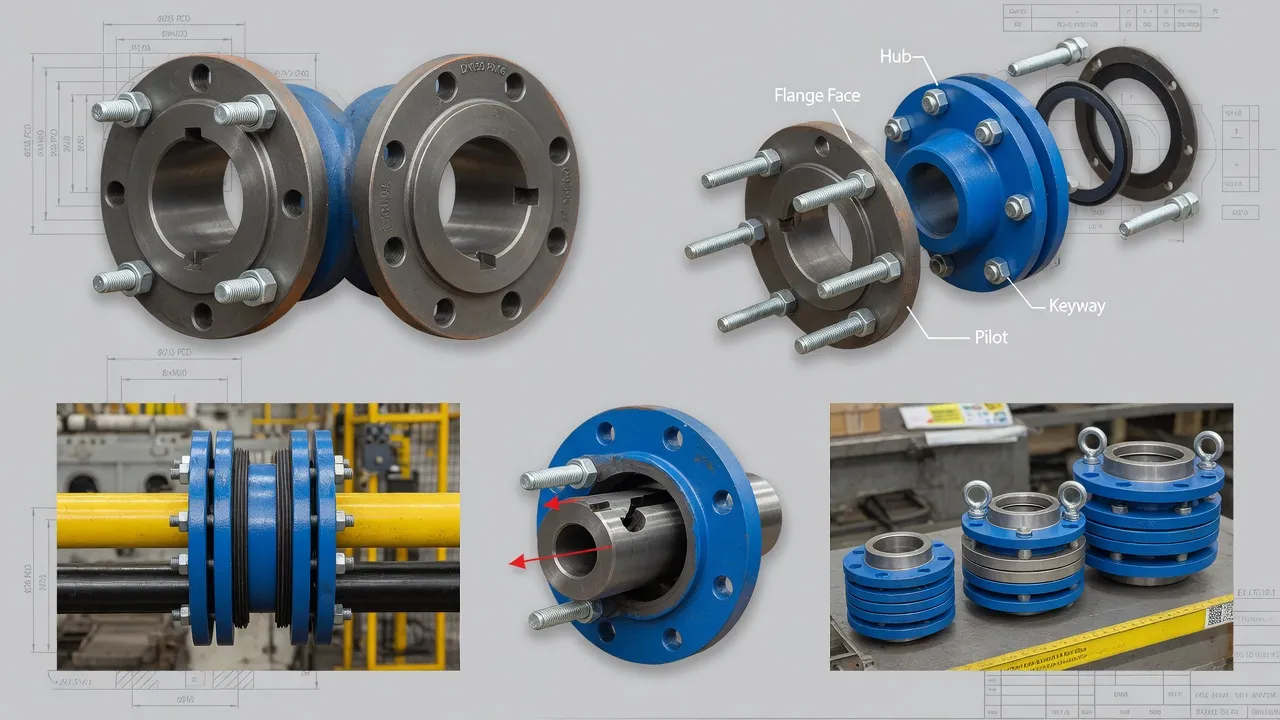
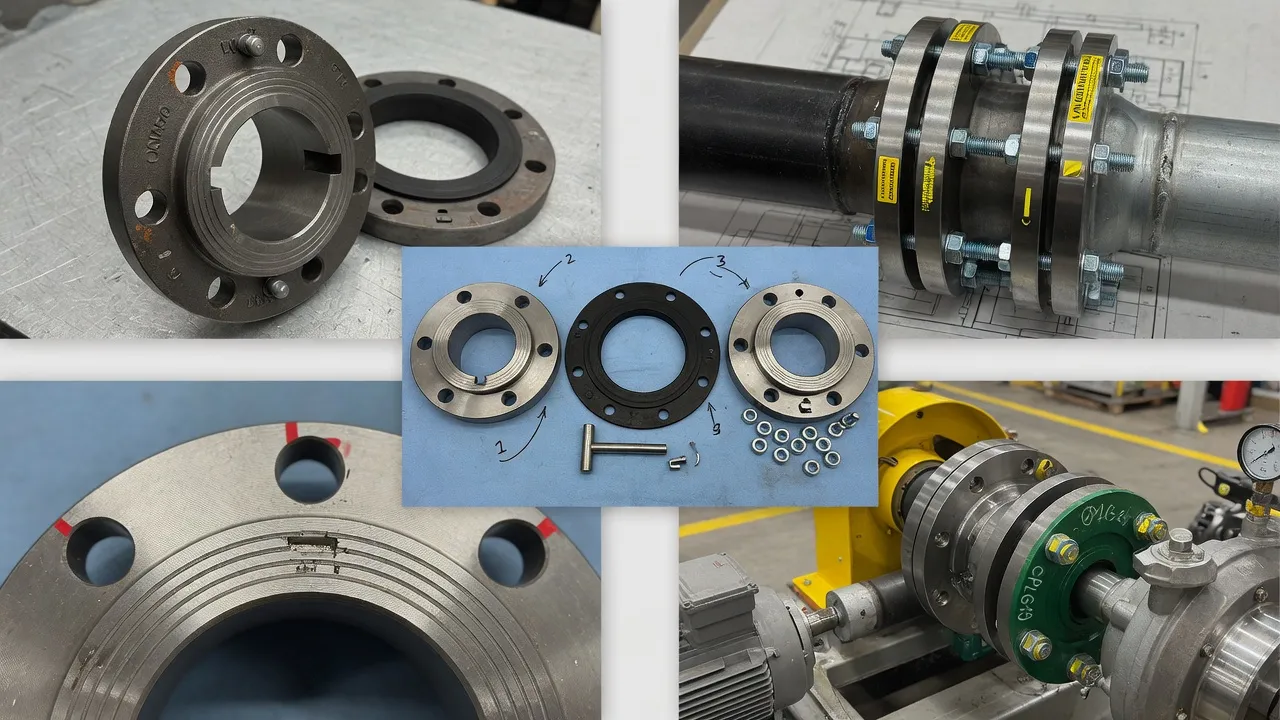
Wastewater treatment plant pump drives represent a specific coupling application environment with characteristics that distinguish them from general industrial pump installations: hydrogen sulphide atmosphere in covered pump wells; outdoor and partially outdoor equipment exposed to Australian UV and weather; wet, humid pump rooms with washdown cleaning requirements; variable duty cycles from continuous to intermittent service; and a strong utility sector preference for maintenance efficiency that has driven widespread adoption of drop-out spacer couplings across the industry. This guide covers coupling specification for wastewater plant pump drives, aeration blowers, sludge pump drives, and chemical dosing equipment, with guidance on selecting and specifying F-type flexible tyre couplings for the full range of wastewater equipment applications.
The Wastewater Plant Coupling Environment
Wastewater treatment plants subject coupling installations to four specific environmental stressors that influence coupling specification beyond standard pump application requirements:
Hydrogen Sulphide (H2S) Atmosphere
Covered wet wells, pump sumps, and sludge handling areas contain elevated H2S concentrations from anaerobic decomposition. H2S degrades natural rubber elastomers and can accelerate corrosion of unprotected metal surfaces. Specify EPDM elements (H2S resistant) for any coupling in covered pump well environments, and protect metal hub surfaces with corrosion-resistant coating.
UV Exposure in Outdoor Areas
Pump stations with outdoor or semi-outdoor installations expose coupling guards and visible elastomeric elements to Australian UV radiation. Standard polyurethane crazes within 6–12 months of direct UV exposure. EPDM maintains its mechanical properties under extended UV. Inspect outdoor coupling guards for deterioration and UV damage at each maintenance visit.
High-Moisture Pump Room Atmosphere
Wastewater pump rooms experience very high humidity from process water evaporation and pump sealing water. This humid atmosphere accelerates fretting corrosion at hub bore-to-shaft interfaces and bolt thread corrosion. Apply anti-seize to all shaft interfaces and coupling bolt threads; specify stainless fasteners on drives in high-humidity areas.
⚗️
Chemical Dosing Equipment
Chemical dosing pumps handling sodium hypochlorite, alum, polyelectrolyte, or ferric chloride may expose the coupling to chemical splash. Verify elastomeric element chemical compatibility for the specific dosing chemical — EPDM is broadly resistant to most water treatment chemicals; verify against the specific agent for unusual chemicals.
Coupling Selection by Wastewater Plant Equipment Type
Equipment
Power Range
Environment
Recommended Coupling
Element Grade
DBSE
Influent/effluent centrifugal pump (indoor)
7.5–200 kW
Indoor pump room
F100–F200 tyre + drop-out spacer
PU 92A
85–140 mm
Sewage pump (covered wet well)
7.5–110 kW
H2S atmosphere
F100–F160 tyre + drop-out spacer
EPDM
85–120 mm
Sludge recirculation pump
5.5–75 kW
Wet, abrasive slurry
F80–F160 tyre
PU 92A or EPDM
85 mm if seal access needed
Roots / lobe blower (aeration)
15–200 kW
Outdoor or partially exposed
F125–F200 tyre (80A or NR element)
80A PU or NR
No spacer typically required
Centrifugal blower (>3,000 RPM)
30–500 kW
Indoor, mechanical room
Disc coupling, balanced to G2.5
N/A — metallic coupling
Check bearing axial play
Chemical dosing pump
0.37–7.5 kW
Chemical splash risk
F40–F80 tyre or jaw coupling
EPDM (verify chemical compat.)
Not typically required
Sludge dewatering press / centrifuge
22–200 kW
High vibration, wet
F160–F250 tyre (NR or 80A element)
NR or 80A PU
Optional
Implementing a Wastewater Plant Coupling Maintenance Programme
1
Build a Coupling RegisterCreate a register of all coupled drives in the plant: equipment tag, location, coupling type and size, bore diameters, last alignment date, last element replacement date, element material grade, and current vibration baseline. This register is the foundation for planned maintenance scheduling and parts inventory management.
2
Implement Quarterly Non-Invasive ChecksAt each quarterly plant inspection, listen to each coupling during deceleration (audible knock = immediate investigation), and take a vibration reading at the motor DE bearing housing. Record in the equipment register. Rising vibration trend triggers an earlier invasive inspection.
3
Annual Invasive InspectionRemove the coupling guard at each annual maintenance. Inspect the tyre element for cracking, chunking, or deformation. Record the condition stage (1–4) in the register. Perform laser shaft alignment and record the readings. Check motor hold-down bolt torque. Refit guard.
4
Scheduled Element ReplacementReplace tyre elements on a 3-year scheduled basis for continuous-duty pumps and 4-year basis for intermittent-duty pumps, regardless of visual condition. This eliminates the risk of a Stage 4 failure between annual inspections on critical drives. Stock the correct element sizes and grades as maintenance inventory at the plant.
Frequently Asked Questions
What coupling is used on aeration blower drives in wastewater treatment?+
Aeration blower drives — typically positive displacement rotary lobe (roots) blowers or centrifugal blowers — use flexible couplings in the F100 to F200 size range depending on power, with EPDM tyre elements for the humid, chemically active outdoor environment. Roots blowers produce significant torsional pulsation at the lobe-pass frequency, which a soft elastomeric element (80A PU or NR) absorbs more effectively than a standard 92A grade. For direct-coupled centrifugal blower drives operating above 3,000 RPM, a disc coupling balanced to ISO 1940 G2.5 is the standard specification.
Do wastewater pump couplings need to be EPDM or will polyurethane work?+
In most covered pump room installations at Australian wastewater treatment plants, standard polyurethane (PU) 92A couplings are adequate. EPDM is specifically required when: the coupling is outdoors or in partially outdoor installations with direct UV exposure; the pump room atmosphere is heavily contaminated with hydrogen sulphide (H2S), which degrades natural rubber and can attack standard PU at sustained concentrations; or the pump handles chemical dosing agents that contact the coupling during maintenance. For the majority of indoor pump room locations, PU 92A is the cost-effective standard specification.
What DBSE is standard for wastewater pump spacer couplings?+
For Australian wastewater plant centrifugal pump drives, 85 mm DBSE is the most common standard for pump shaft sizes up to 65 mm bore. For larger pumps (shaft sizes 65–100 mm) where the seal cartridge or impeller is wider, 120–140 mm DBSE is typically specified. Sydney Water, SA Water, and similar Australian utilities typically specify the DBSE requirement in their pump station design standards — check the applicable utility specification before specifying the spacer coupling DBSE for a council or utility project.
Why do wastewater plant operators prefer drop-out spacer couplings?+
Wastewater pump stations are often attended only periodically — weekly or less. When a pump mechanical seal fails, the maintenance team typically has a narrow time window between discovering the seal failure and the next scheduled crew visit. A drop-out spacer coupling allows the seal to be changed quickly without motor removal, making it possible to complete the repair in a single maintenance visit rather than requiring a second visit for motor repositioning and realignment. The labour saving from spacer couplings across a utility’s pump station network is substantial — many utilities have standardised on drop-out spacer couplings as a default specification for all new pump installations.
What maintenance interval should I use for wastewater pump couplings?+
For wastewater plant pump drives with flexible tyre couplings, the recommended schedule is: quarterly non-invasive check (listen for coupling knock during deceleration; take vibration baseline at motor bearing housing); annual invasive inspection (remove guard, visually inspect tyre element for cracking, chunks, or debris); laser alignment check at least annually and after every pump replacement; and scheduled tyre element replacement every 3 years for high-duty continuous-service pumps. This schedule provides the best balance of inspection thoroughness, maintenance labour cost, and failure risk management for typical utility pump station operation.
Need Expert Coupling Advice?
Our engineering team in Condell Park NSW is ready to help — free of charge.