Description
What Is a Spacer Coupling — and Why Does Shaft Separation Matter?
A spacer coupling is a flexible shaft coupling that incorporates a fixed-length spacer tube or bar between the two flexible coupling ends — creating a defined physical gap between the shaft ends of the driver and driven machines. This Distance Between Shaft Ends, universally abbreviated as DBSE, is the engineering parameter that separates a spacer coupling from a close-coupled design and is the feature that makes spacer couplings the standard specification for pump sets, marine engine drives, and industrial machinery where maintenance access to shaft components is a recurring operational requirement.
Ever Power Flange Couplings Australia Ltd. supplies two primary spacer coupling types from our Condell Park, Sydney warehouse. The first is the Fenaflex-compatible flexible tyre spacer coupling — a highly flexible rubber tyre type with a central spacer assembly, designed to match the dimensional and performance specification of the Fenaflex spacer coupling range that has dominated Australian pump and engine drive applications for decades. The second is the alloy steel rigid spacer coupling, used where torsional stiffness rather than flexibility is the design priority — typically on precision machine tool drives and test equipment. Both types accommodate the standard DBSE distances of 80, 100, 140, and 180 mm as stock items, with custom spacer lengths available on request from our Sydney machining service.
The primary industries driving demand for spacer couplings across New South Wales are marine and offshore engineering, water and wastewater infrastructure, oil and gas processing, and heavy mining — all sectors where pump sets and engine-driven equipment require periodic impeller withdrawal, mechanical seal replacement, or bearing change without the disruption of moving the motor or engine. For every maintenance engineer who has ever spent unnecessary hours repositioning a motor to access a pump seal, the spacer coupling’s DBSE clearance represents a direct reduction in planned maintenance shutdown time and a corresponding increase in plant availability.
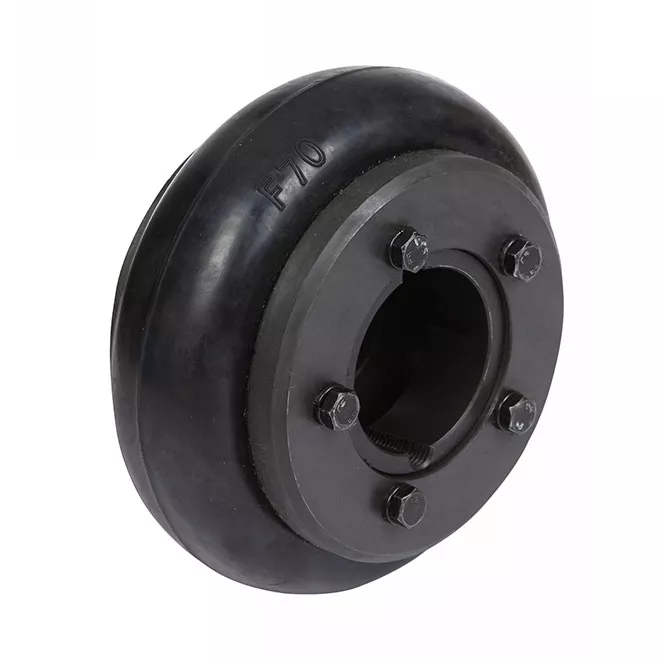
Flexible tyre spacer coupling — DBSE 80–180 mm, Fenaflex-compatible, supplied by Ever Power Flange Couplings Australia Ltd., Condell Park NSW 2200
Two Types — Flexible Tyre Spacer vs Rigid Steel Spacer
The choice between flexible tyre spacer and rigid alloy steel spacer coupling comes down to the same fundamental decision that drives all coupling selection: does the drive system need misalignment compensation and vibration damping, or does it need maximum torsional stiffness with controlled shaft separation? The two types serve different engineering needs — and Ever Power Australia stocks both from our Sydney warehouse.
Flexible Tyre Spacer Coupling (Fenaflex-Compatible)
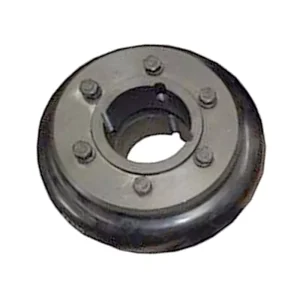
The flexible tyre spacer coupling combines the vibration damping, misalignment tolerance, and lubrication-free operation of an F-Type tyre coupling with a central spacer assembly of specified DBSE length. The rubber tyre elements — one at each end of the spacer — each handle up to 4° of angular misalignment and 6 mm of parallel offset, while the spacer bridges the gap between shaft ends to permit pump rotor withdrawal, mechanical seal extraction, or bearing replacement without dismantling the motor or engine. This is the Fenaflex-compatible configuration that covers the vast majority of Australian pump sets, diesel engine-to-pump connections, and marine flange coupling applications on vessels operating from NSW ports. Standard DBSE: 80, 100, 140, and 180 mm. Tyre sizes F40–F140 in standard natural rubber, FRAS (fire-resistant anti-static), and ATEX-certified compounds.
Rigid Alloy Steel Spacer Coupling
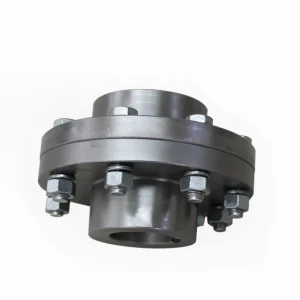
The rigid alloy steel spacer coupling extends the standard flanged rigid coupling design by adding a precision-machined steel spacer tube between the two flanged hubs. It provides the zero-backlash torque transmission of a rigid coupling while allowing the shaft-end separation required for driven machine maintenance access. Because it is torsionally rigid, it demands the same precision shaft alignment as a standard rigid coupling — typically to within 0.05 mm/100 mm angular and 0.05 mm radial. This type is specified on machine tool spindle extensions, long-reach dynamometer shaft trains, and precision instrumentation drives where torsional compliance would introduce positional error. Standard spacer lengths from 50 mm to 3,000 mm; custom lengths available. Material: 42CrMo alloy steel, surface-treated for corrosion protection.
Fenaflex-Compatible Spacer Coupling — Technical Specifications
The table below covers the Fenaflex-compatible tyre spacer coupling range available from our Sydney warehouse, covering tyre sizes F40–F140 across the four standard DBSE values. All dimensions and performance parameters are designed to match the Fenaflex standard — allowing direct replacement of worn Fenaflex spacer coupling assemblies without modification to the machine baseplate, shaft separation, or flange interface. Natural rubber tyre compound is standard stock; FRAS and ATEX compounds are available on 5–10 working day lead time.
| Tyre Size | Max Torque (N·m) | Max Speed (rpm) | Bore d (mm) | Angular Misalign. | Parallel Offset | Std DBSE (mm) |
|---|---|---|---|---|---|---|
| F40 | 10 | 4800 | 12–20 | 4° | 6 mm | 80 / 100 |
| F60 | 40 | 4000 | 16–30 | 4° | 6 mm | 80 / 100 |
| F80 | 100 | 3600 | 20–38 | 4° | 6 mm | 80 / 100 / 140 |
| F100 | 200 | 3200 | 25–48 | 4° | 6 mm | 80 / 100 / 140 |
| F120 | 400 | 2800 | 32–56 | 4° | 6 mm | 100 / 140 / 180 |
| F140 | 800 | 2500 | 40–65 | 4° | 8 mm | 100 / 140 / 180 |
All dimensions match Fenaflex spacer coupling standard. Internal load-carrying wire wound in both directions — reverse drive available. FRAS (Fire Resistant Anti-Static) tyre compound available for underground mining applications. ATEX certified tyre elements available on request. Custom DBSE lengths available from our Sydney machining service.
Engineering Advantages of the Flexible Tyre Spacer Coupling
The Fenaflex-compatible spacer coupling earns its dominant position across Australian pump and engine drive applications through a combination of practical engineering properties that directly reduce maintenance cost and operating risk in the demanding environments where diesel engine drives and marine pump sets operate.
Pump Maintenance Without Moving the Motor
The spacer coupling’s central DBSE clearance allows the entire spacer assembly to be removed radially by loosening the tyre flange bolts — leaving both hubs on their respective shafts. The pump rotor can then be withdrawn axially through the space previously occupied by the spacer, giving full access to the mechanical seal, impeller, and front bearing without repositioning the motor. This single maintenance feature has driven spacer couplings to near-universal adoption on centrifugal pump sets in water utilities, mining dewatering, and marine engine rooms across NSW and Australia.
Marine & Offshore Misalignment Tolerance
The large misalignment capacity — 4° angular and 6–8 mm parallel offset per tyre end — is critical for marine coupling applications where hull deflection under sea load, propeller thrust forces, and thermal growth differentials in the engine room continuously shift shaft centrelines during operation. A rigid coupling would transmit these displacement forces directly into crankshaft and gearbox bearings; the flexible tyre spacer absorbs them within the tyre element while maintaining torque transmission.
FRAS & ATEX Compounds for Hazardous Locations
Underground coal mines in NSW require fire-resistant anti-static (FRAS) material in all rubber components — including coupling tyres — under Queensland and NSW mine safety regulations. FRAS tyre elements are available in all F40–F140 sizes, providing the same misalignment and vibration performance as the standard natural rubber compound while meeting the statutory fire and anti-static requirements. ATEX-certified tyre elements are additionally available for explosive atmosphere classifications in gas plant, offshore, and chemical processing environments.
Diesel Engine Torsional Damping
As an engine coupling on diesel engine-to-pump and engine-to-generator drive trains, the tyre spacer coupling’s rubber element absorbs the torsional impulses from engine firing events that would otherwise reach the driven machine as cyclic torque peaks. This is particularly significant at low engine speeds where firing impulses are most pronounced, and on multi-cylinder engines where the torsional excitation frequency passes through driven-machine resonances during run-up and run-down. The internal wire reinforcement in the tyre element provides the same damping in reverse drive — making the coupling equally effective on engine-braking and regenerative drives.
Corrosion Resistance for Marine Environments
The tyre spacer coupling’s corrosion performance in marine and offshore environments is inherently strong — the rubber tyre element does not corrode, and the flanged hub material can be specified in marine-grade ductile iron, carbon steel with appropriate coating, or stainless steel for permanently wet locations. The spacer tube is available in 316 stainless for saltwater-splash and washdown environments. This combination of corrosion-resistant material selection flexibility is a significant advantage over gear coupling and disc coupling types in permanently marine environments.
Tyre-Only Replacement — No Shaft Disturbance
The rubber tyre elements of the spacer coupling wear independently of the metal flanges and spacer tube. When the tyre reaches end-of-life — typically 3–5 years under normal industrial service — only the tyre is replaced, leaving the flanges and spacer assembly undisturbed. This reduces the material cost of a routine tyre change to a fraction of a complete coupling replacement, and the installation process — removing the bolts, sliding the spacer out, fitting new tyres, reassembling — takes under an hour for an experienced maintenance team on a standard pump set.
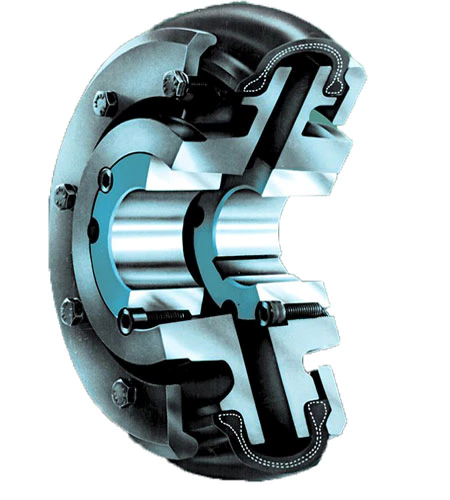
Fenaflex-compatible flexible tyre spacer coupling assembly showing the spacer tube, tyre elements, and flanged hub arrangement
Applications — Marine, Engine Drive & Industrial Pump
The spacer coupling is the standard drive connection solution across a broad range of Australian industrial and marine applications. Each of the sectors below represents a core market that Ever Power serves from our Sydney warehouse, where the combination of DBSE maintenance access, misalignment tolerance, and tyre element replaceability provides direct operational value.
🚢 Marine Propulsion & Vessel Auxiliary Drives
On commercial vessels, patrol boats, ferries, and workboats operating from NSW ports — Sydney Harbour, Botany Bay, Newcastle, Port Kembla — marine flange couplings in the tyre spacer configuration connect diesel engines to gearboxes and shaftlines. The spacer DBSE allows the shaft seal and gearbox to be serviced without withdrawing the engine from the engine room. The large angular and parallel misalignment capacity absorbs the dynamic shaft offsets generated by hull flexure, propeller forces, and engine mounting compliance under seaway conditions.
⛽ Diesel Engine-to-Pump & Generator Drives
Diesel fire pump sets, emergency generator drives, portable dewatering units, and mobile plant auxiliary drives across NSW agriculture, mining, and infrastructure all use tyre spacer engine couplings as the standard drive connection. The rubber tyre’s torsional damping is particularly important on four-cylinder diesel engines at low speed, where the firing frequency creates torque peaks that must be attenuated before reaching the pump shaft. The spacer DBSE allows pump maintenance on site without disconnecting the diesel engine from its sub-base — a critical advantage on remote-site and emergency standby installations where specialist labour for engine repositioning is not available.
🌊 Water & Wastewater Pump Stations
NSW water utilities and wastewater treatment authorities operate hundreds of pump stations on electric motor drives where spacer couplings are the standard specification. The DBSE clearance allows pump mechanical seals to be replaced — the most frequent maintenance item on centrifugal water pumps — without removing the motor from the baseplate or disconnecting the motor cables. On continuously-operating water supply pump stations, this maintenance capability directly reduces planned shutdown duration and the associated risk of supply interruption.
🏭 Offshore Platform & Subsea Equipment
Topsides equipment on offshore platforms in the Bass Strait, Timor Sea, and Carnarvon Basin uses spacer couplings across pump, compressor, and generator drives. The ATEX-certified tyre compound is mandatory in classified hazardous areas, and the corrosion resistant coupling requirements of permanent salt-spray exposure are met through stainless steel spacer tubes and marine-grade coating on hub assemblies. The spacer DBSE also provides safe working clearance for personnel around rotating machinery on crowded topsides decks.
⚒ Underground Mining Dewatering
Underground pump drives in NSW coal and metalliferous mines must use FRAS-compliant coupling materials under state mine safety regulations. FRAS tyre spacer couplings in F60–F140 cover the pump drives deployed in underground dewatering sumps, wash-bay drives, and compressed-air auxiliary pumps. The DBSE maintenance benefit is amplified in underground environments where the confined working space makes conventional motor repositioning particularly labour-intensive and hazardous.
🔬 Long-Span Precision Machine Drives
The rigid alloy steel spacer coupling serves precision machine tool drives, optical instrument positioning stages, and long-reach dynamometer shaft trains where the drive shaft system must bridge a physical gap between driver and measurement point while transmitting torque with zero torsional compliance. Custom spacer lengths from 50 mm to 3,000 mm are available with all dimensional tolerances held to the same standard as the standard flanged rigid coupling — bore H7, keyway h9, flange face runout under 0.01 mm.
How to Select the Correct DBSE — A Practical Guide
The DBSE value — the physical gap between the two shaft ends that the spacer coupling must bridge — is determined by the maintenance access requirement of the driven machine, not by the coupling’s torque capacity. For the Fenaflex-compatible tyre spacer, four standard DBSE values cover the vast majority of pump and engine drive applications encountered in Australian industry. Choosing between them requires answering one question: how much axial clearance does the driven machine’s shaft-end component (impeller, seal, bearing) need to be withdrawn during maintenance?
| DBSE (mm) | Typical Application | Maintenance Access Provided |
|---|---|---|
| 80 | Small centrifugal pumps, light diesel engine drives | Mechanical seal cartridge removal; impeller access on end-suction pumps with short shaft extension |
| 100 | Standard centrifugal pump sets, medium diesel drives | Full impeller withdrawal on most back-pull-out pump designs; mechanical seal and wear ring replacement |
| 140 | Large centrifugal pumps, marine main engine drives | Full rotor withdrawal including impeller nut; front bearing removal on larger pump bodies; working clearance in marine engine rooms |
| 180 | Heavy pump sets, offshore drives, long-shaft pumps | Long impeller shaft extraction; multi-stage pump rotor removal; full working clearance for bearing housing access without restricting adjacent equipment |
Unsure which DBSE is right for your pump? Check the pump manufacturer’s installation manual for the stated “back pull-out dimension” — this is the minimum DBSE your coupling must provide. If the manual is unavailable, contact our Sydney team with the pump model and we can check the standard back pull-out clearance requirement before you order.
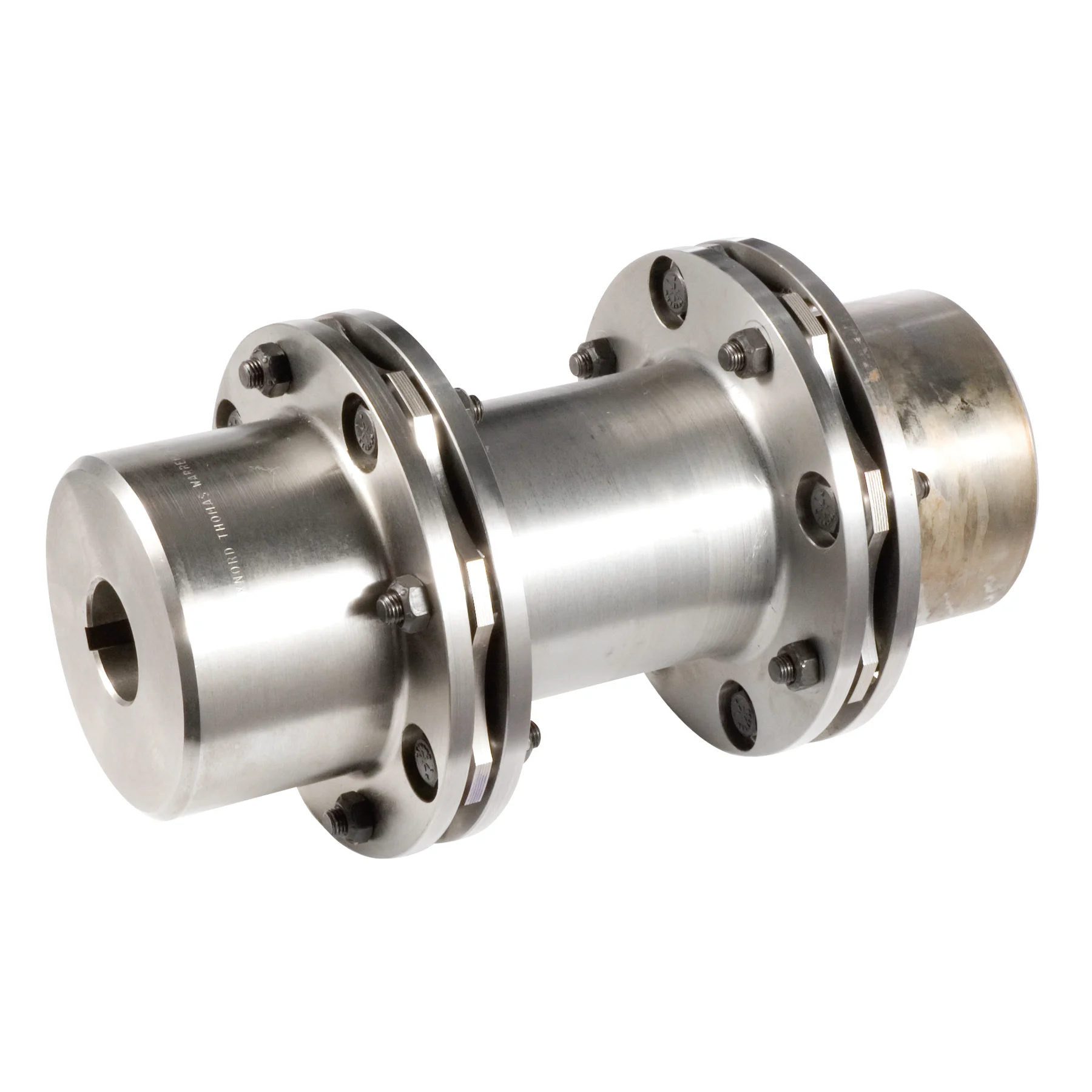
Spacer coupling assembly showing DBSE maintenance clearance — the spacer is removed radially, allowing the pump rotor to be withdrawn through the gap without moving the motor
Installation & Pump Maintenance Procedure
The installation and routine maintenance procedure for the Fenaflex-compatible tyre spacer coupling is straightforward — the design is deliberately engineered for field service by maintenance technicians without specialised tooling. The steps below cover both initial installation on a new pump set and the routine pump-seal maintenance procedure that the spacer coupling makes possible without motor repositioning.
Mount the Flanged Hubs onto Each Shaft
Clean and inspect both shaft journals and hub bores. Mount each hub onto its shaft — the motor end hub and the pump end hub — using the specified keyway and hub retaining arrangement. For taper-lock bushed hubs, draw up the bushing bolts evenly and check that the hub face is perpendicular to the shaft axis before final tightening. Set the axial position of each hub so that the face-to-face distance between the two hub flange faces equals the specified DBSE when the spacer assembly is removed.
Align the Drive to Acceptable Tolerance
Align the motor and pump shafts to within the tyre element’s rated misalignment capacity — targeting angular misalignment below 1° and parallel offset below 2 mm for optimal tyre life, even though the coupling’s rated maximum is 4° angular and 6 mm parallel. The wider capacity is a safety margin and a thermal-growth allowance, not an invitation to install misaligned drives. Use a straight-edge across the hub flanges plus feeler gauge for initial rough alignment, then confirm with dial indicators or laser tool.
Assemble the Spacer Unit Between the Hubs
Fit the tyre elements onto the spacer flanges — the tyre bead seating into the flange groove. Offer the spacer assembly into the gap between the two shaft-mounted hubs and bolt the tyre flanges to each hub flange in a cross-pattern sequence. Do not lubricate the tyre bead contact surfaces. Torque the flange bolts to the specified value for the tyre size from the data sheet — correct bolt torque is the single most critical installation parameter for spacer tyre life.
Pump Maintenance — Removing the Spacer for Shaft Access
To access the pump for mechanical seal replacement or impeller removal: isolate the drive, lock out the motor supply, and remove the tyre flange bolts at both ends of the spacer assembly. The spacer unit — tyre elements, spacer tube, and intermediate flanges — can then be removed radially from between the two shaft-mounted hubs, which remain undisturbed on their shafts. The pump rotor is now free to be withdrawn axially through the space previously occupied by the spacer. Reinstate the spacer in reverse order after maintenance. Total elapsed time for this operation on a standard pump set: 30–45 minutes.
Tyre Inspection & Replacement Schedule
Inspect tyre elements visually at each maintenance shutdown — replace if the tyre shows cracking in the bead zone, visible cord exposure, swelling from oil contact, or hardening from heat exposure. In continuous industrial service at moderate misalignment, tyre life is typically 3–5 years. In high-misalignment applications such as marine engine rooms or uneven-foundation pump sets, annual tyre inspection is recommended. Replace both tyre elements simultaneously to ensure balanced compliance across the spacer assembly.
Why Choose Ever Power for Spacer & Marine Flange Couplings
Marine and industrial pump operators across New South Wales have practical reasons for choosing a locally-stocked, technically-capable spacer coupling supplier over importing from offshore. The most important is lead time — a pump seal failure on a critical water supply or diesel fire pump cannot wait three weeks for an import shipment. Ever Power stocks spacer assemblies and tyre elements separately, in standard sizes, for same-day dispatch from our Sydney warehouse.
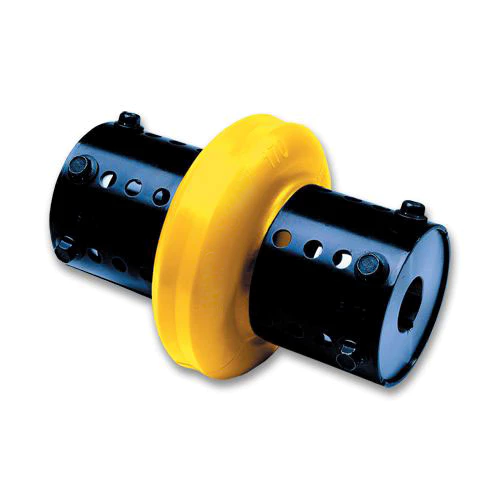
Spacer coupling range — marine flange coupling and industrial pump drive variants, ISO 9001 certified, Ever Power Flange Couplings Australia Ltd.
Marine & Spacer Coupling Supplier — Sydney, New South Wales
Ever Power Flange Couplings Australia Ltd. serves marine operators, pump station contractors, offshore engineering firms, and mining maintenance departments across New South Wales from our Condell Park, Sydney warehouse. Our stock of Fenaflex-compatible tyre spacer couplings and alloy steel rigid spacer couplings covers the standard size and DBSE range for same-day dispatch — with FRAS, ATEX, and corrosion-resistant variants available on short lead times for regulated and demanding environments.
Australia Ltd.
Condell Park NSW 2200
New South Wales, Australia
Frequently Asked Questions
Answered by our Sydney marine and industrial coupling team.
Request a Quote or Technical Consultation
Share your pump type, shaft diameters, motor power, DBSE requirement, and any special compound needs — our Sydney team will confirm the correct size and compound with a price within one business day.
Ever Power Flange Couplings Australia Ltd. · 27 Harley Crescent, Condell Park NSW 2200 · [email protected] · flangecoupling.net