Description
The EP-GL chain coupling transmits torque between two sprocket hubs through a double-row roller chain that wraps both sprockets simultaneously. The split housing or flexible boot retains lubricant at the chain-tooth engagement; the chain itself opens at the master link without specialist tools. This combination of features delivers the fastest field assembly and disassembly of any flexible coupling type — the EP-GL is the natural choice where portable equipment, frequent maintenance access, or mismatched shaft diameters at each end of the drive define the application requirement.
EP-GL Chain Coupling Specifications
The EP-GL range covers shaft diameters from 16 mm through 180 mm and continuous torque ratings from 11 N·m at GL3 up to 4700 N·m at GL14. The torque rating is published at the rated maximum speed for each size — most sizes derate above the rated speed for chain centrifugal effects, and our Sydney engineering team confirms the size selection where the application combines high speed with large bore.
| Size | Max Torque (N·m) | Max Speed (rpm) | Max Shaft Diameter (mm) | Outer Diameter (mm) | Chain Type |
|---|---|---|---|---|---|
| GL3 | 11 | 1800 | 16 | 68 | 06B-2 |
| GL4 | 27 | 1800 | 22 | 90 | 06B-2 |
| GL5 | 73 | 1800 | 30 | 109 | 08B-2 |
| GL6 | 127 | 1800 | 38 | 128 | 10B-2 |
| GL7 | 226 | 1500 | 44 | 148 | 12B-2 |
| GL8 | 342 | 1500 | 55 | 172 | 16B-2 |
| GL9 | 560 | 1500 | 65 | 200 | 16B-2 |
| GL10 | 830 | 1200 | 75 | 233 | 20B-2 |
| GL11 | 1300 | 1200 | 90 | 270 | 20B-2 |
| GL12 | 1950 | 900 | 110 | 310 | 24B-2 |
| GL13 | 2750 | 900 | 125 | 360 | 24B-2 |
| GL14 | 4700 | 750 | 150 | 450 | 28B-2 |
Different bores at each end are supplied as a standard configuration — not a custom modification. The natural three-component construction (two sprocket hubs and one chain) makes mismatched bores the natural fit; this is one of the standout features of the chain coupling type. Specify both shaft diameters at order entry and our Sydney warehouse picks the matched hub pair for the same chain size, ready for same-day dispatch on commonly specified sizes.
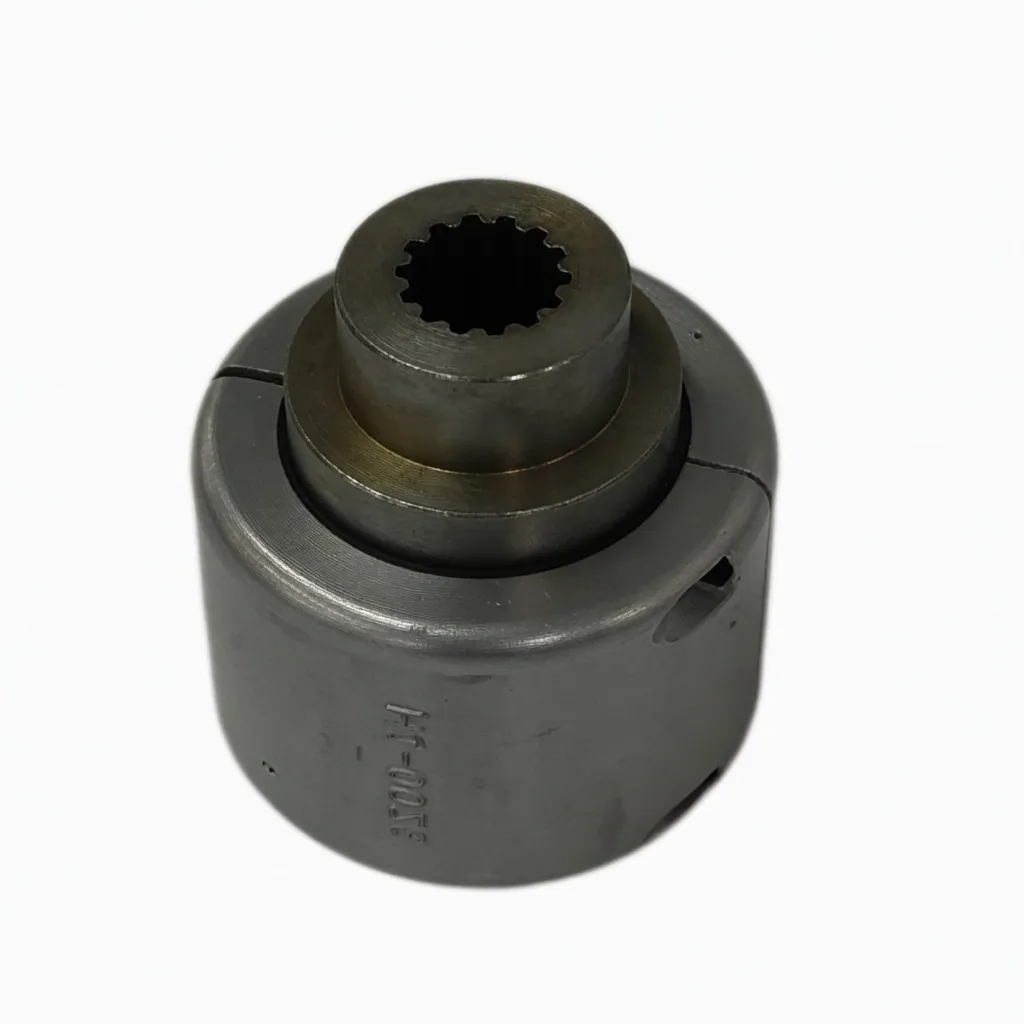
EP-GL Series Chain Coupling – double-row roller chain wraps both sprocket hubs, split housing retains lubricant. Ever Power Flange Couplings Australia Ltd.
How the EP-GL Chain Coupling Transmits Torque
Two sprocket hubs are keyed to the drive and driven shafts. Each sprocket has the same tooth count and pitch — typically 14 or 16 teeth for industrial sizes. A continuous double-row roller chain wraps both sprockets simultaneously, with the chain running parallel to the shaft axis rather than at right angles as on a chain drive. The chain pin clearance in the master link allows the chain to deflect slightly as it tracks the two sprocket tooth lines, and that deflection capacity is the flexible-coupling characteristic of the design.
Angular misalignment of up to 1° between the drive and driven shafts produces a slight axial cam motion of the chain as it engages each sprocket tooth pair. Radial offset of up to 1 mm produces a similar small chain deflection. Both deflection modes are accommodated by the chain link clearances without significant additional load on the chain — torque transmission through the sprocket teeth dominates the mechanical loading. The result is a robust, compact, and serviceable industrial shaft coupling with excellent shock-load tolerance.
Lubrication and Housing Function
The chain tooth engagement is sliding contact under load and requires continuous lubrication. The split steel housing — or flexible synthetic boot on smaller sizes — encloses the entire chain and both sprocket hubs, retaining grease at the contact surfaces. The split housing makes grease replenishment a five-minute task without disassembly, and the same split makes chain replacement at end of life a single-shift maintenance task without removing either hub from its shaft. This serviceability is the EP-GL’s defining engineering virtue.
Construction and Material Specification
Sprocket hubs are machined from medium-carbon steel forgings. Sprocket teeth are induction-hardened on the bearing surfaces and ground to commercial sprocket tooth tolerance. Hub bores are finished to ISO H7 with standard parallel keyway as published in the dimensional documentation; metric and imperial keyway profiles are available as standard. Larger sizes (GL10 and above) can be supplied with taper-bushed bores for higher torque transmission reliability without keyway stress concentration.
The chain is a standard British Standard double-row roller chain in size matched to the sprocket pitch — 06B-2 for the smaller sizes through 28B-2 for the largest. Chain pins, bushings, and rollers are case-hardened alloy steel; the chain plates are heat-treated medium-carbon steel. The chain centre link is a master link with retaining clip — this is the link that opens to install or remove the chain from the assembled sprocket pair, and it is replaceable as a separate spare item.
Engineering Features of the Chain Coupling
Chain opens at the master link with a flat-bladed screwdriver. No specialist tools, no puller, no heat. Coupling assembly or removal in 5 minutes during a maintenance window. Hub stays on the shaft; only the chain comes out.
Different shaft diameters at each end is a standard configuration, not a custom variant. Order each hub bore independently to match the actual motor shaft and driven shaft diameters — no machining required.
Standard sprocket-and-chain geometry produces a smaller envelope outside diameter than equivalent-torque tyre or gear couplings. Ideal where guard envelope is restricted.
Split steel housing retains lubricant on the sliding tooth-chain contact. Standard replenishment interval is 6 to 12 months through the housing grease port; chain life is typically 5 years in normal industrial duty.
Direct dimensional replacement for Renold chain coupling, Tsubaki chain coupling, and Rexnord chain coupling sizes. Provide OEM size code for confirmed cross-reference from our Sydney engineering team.
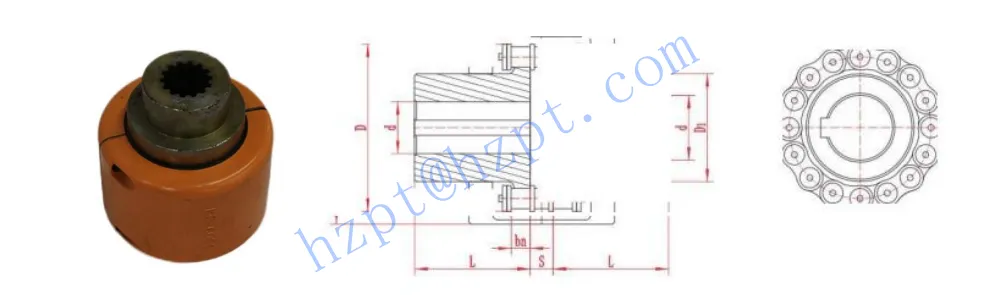
Sprocket hub pair with the double-row chain wrapped around both sprockets – master link visible for field assembly and disassembly.
Application Field for the EP-GL Chain Coupling
Where mobile equipment, portable plant, or frequent field service define the application, the chain coupling earns its specification. Tractor-mounted equipment, portable generators, mobile compressors, mobile concrete mixers, well-service pump skids — all benefit from the five-minute field assembly characteristic. Agricultural equipment is the original heartland: the PTO connection between tractor and implement is exactly the duty the chain coupling was designed for.
Fixed-Plant Applications Where Servicing Matters
Fixed industrial plant also specifies the EP-GL where maintenance access is the limiting factor. Material handling drives in quarrying — conveyor head pulleys, screen drives, feeder motors — where breakdown response time matters more than the last percentage point of efficiency. Process plant auxiliary drives where the maintenance window is short. Pump and fan drives in chemical and food processing where the cleaning regime requires regular coupling removal. The chain coupling is the right choice every time service frequency is the dominant engineering consideration.
Selecting the Correct EP-GL Chain Coupling Size
Size selection starts with running torque from the motor or engine nameplate, multiplied by an application-specific service factor. Continuous-duty pump and fan drives use a service factor of 1.25 to 1.5. Conveyor and bulk-handling drives use 1.5 to 2.0. Shock-loaded crusher and reciprocating-machinery drives use 2.5 to 3.0. The resulting design torque is matched against the published nominal torque to select the EP-GL size — with a check against the operating speed because torque rating derates at high speed.
Bore selection is independent at each end. Specify the actual shaft diameter at each connection — driver and driven — at order entry. Confirm the keyway profile (metric, imperial, square, or taper-bushed) at each end. For sizes GL10 and above where the application includes shock loading or torque reversal, the taper-bushed bore option provides more reliable torque transmission than the standard parallel-bore keyed connection without any change to the chain or sprocket selection.
Installation and First-Service Workflow
The EP-GL installation workflow has the fewest steps of any flexible coupling type — the design intent of the chain coupling is rapid field service. The five steps below cover initial installation; the same workflow applies to chain replacement at end of service life, with the additional step of removing the worn chain before fitting the new one.
Mount both sprocket hubs on their shafts with the sprocket faces toward each other across the rated axial gap. Verify shaft engagement length and confirm parallel keys are correctly seated. Bring driver and driven equipment to rough alignment using straight edge and feeler gauges.
Confirm the sprocket teeth on both hubs are in axial line with each other so the chain will run flat between them. Misalignment of more than 1° causes premature chain wear. Tighten foot-bolts on driver and driven equipment progressively to maintain alignment as bolts come up to torque.
Wrap the double-row chain around both sprockets simultaneously, engaging the chain with the sprocket teeth on both hubs. Position the master link at the most accessible location for future service. Insert the master link pin and fit the retaining clip with the open end of the clip trailing in the direction of rotation.
Fit both halves of the split housing over the chain and sprocket assembly. Install all housing bolts and torque progressively in the specified pattern. Inject lubricant through the grease port until clean lubricant appears at the hub seals — this is the visual confirmation of full housing fill.
Bump-start the drive briefly to confirm correct chain engagement. Run for 30 minutes at progressive load monitoring noise and housing temperature. Recheck housing temperature after 4 hours of continuous operation; normal housing temperature is ambient plus 15–25°C in standard duty.
Request a Chain Coupling Quote
Maintenance and Chain Wear Inspection
Routine maintenance is grease replenishment through the housing port at 6 to 12 month intervals depending on duty severity. Standard industrial lithium-based extreme-pressure grease (NLGI 2) is correct for most applications; high-temperature service requires synthetic-base grease selected for the operating temperature. The replenishment task takes five minutes per coupling and does not require shutdown of the equipment in most cases.
Chain wear is the long-term life-determining factor. Standard chain life in normal industrial duty is 5 years; severe-duty service may see chain replacement every 2 to 3 years. Wear shows as increasing backlash between the sprockets — measure the rotational play at the hub OD and replace the chain when play reaches 3° or noise from the housing increases noticeably under load. Chain replacement does not require hub removal; only the chain and master link come out through the split housing.
Why Choose Ever Power Australia
Ever Power Flange Couplings Australia Ltd. carries the standard EP-GL chain coupling sizes in Sydney warehouse stock — GL3 through GL11 typically same-day dispatch; larger sizes from 1 to 3 working days. Different bores at each end is a no-charge standard configuration. Renold, Tsubaki, and Rexnord chain coupling cross-reference work is provided directly from our Condell Park technical office. The ISO 9001 quality management system ensures consistent sprocket tooth hardness, chain specification, and housing fit across the size range.
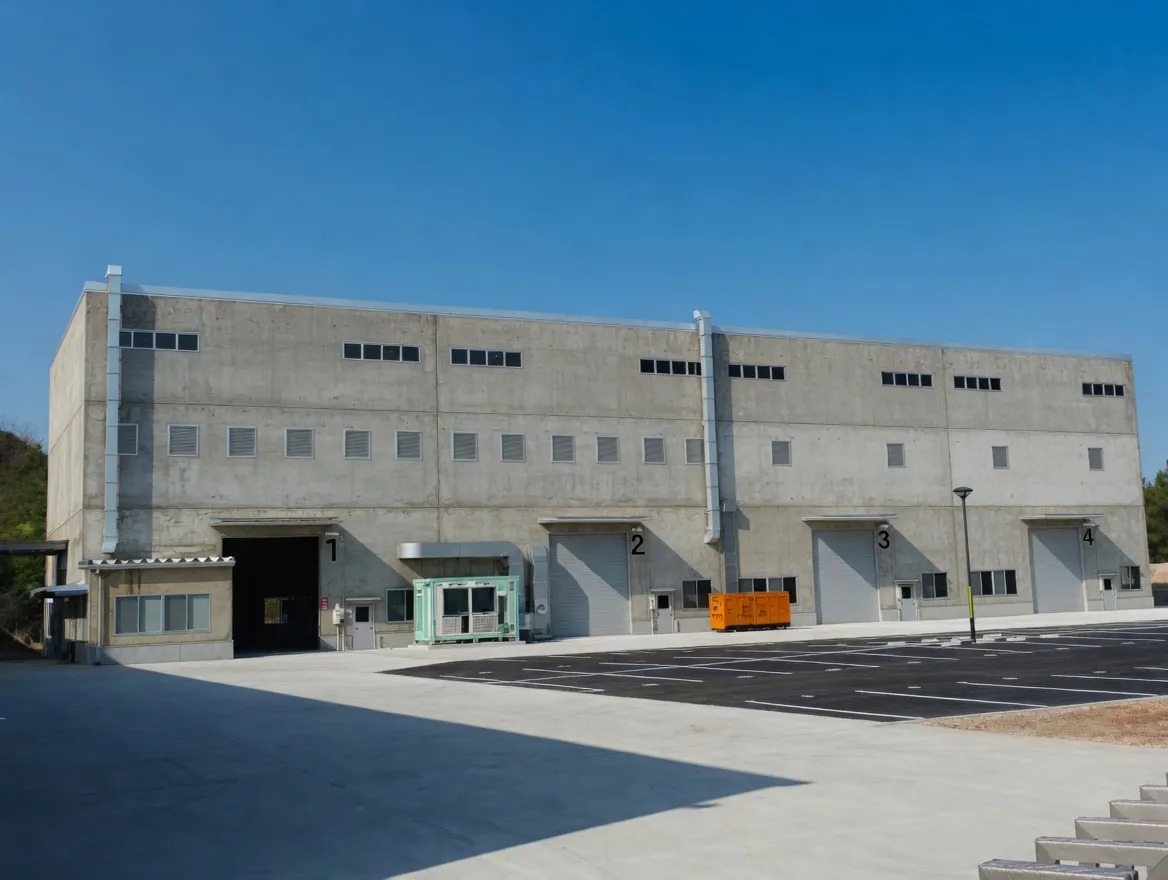
Ever Power manufacturing facility — ISO 9001 certified, 12,000 m², 108 dedicated coupling machines, 20+ years of production experience.
Every order placed with our Sydney team is backed by full material traceability, dimensional inspection certificates on request, and direct access to the engineers who specified, machined, and packed your coupling. We do not subcontract technical support — when you phone +61 2 9708 3322 during NSW business hours, you reach the people who actually know the product.
Frequently Asked Questions
Quick answers from our Sydney technical team. Contact us for application-specific guidance.
1. How quickly can the EP-GL chain coupling be removed from a running shaft? +
2. Can I order different bores at each end of the same EP-GL? +
3. What is the standard chain replacement interval? +
4. Is the EP-GL compatible with Renold and Tsubaki chain couplings? +
5. Do I need to specify the chain separately or is it included? +
Request a Quote — Sydney NSW Stock
Tell us your motor power, shaft diameter, and operating environment. Our New South Wales coupling team confirms availability and pricing within one business day, with same-day dispatch on standard sizes from Condell Park.
Ever Power Flange Couplings Australia Ltd. · 27 Harley Crescent, Condell Park NSW 2200 · [email protected]