The question of which coupling requires no lubrication is one of the most practically important coupling selection questions in industries where maintenance access is difficult, lubrication contamination is a risk, or maintenance-free operation is a commercial requirement. In food and beverage manufacturing, pharmaceutical production, and remote or difficult-access installations across Australia, the ability to install a coupling and not think about it again — beyond occasional visual inspection — carries real commercial value.
Why Some Couplings Need Lubrication and Others Do Not
Lubrication in a coupling is required when the misalignment accommodation mechanism involves sliding or rolling contact between metal surfaces. The gear coupling is the classic example: its teeth slide against each other as the coupling rotates under misalignment, and without a grease film between the tooth flanks, contact stress causes rapid wear and fretting corrosion. Grid couplings, chain couplings, and older pin-and-bush designs share this characteristic.
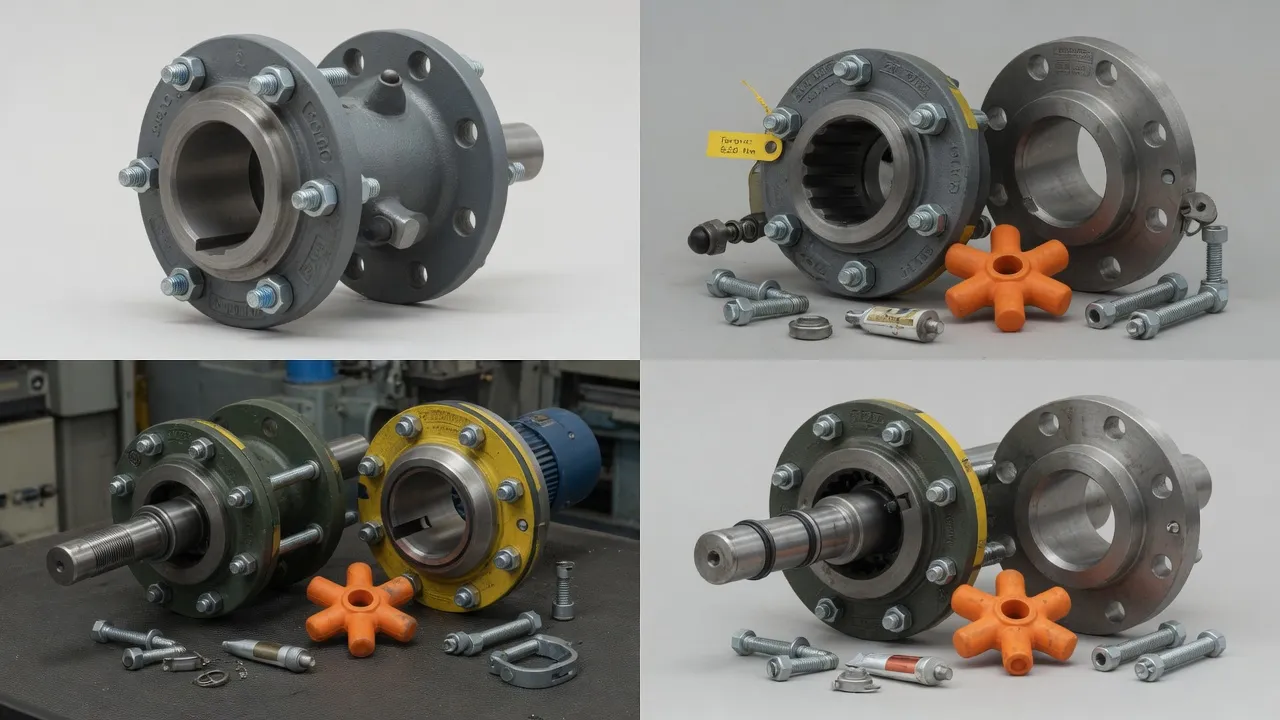
Coupling designs that eliminate metal-to-metal sliding contact also eliminate the need for lubrication. The two engineering approaches used are: replacing the sliding metallic element with a deformable elastomeric element (tyre, spider), or using a metallic element that flexes elastically rather than sliding (disc pack, diaphragm, bellows, beam). In both cases, the misalignment accommodation mechanism is deformation rather than sliding, and no lubrication is required or beneficial.
Maintenance-Free Coupling Types Compared
| Coupling Type | Lube Required? | Wear Element? | Inspection Interval | Best Application |
|---|---|---|---|---|
| Gear Coupling | Yes — grease every 3–12 months | Yes — tooth flanks | 3–12 months (lubrication) | High torque, high misalignment industrial drives |
| Elastomeric Tyre (F-Type) | No | Yes — tyre element | 12 months visual | Pump, fan, compressor drives — general industrial |
| Elastomeric Spider (Jaw/Claw) | No | Yes — spider insert | 12 months visual | Light to medium motor-pump drives |
| Disc Coupling (Metallic) | No | No | 24 months visual | High speed, servo, precision drives |
| Flexible Beam Coupling | No | No | 24 months visual | Encoder, CNC, servo — small bore |
| Chain Coupling | Yes — oil bath or grease | Yes — chain and sprockets | 6 months | General industrial low speed |
The Elastomeric Flange Coupling: Best No-Lube Option for Most Pump Drives
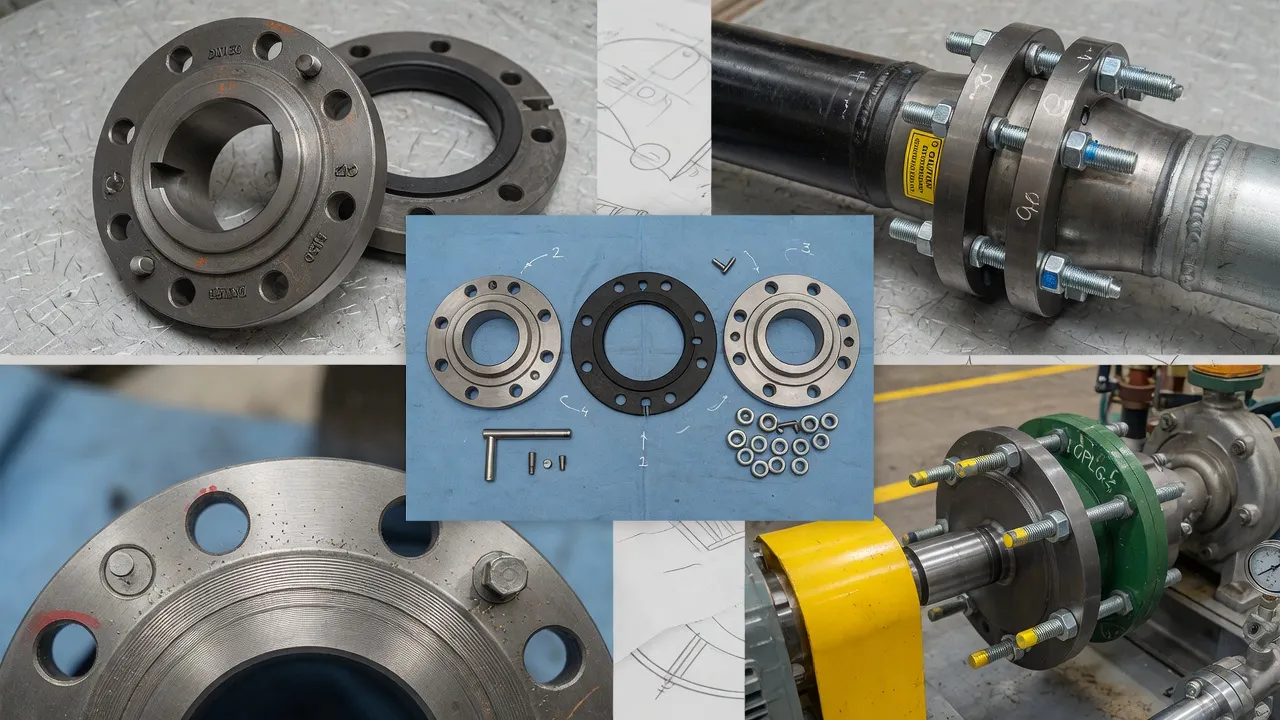
For the vast majority of pump, fan, and compressor drives in Australian industry, the flexible flange coupling with an elastomeric tyre or spider element is the optimum no-lubrication option. It requires no grease, no oil, and no periodic fluid management — the only maintenance it needs is a visual inspection of the elastomeric element once a year, and eventual replacement every 3–6 years in normal service.
The elastomeric element also provides vibration damping and misalignment accommodation that lubricated gear couplings cannot match. A gear coupling accommodates misalignment through tooth sliding — which only works at the cost of continuous lubrication maintenance. An elastomeric coupling accommodates misalignment through elastic deformation — which is inherently maintenance-free and also provides vibration isolation that the gear coupling does not.
Food and Pharmaceutical Applications: What No-Lube Really Means
In food and pharmaceutical processing, no lubrication in the coupling is not just a maintenance preference — it is a contamination control requirement. A gear coupling failure releasing grease into a food product stream can trigger a product recall. Specifying no-lube elastomeric or metallic disc couplings in food and pharmaceutical plants eliminates this contamination pathway entirely. Specify FDA-compliant elastomers (food-grade polyurethane or EPDM) and 316 stainless steel fasteners for the most complete food-safe installation.
Frequently Asked Questions
Need Expert Coupling Advice?
Our engineering team in Condell Park NSW is ready to help — free of charge.