The disc coupling occupies a specific and important niche in the coupling world: it is the premium choice where zero backlash and maintenance-free operation must coexist in the same product. Elastomeric couplings provide maintenance simplicity but have inherent torsional play at low loads. Gear couplings provide high torque capacity but require periodic lubrication. The disc coupling achieves both zero backlash and no-maintenance operation through a purely metallic design — stainless steel laminate discs that flex elastically to accommodate misalignment without any sliding contact, wear surfaces, or elastomeric elements to degrade. For servo motor drives, turbines, precision test equipment, and high-temperature process applications, this combination is frequently the only engineering solution that meets all the requirements simultaneously.
How a Disc Coupling Transmits Torque
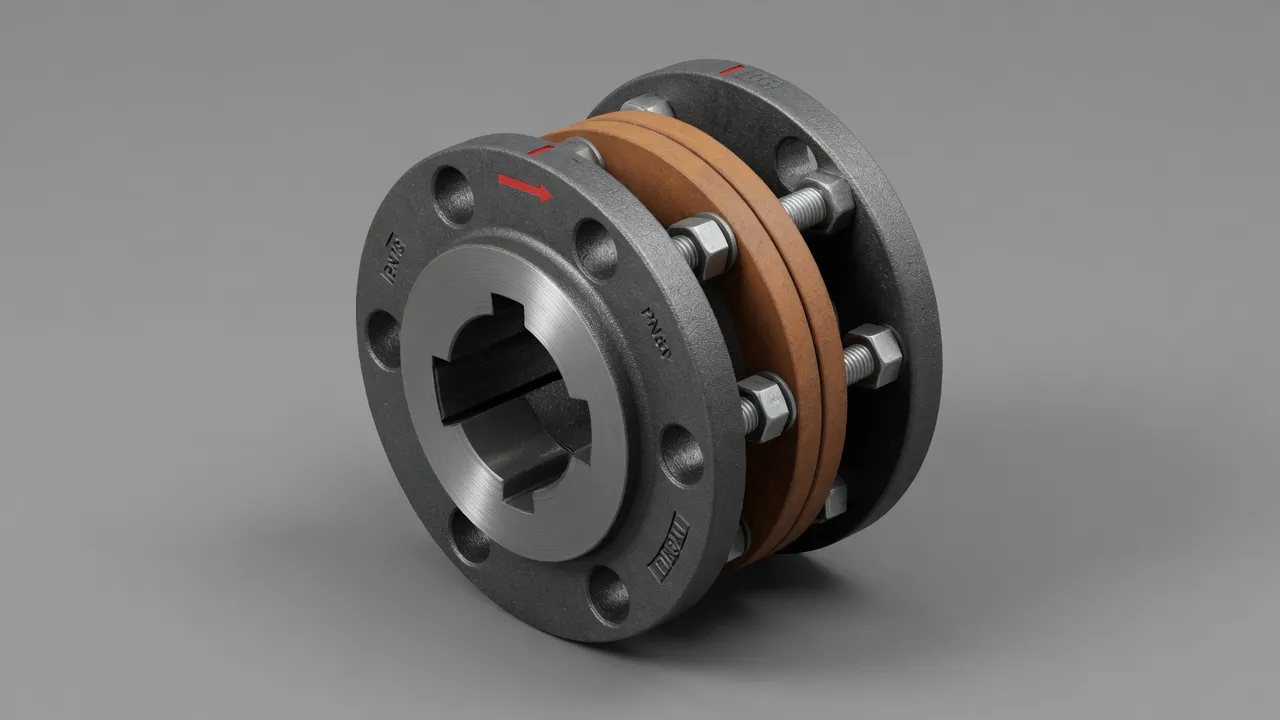
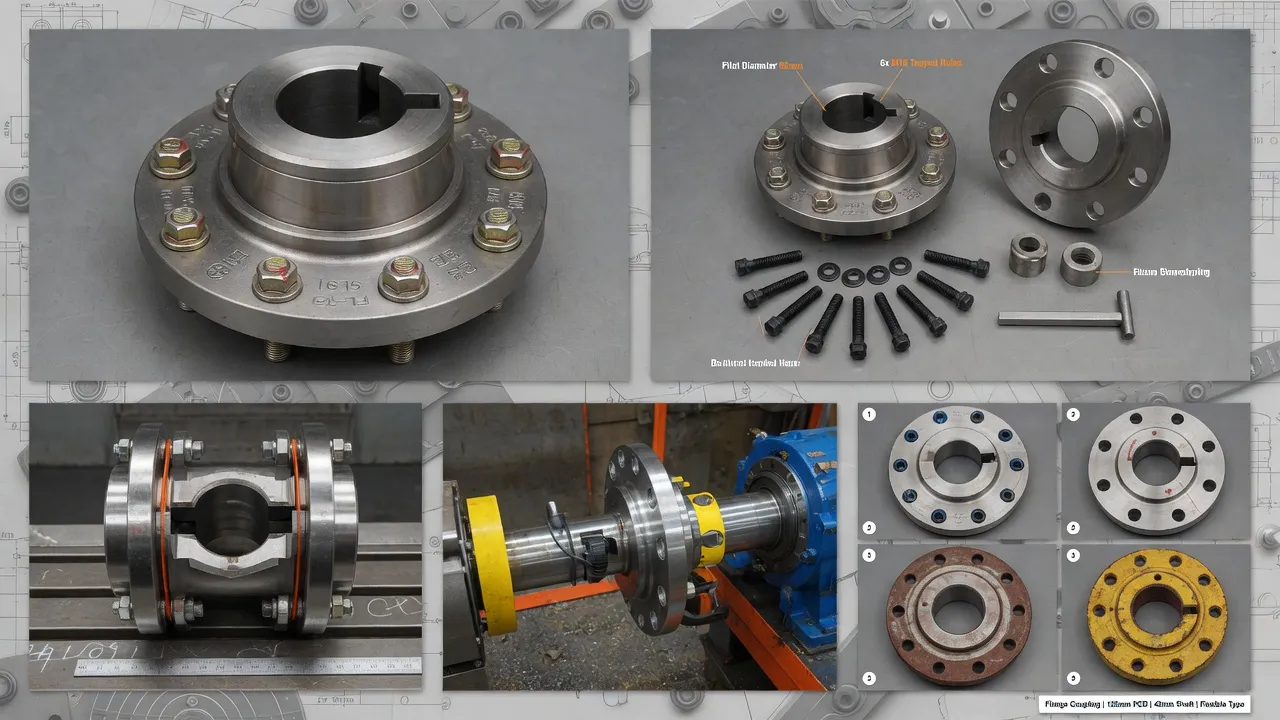
The disc coupling consists of two machined hubs connected by one or two packs of thin stainless steel laminate discs. Each disc pack is bolted alternately to the driving hub and the driven hub through alternating bolt positions around the disc circumference. When torque is applied, the discs transmit it through tension in the metallic laminate between adjacent bolt attachment points — some disc sections are in tension, others flex in bending. The angular and parallel misalignment accommodation comes from the controlled bending of the disc material between the tension-loaded bolt positions.
This mechanism produces the disc coupling’s most valuable characteristic: at any torque level, including zero, the tension path through the disc laminate is always under load. There is no clearance zone, no compression play, and no elastic compliance at low torque — giving the coupling genuine zero backlash behaviour across the full torque cycle. This is fundamentally different from an elastomeric coupling, which has a small compliance zone at low torque where the elastomeric element transitions from compression on one side to the other.
Disc Coupling vs Diaphragm Coupling — When to Choose Which
The EP-JZM series diaphragm coupling and the disc coupling share the same zero-backlash, maintenance-free operating principle but differ in how the flexible element is constructed. The choice between them depends on the specific mechanical requirements of the application.
Criterion
Disc Coupling
Diaphragm Coupling
Torsional Stiffness
Higher — tighter speed control
Lower — better torsional isolation
Angular Misalignment
Typically ≤1°
Typically ≤2–3°
Axial Movement
Moderate — ±1–2 mm
Good — ±2–5 mm
Speed Range
To 10,000+ RPM
To 8,000 RPM
Torque Range
0.5 Nm – 35,000 Nm
500 Nm – 200,000 Nm (heavy diaphragm)
Temperature Rating
To 350°C (SS disc pack)
To 400°C (Inconel diaphragm available)
Best Application
Servo motors, CNC, turbine auxiliaries, test rigs
Heavy machinery drives, compressors, large pumps
Disc Coupling Selection — Key Parameters
1
Torque Rating with Service FactorCalculate running torque: T = 9,550 × kW ÷ RPM. Apply service factor (1.5 for smooth servo loads, 2.0–2.5 for shock or reversing loads). Disc coupling rated torque must exceed this design torque. For servo applications, also check the coupling’s rated peak torque against motor peak torque during acceleration and deceleration cycles.
2
Misalignment ToleranceMeasure or calculate the expected angular and parallel shaft misalignment at operating temperature. The disc coupling’s rated misalignment tolerance must exceed this. For high-precision applications, align to within 50% of the coupling’s rated tolerance to ensure the disc pack operates well within its fatigue curve.
3
Torsional Stiffness RequirementFor servo positioning systems, check that the coupling’s torsional stiffness does not reduce the first torsional resonant frequency of the drivetrain below the servo control bandwidth. Torsional stiffness data is provided in the coupling datasheet — consult our engineering team if torsional resonance analysis is required for your servo system.
4
Speed and Balance GradeVerify the coupling’s maximum RPM rating covers the highest operating speed, including VSD overspeed setpoints. For speeds above 3,000 RPM, specify balancing to ISO 1940 G2.5. For speeds above 6,000 RPM, individual assembly balancing and full disc pack traceability should be specified.
Frequently Asked Questions
Are disc couplings zero backlash?+
Yes. A disc coupling transmits torque through tension in the metallic disc laminate pack — there is no elastomeric element with compression play, no tooth clearance, and no sliding contact. At all torque levels from zero to rated, the disc coupling has essentially zero backlash. This makes it the standard choice for servo motor drives, CNC positioning axes, and measurement applications where angular positioning accuracy must be maintained throughout the operating cycle.
How long does a disc coupling last before the disc pack needs replacing?+
On a correctly specified and aligned installation, a stainless steel disc pack will typically run for the full service life of the machine — 10 to 20+ years — without any disc pack replacement. Disc pack fatigue occurs when the coupling is operated beyond its misalignment or torque rating, particularly through angular overload. The early sign of disc fatigue is visible surface cracking or slight fretting at the bolt attachment points. Replace the disc pack at the first sign of cracking — a failed disc pack can separate suddenly at speed.
What is the difference between a disc coupling and a diaphragm coupling?+
Both are metallic flexible couplings providing zero backlash and maintenance-free operation. A disc coupling uses a stack of thin flat metallic discs (a disc pack) to provide the flexible element — each disc flexes in bending as the coupling accommodates misalignment. A diaphragm coupling uses a single formed metallic diaphragm that flexes in a controlled pattern. Diaphragm couplings typically handle larger misalignment and axial movement at equivalent torque, while disc couplings provide higher torsional stiffness per unit size.
Can a disc coupling handle high temperature applications?+
Yes. Because the disc coupling is an all-metallic design with no elastomeric element, operating temperature is limited only by the material properties of the disc pack and hub materials. Standard 301 or 17-4PH stainless steel disc packs are rated to 300–350°C. This makes disc couplings the only practical zero-backlash coupling option for applications involving high-temperature process gases, steam turbine auxiliaries, or furnace drive connections where elastomeric materials would not survive.
Is a disc coupling self-aligning?+
No. A disc coupling accommodates misalignment through controlled flexure of the disc pack — but it does not ‘self-align’ in the sense of returning the shafts to alignment. The misalignment must be within the coupling’s rated angular and parallel tolerance for the disc pack to flex within its fatigue life. Operating a disc coupling beyond its misalignment tolerance accelerates disc fatigue and can produce failure within weeks. Laser alignment to within the coupling’s specification at commissioning is mandatory.
Need Expert Coupling Advice?
Our engineering team in Condell Park NSW is ready to help — free of charge.