
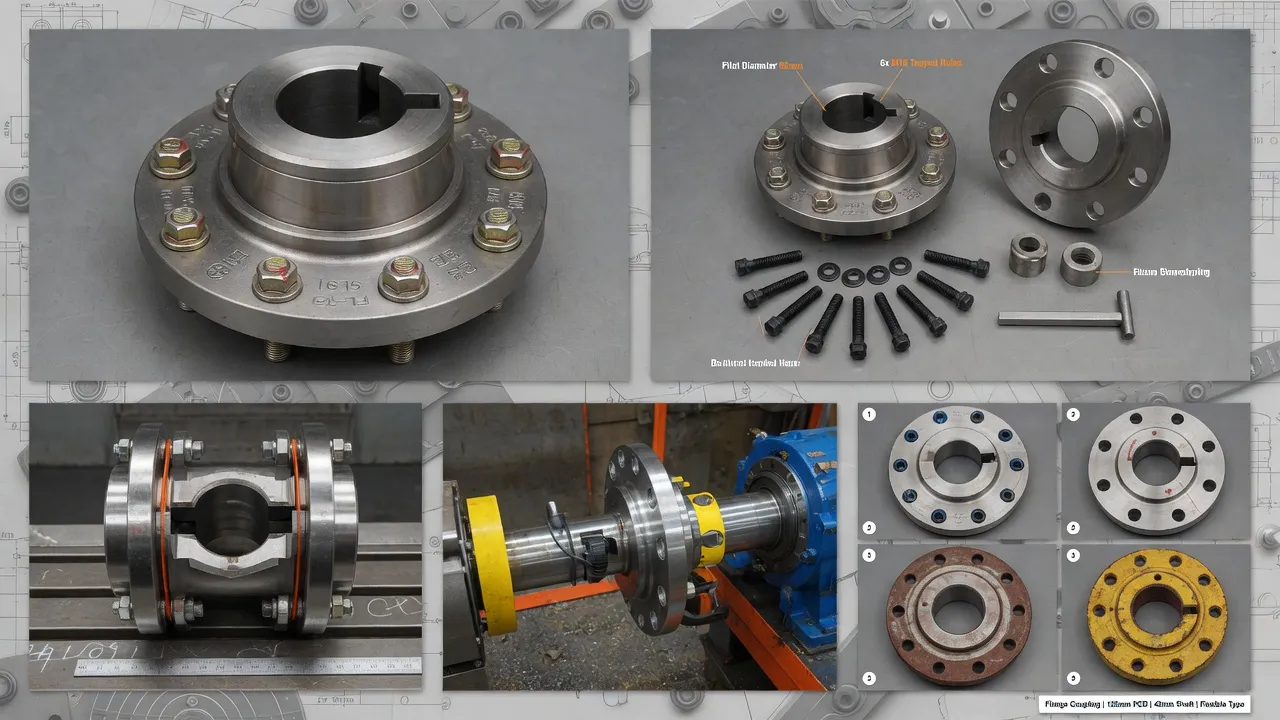
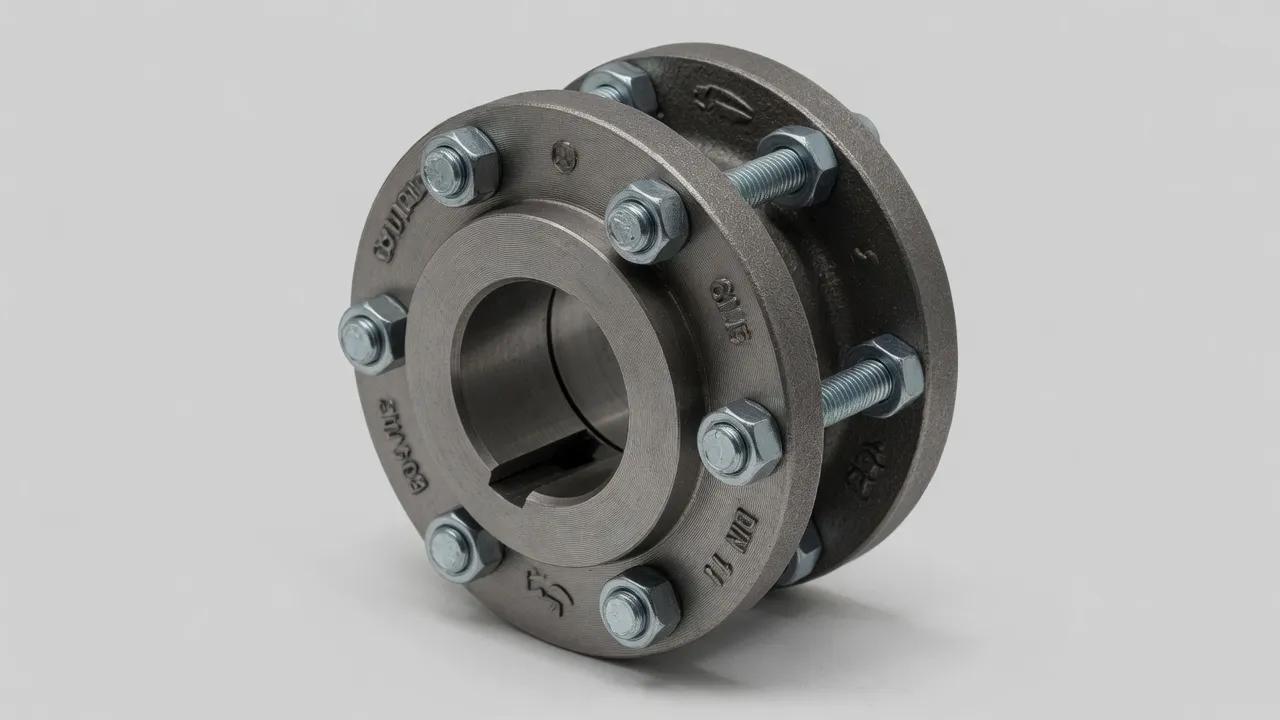
Coupling specification in Australia operates within a framework of international standards, industry-specific regulations, and classification society requirements that varies considerably depending on the application sector. A coupling for a water treatment pump in NSW operates under a different compliance framework than the same torque-rated coupling installed on an offshore oil platform, a coal mine conveyor, or a marine vessel. Understanding which standards apply — and what they actually require — is the foundation of correct coupling specification for regulated applications. This guide covers the relevant standards for the most common regulated sectors in Australian industry, with practical guidance on specification for cast iron and steel rigid couplings and F-type flexible tyre couplings across each compliance environment.
The Australian Coupling Standards Framework
Unlike Germany (DIN 740) or the United States (AGMA 9000), Australia does not have a comprehensive national coupling standard. Australian coupling specifications are built on a hierarchy of international standards adopted by Standards Australia, supplemented by industry-specific requirements from safety regulators and classification societies:
| Standard | Scope | Coupling Relevance | Mandatory or Advisory? |
|---|---|---|---|
| ISO 1940 | Mechanical vibration — balance quality grades for rigid rotors | Specifies balance grades (G6.3, G2.5, G1.0) for rotating coupling assemblies | Mandatory where speed > 1,500 RPM on precision or regulated drives |
| ISO 286 (AS 1654) | Limits and fits for bore and shaft tolerances | Specifies H7/k6 and similar fit classes for hub bore-to-shaft connections | Advisory — but H7 bore tolerance is industry standard |
| ISO 773 | Woodruff and parallel keyway dimensions | Specifies key and keyway width, depth, and length for coupling hub keyways | Advisory — but ISO 773 dimensions are universally used in Australia |
| IECEx / ATEX | Electrical equipment for explosive atmospheres | Applies to couplings in underground coal mines and classified petroleum zones | Mandatory for Zone 1 and Zone 2 equipment in gassy environments |
| AS 2865 | Mining safety — surface and underground mines | Sets requirements for equipment used in mining environments | Mandatory in Australian mines via WHS Mines Regulations |
| Lloyd’s Register / DNV-GL | Marine classification rules | Require material certificates, balance records, and torsional analysis for certified drives | Mandatory for classified vessels and offshore platforms |
| API 610 / API 671 | Petroleum and natural gas equipment | API 671 specifically covers special-purpose couplings for oil and gas rotating equipment | Mandatory for API-specified oil and gas installations |
Sector-Specific Compliance Requirements
Water and Wastewater Industry
Australian water utilities (Sydney Water, SA Water, Melbourne Water, and council-operated utilities) typically specify couplings to AS/NZS quality management standards with material certificates on request, but have no mandatory coupling certification requirement beyond standard engineering specifications. The relevant coupling standards for water industry are the operator’s own technical specifications, which generally reference ISO 1940 balance grades and ISO 286 bore tolerance classes.
Mining Industry
Coupling requirements in Australian mining are governed by the Work Health and Safety (Mines and Petroleum Sites) Regulations. For underground coal mines with classified explosive atmospheres, IECEx equipment certification is required for electrical equipment, but mechanical couplings are assessed as part of the machine compliance rather than independently. Key coupling requirements for underground coal: no aluminium alloy hubs; antistatic elastomeric elements (below 10⁹ Ohm resistivity); and marking with the coupling’s torque rating and maximum speed for safe maintenance.
Marine and Offshore
Marine couplings for classification society certification (Lloyd’s Register, DNV-GL, Bureau Veritas, ABS) must be accompanied by material test certificates, dimensional inspection records, and balancing records in the format required by the relevant society. For main propulsion couplings, a torsional analysis reviewed and approved by the classification society is required. Our marine coupling range carries pre-approved material specifications for Lloyd’s and DNV-GL classification — contact us for the specific documentation package required for your project.
Oil and Gas
Couplings for oil and gas rotating equipment specified to API 610 (centrifugal pumps) must meet API 671 requirements where applicable. API 671 specifies requirements for special-purpose couplings including: torsional stiffness and damping data for torsional analysis; specific material and heat treatment requirements; dynamic balancing to API 671 G1.0 for high-speed applications; and full traceability of materials and testing records. API 671 couplings are engineering-to-order products with longer lead times — plan procurement at the project design stage, not during commissioning.
What Documentation Should I Request from a Coupling Supplier?
| Document | Standard Application | Regulated Application |
|---|---|---|
| Dimensional drawing | Always — confirms coupling meets space envelope | Always |
| Torque and speed rating datasheet | Always — confirms coupling is correctly rated | Always |
| Material certificate (mill cert) | On request for high-torque or critical drives | Mandatory for marine, oil and gas, mining safety-critical |
| Balance certificate (ISO 1940) | On request for high-speed drives above 3,000 RPM | Mandatory for marine, API 671, turbomachinery |
| IECEx/ATEX certificate (for Ex equipment) | Not applicable for standard industrial | Mandatory for underground coal and petroleum Zone 1/2 |
| Torsional stiffness and damping data | On request for VSD or reciprocating machine drives | Mandatory for marine classification and API 671 |
Frequently Asked Questions
Need Expert Coupling Advice?
Our engineering team in Condell Park NSW is ready to help — free of charge.