
Water pump coupling selection in Australia follows a consistent pattern across applications from domestic tank pressure sets to large water treatment plant centrifugal pumps serving hundreds of thousands of people. The fundamental requirement is the same in each case: transmit the motor’s torque to the pump impeller reliably, accommodate the shaft misalignment that exists in virtually every installation, and do so without requiring frequent maintenance attention or specialised tools to service. The F-type flexible tyre coupling is the dominant choice for Australian water pump applications from 1.5 kW to 250 kW, with the drop-out spacer coupling design widely adopted by NSW water utilities and council pump stations where frequent mechanical seal access drives a preference for minimal downtime maintenance.
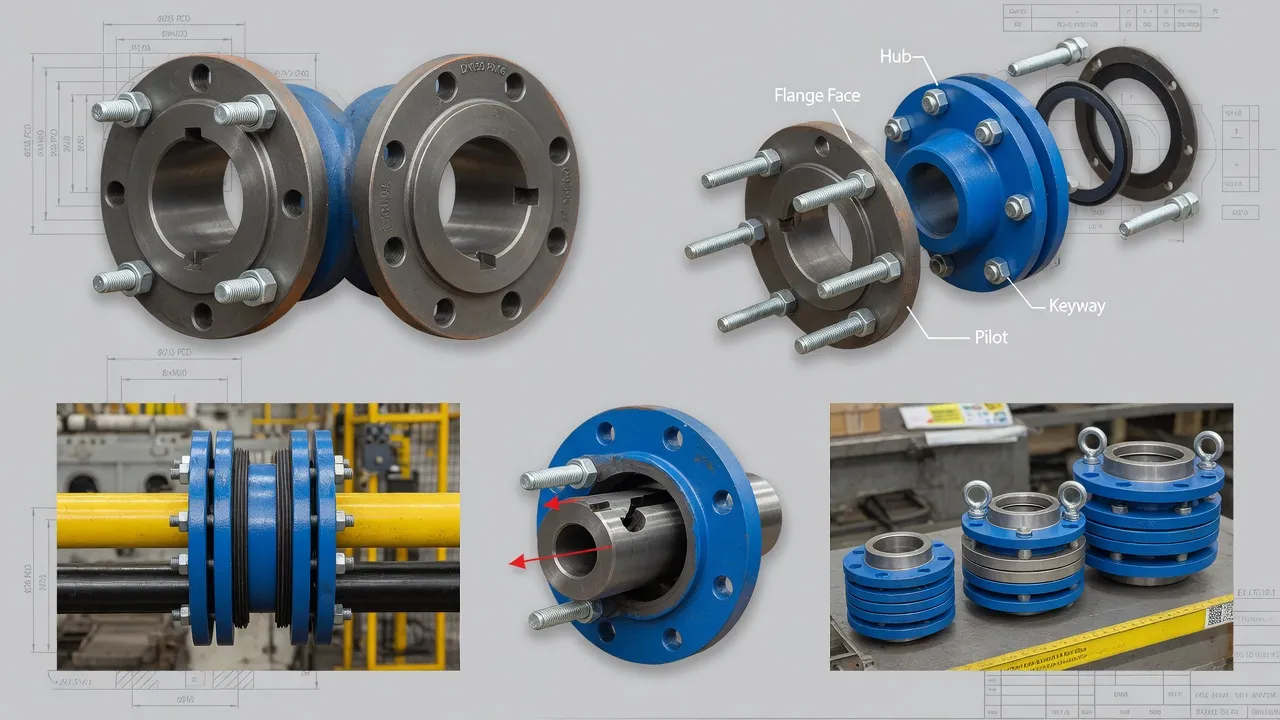
Why the Flexible Tyre Coupling Dominates Australian Water Pump Applications
The Australian water and wastewater sector has settled on the flexible tyre coupling as the standard for good engineering reasons. Pump stations are often unattended, staffed only during scheduled maintenance visits. The flexible tyre element accommodates the slow misalignment drift that occurs between visits — from baseplate settlement, thermal cycling, and the occasional motor replacement that does not always achieve perfect alignment — without transmitting these drifts as bearing loads or seal damage. When the maintenance team does visit, the spider or tyre element inspection takes 15 minutes with the coupling guard removed and a visual check, not a vibration specialist and a laptop.
The no-lubrication characteristic matters enormously in water treatment environments where any hydrocarbon contamination of the treated water supply is unacceptable. The polyurethane or EPDM tyre element needs no oil or grease — it simply flexes, damps, and runs maintenance-free between planned inspection intervals.
Coupling Selection by Water Pump Type and Application
| Water Pump Application | Typical Power Range | Shaft Diameter | Recommended Coupling | Key Selection Driver |
|---|---|---|---|---|
| Domestic pressure set | 0.37–2.2 kW | 14–24 mm | Jaw coupling (L-series) or F40/F60 tyre | Small bore, low torque, simple installation |
| Swimming pool / spa pump | 0.75–3.0 kW | 19–28 mm | Jaw coupling or F60 tyre coupling | No lubrication, compact envelope |
| Irrigation pump (surface) | 2.2–22 kW | 24–45 mm | F80 or F100 flexible tyre coupling | Regular starts, outdoor environment, EPDM element |
| Building services pump (HVAC) | 1.1–30 kW | 19–55 mm | F60–F125 flexible tyre coupling | Vibration damping for occupied buildings |
| Water treatment centrifugal pump | 7.5–200 kW | 38–100 mm | F100–F200 flexible tyre coupling | Reliability, annual inspection standard |
| Sewage / wastewater pump | 5.5–110 kW | 38–90 mm | F100–F160 flexible tyre coupling, EPDM element | Chemical resistance, wet environment |
| Mine dewatering pump | 30–500 kW | 55–120 mm | F160–F250 or heavy-duty flexible coupling | Abrasive fluid, shock start, remote access |
| Booster pump station | 7.5–75 kW | 38–80 mm | F100–F160 flexible tyre + drop-out spacer | Frequent seal access, DOL start programme |
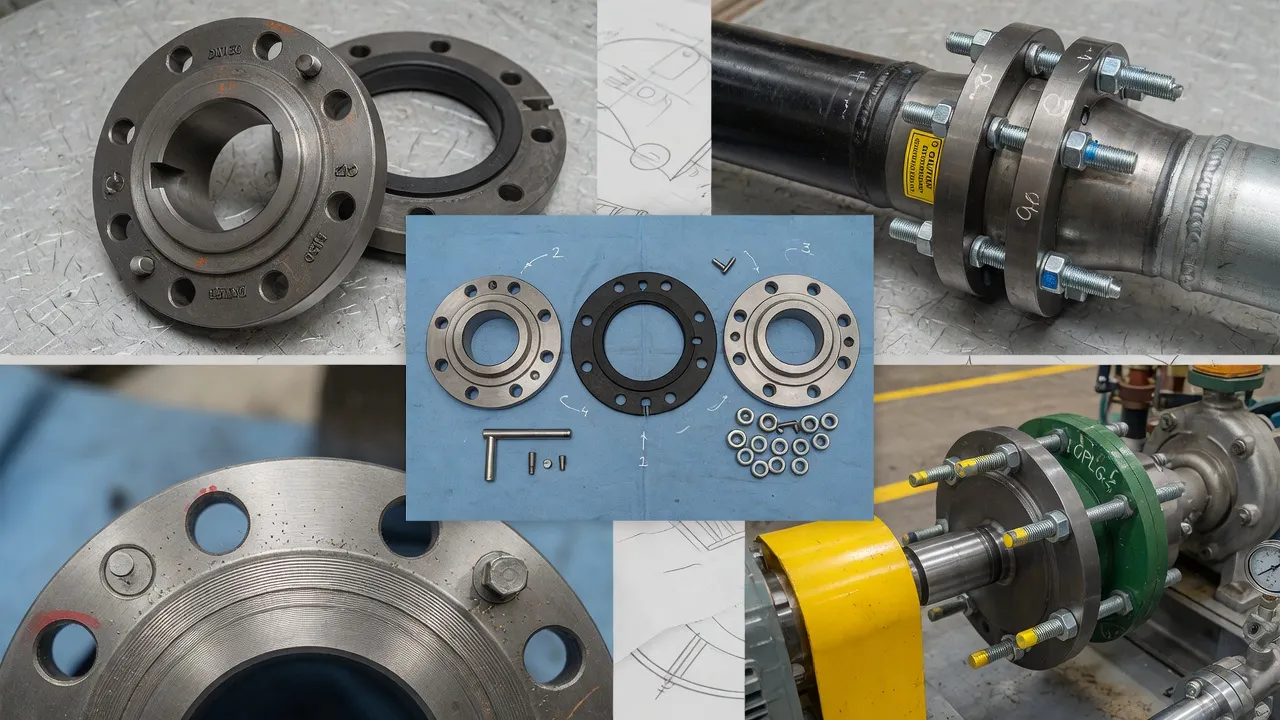
The Case for Drop-Out Spacer Couplings in Australian Pump Stations
The widespread adoption of drop-out spacer couplings by NSW Water, Sydney Water, and equivalent state water authorities is driven by a straightforward maintenance economics argument. At a typical pump station with 6–8 centrifugal pumps, each pump averages 2 mechanical seal replacements per year (allowing for variations in condition and duty cycle). A standard coupling requires motor dismounting for each seal replacement — approximately 6 hours per event. A drop-out spacer coupling reduces seal access time to under 60 minutes.
8 pumps × 2 seal changes/year × 5 hours saved per change = 80 hours of fitter time saved annually per pump station
At AUD 95/hour average industrial maintenance rate: AUD 7,600 per station per year
Payback on the spacer coupling premium (typically AUD 200–400 per coupling): first seal change
EPDM vs Polyurethane: Which Tyre Element for Water Pump Applications?
| Condition | Polyurethane (PU) 92A | EPDM |
|---|---|---|
| Indoor pump room, 15–35°C | Standard — PU is correct choice | Overkill — added cost not justified |
| Outdoor installation, UV exposure | Not recommended — crazes within 12 months | Correct choice — UV resistant |
| Chemical dosing plant, acid/alkali | Verify chemical compatibility | Preferred — broad chemical resistance |
| Seawater or coastal environment | Acceptable indoors | Preferred for outdoor or wet exposure |
| High-temperature pump (>60°C process) | Verify against 80°C limit | Rated to 120°C — preferred for hot water pumps |
Frequently Asked Questions
Need Expert Coupling Advice?
Our engineering team in Condell Park NSW is ready to help — free of charge.