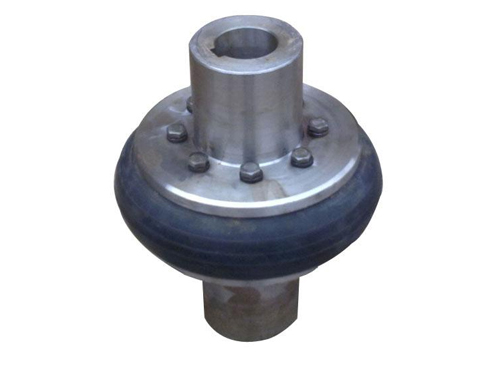
Encoders, miniature couplings

Encoders and miniature couplings are devices that compile and convert signals (such as bit streams) or data into signal forms that can be used for communication, transmission and storage. The encoder converts angular displacement or linear displacement into electrical signals, the former is called It is a code wheel, and the latter is called a yardstick.According to the reading mode, the encoder can be divided into contact type and non-contact type; according to the working principle, the encoder can be divided into incremental type andThere are two types of formulas.The incremental encoder converts the displacement into a periodic electric signal, and then converts this electric signal into a counting pulse, and the number of pulses is used to indicate the magnitude of the displacement.Each position of the type encoder corresponds to a certain digital code, so its indication is only related to the start and end positions of the measurement, and has nothing to do with the middle process of the measurement.
Classification introduction of encoders and miniature couplings:
1. According to the different classification of the engraving method of the code disc
(1) Incremental type: that is, a pulse signal is sent every time the angle of a unit is rotated (there is also a sine and cosine signal,
Then subdivide it and chop the frequency pulse), usually A-phase, B-phase, Z-phase output, A-phase, B-phase are mutually delayed 1/4 cycle pulse output, according to the delay relationship can distinguish positive and negative The frequency can be multiplied by 2 or 4 by taking the rising and falling edges of phase A and phase B; phase Z is a single-turn pulse, that is, one pulse is sent out every turn.
(2)Value type: It corresponds to a circle, and each reference angle emits a binary value corresponding to the angle, and the recording and measurement of multiple positions can be performed through the external circle device.
2. According to the output type of the signal, it is divided into: voltage output, open collector output, push-pull complementary output and long-line drive output.
3. Classified by the form of mechanical installation of encoder
(1) Shaft type: Shaft type can be divided into clamping flange type, synchronous flange type and servo mounting type.
(2) Sleeve type: The sleeve type can be divided into half-empty type, full-empty type and large-diameter type.
4. According to the working principle of the encoder, it can be divided into: photoelectric type, magnetoelectric type and contact brush type.
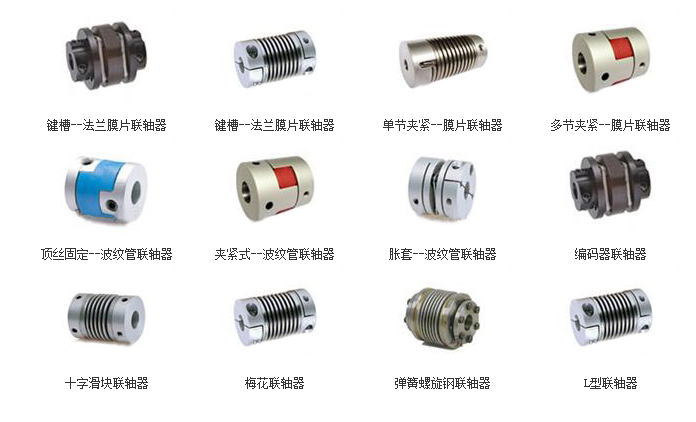
Hebei encoder, miniature coupling Hebei encoder, miniature coupling