Description
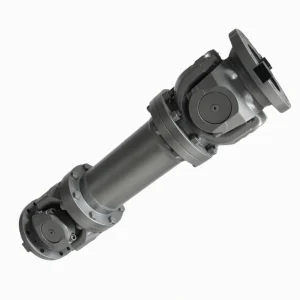
The SWC-BH is a welded-yoke heavy duty shaft coupling built for the most demanding torque transmission environments — rolling mills, crane long-travel drives, mining auxiliaries, and steel plant transfer equipment. The welded shaft connection eliminates the tolerance chain that flanged hubs introduce, delivering maximum torsional stiffness and the highest torque rating per gyration diameter in our universal coupling range. Standard flex configuration with the telescoping intermediate shaft handles continuous axial movement under varying flex angle.
SWC-BH Specifications and Dimensional Range
The SWC-BH range covers gyration diameters from 58 mm to 740 mm, with nominal torque from 0.16 kN·m at the smallest size to 1,000 kN·m at SWC740BH. Maximum flex angle is 22 degrees, which substantially exceeds the requirements of typical rolling mill spindle drives operating between 5 and 10 degrees. The induction-hardened trunnion cross uses 35CrMo alloy steel hardened to HRC 58 to 64, supported on pre-lubricated sealed needle roller bearings that do not require periodic re-greasing.
| Model | Gyration Ø D (mm) | Nominal Torque Tn (kN·m) | Fatigue Tn Tf (kN·m) | Flex Angle β (°) | Bore D₂ (mm) | Lmin (mm) |
|---|---|---|---|---|---|---|
| SWC58BH | 58 | 0.16 | 0.08 | ≤22° | 10–24 | 224 |
| SWC100BH | 100 | 1.0 | 0.5 | ≤22° | 20–44 | 320 |
| SWC150BH | 150 | 4.0 | 2.0 | ≤22° | 30–65 | 420 |
| SWC180BH | 180 | 10 | 5.0 | ≤22° | 35–75 | 460 |
| SWC200BH | 200 | 15 | 7.5 | ≤22° | 40–95 | 490 |
| SWC250BH | 250 | 32 | 16 | ≤22° | 55–115 | 590 |
| SWC285BH | 285 | 63 | 31.5 | ≤22° | 75–130 | 620 |
| SWC315BH | 315 | 100 | 50 | ≤22° | 85–150 | 680 |
| SWC390BH | 390 | 200 | 100 | ≤22° | 100–175 | 770 |
| SWC440BH | 440 | 315 | 160 | ≤22° | 120–200 | 830 |
| SWC490BH | 490 | 400 | 200 | ≤22° | 135–220 | 920 |
| SWC550BH | 550 | 500 | 250 | ≤22° | 150–240 | 990 |
| SWC620BH | 620 | 710 | 355 | ≤22° | 170–270 | 1080 |
| SWC740BH | 740 | 1000 | 500 | ≤22° | 200–320 | 1200 |
Bore range D₂ accommodates shaft diameters from 10 mm at the smallest size to 320 mm on the largest. The bore tolerance is H7 with the keyway machined to h9 — the same dimensional convention used across Australian heavy industry. Lmin values shown are the minimum installed length; the telescoping shaft extends to accommodate axial movement as the flex angle changes during operation.
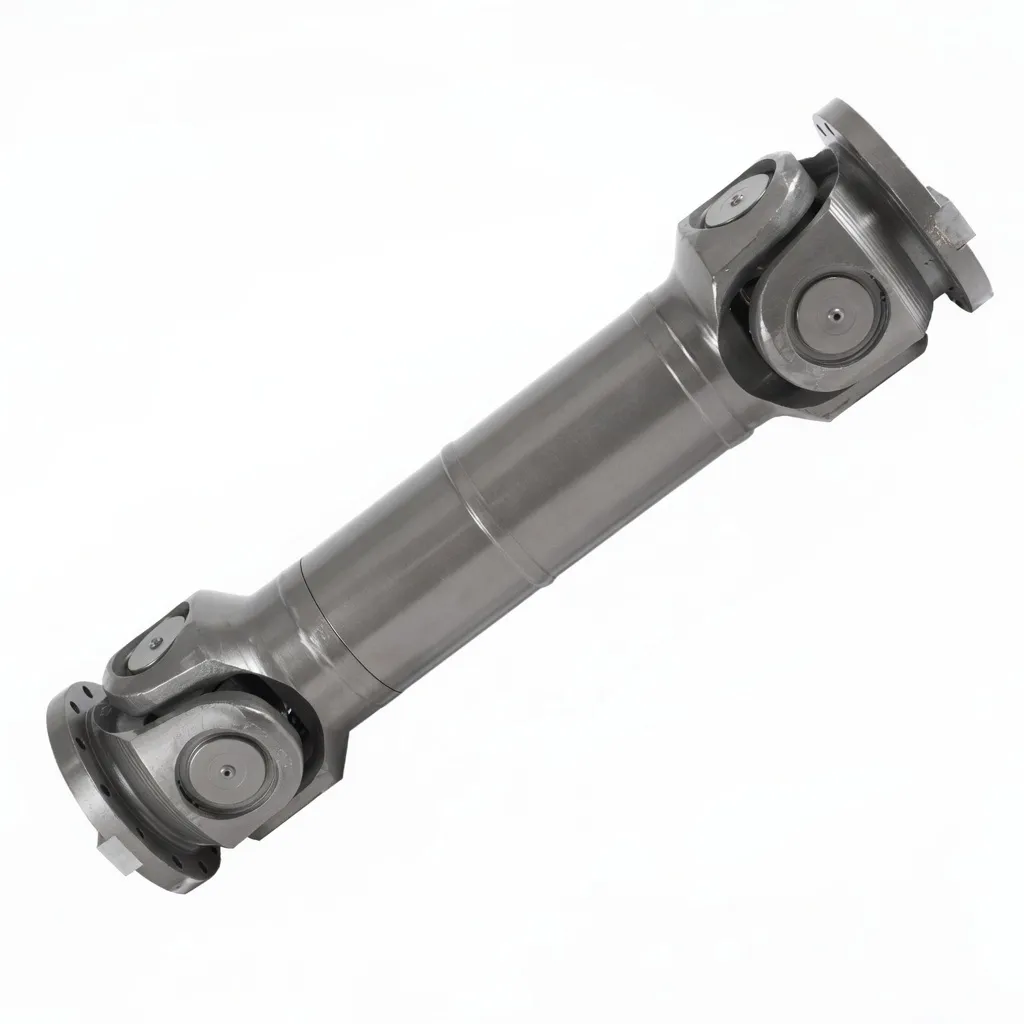
SWC-BH Standard Flex Welding Type Universal Coupling – 35CrMo alloy steel cardan shaft, ISO 9001 certified. Ever Power Flange Couplings Australia Ltd., Condell Park NSW 2200.
What Distinguishes the SWC-BH from Other Universal Joint Types
The SWC-BH falls into the welding-type subset of the SWC universal coupling family, distinguished from the flange-type variants (SWC-BF and similar) by how it connects to the driven shafts. Where flange-type couplings bolt to existing flanged shaft stubs through machined hub interfaces, the welding-type connects directly to the shaft end with a circumferential weld. This eliminates the bolt-circle tolerance, the hub register tolerance, and the bolt preload variability that together limit how stiffly a flanged coupling can transmit reversing torque.
For applications where the drive frequently reverses under load — rolling mill stands handling material in alternating passes, crane drives that must brake against load, or test rigs simulating engine load — the welded connection delivers a torsional stiffness step-change compared to bolted alternatives. The trade-off is that the welding process must be performed by qualified welders to the appropriate procedure, and the shaft end material must be weldable. For 35CrMo and similar alloy steels common on rolling mill spindles, this is a standard fabrication operation.
Standard Flex Configuration Explained
The ‘Standard Flex’ designation in the SWC-BH code refers to the intermediate shaft length, not the flex angle itself. Standard Flex sits between the Short Flex (SWC-DH) and Long Flex (SWC-CH) variants — providing the intermediate shaft length that suits the majority of rolling mill spindle and crane drive installations. The telescoping splined section in the intermediate shaft accommodates the axial movement that occurs as the flex angle varies — when the input and output shafts move closer or further apart, the spline slides without binding or generating reaction force back into the bearings.
Construction and Material Specification
Material selection and heat treatment determine the SWC-BH’s service life under cyclic high-torque loading. The yokes and intermediate shaft are forged from 35CrMo alloy steel — a chromium-molybdenum grade that combines high tensile strength with the impact toughness required for shock loading. After forging, the components undergo a full quench-and-temper heat treatment cycle, with the surface of the trunnion bore and the spline teeth additionally induction-hardened to HRC 58 to 64. This combination provides hard, wear-resistant contact surfaces with a tough, fatigue-resistant core.
The trunnion cross — the four-armed component that carries the needle bearings and transmits torque between the two yokes — is forged as a single piece from the same 35CrMo alloy, then case-hardened on the bearing journals. Sealed needle roller bearings are pre-lubricated at assembly with the appropriate grease grade for the operating temperature range. The seals retain lubricant for the design service life under normal operating conditions, eliminating the periodic re-greasing requirement of older universal joint designs.
Maximum torsional stiffness — eliminates the bolt-circle tolerance chain that limits flanged hub stiffness. Suitable for high-frequency reverse-load applications including rolling mill spindles and crane drive systems.
Chromium-molybdenum alloy steel forging combines high tensile strength with impact toughness. Full quench-and-temper heat treatment cycle followed by induction hardening on trunnion journals and spline teeth to HRC 58-64.
Pre-lubricated at assembly with operating-temperature-appropriate grease. Lifetime sealing eliminates the periodic re-greasing required by older universal joint designs, reducing scheduled maintenance burden.
Substantially exceeds the 5 to 10 degree operating angles of typical rolling mill spindles, providing significant headroom for foundation settlement, thermal growth, and load-induced shaft movement during operation.
Accommodates axial movement as the flex angle changes during operation. The splined section slides freely without reaction force back into the supporting bearings of driver and driven equipment.
Full material traceability, dimensional inspection records, and heat treatment certificates available on request. Standard inclusion in NSW mining and heavy industry equipment dossier documentation packages.
Industrial Applications Across Heavy Industry
The SWC-BH covers a wide application envelope across Australian heavy industry — wherever a shaft drive needs to operate at significant angles while transmitting high torque, the welded-yoke universal coupling family is the engineering default. The 0.16 to 1,000 kN·m torque range covers everything from small auxiliary drives on rolling mills to the main drive spindles of finishing mill stands handling structural steel and heavy plate.
Rolling Mill Drive Spindles — Primary Application
Hot rolling mill and cold rolling mill drive spindles are the largest single application category for SWC-BH couplings worldwide. The spindle connects the mill main drive gearbox to the work roll, transmitting torque through angles that vary continuously as the work roll height adjusts during each pass. The 22-degree flex capacity, the high torque ratings, and the welded shaft connection’s torsional stiffness combine to make this the engineering default for plate, bar, and structural rolling mill installations.
Crane Drives, Cranes, and Heavy Hoisting
Overhead crane long-travel and cross-travel drives use SWC-BH couplings between the gearbox output and the trolley or bridge drive wheels. The cardan shaft accommodates the small misalignments between gearbox and wheel that result from rail surface variation, structural deflection under load, and thermal growth across the crane span. Container terminal cranes, steel mill cranes, and heavy-machinery erection cranes across Australia specify this industrial shaft coupling for its reliability under reversing-load duty cycles.
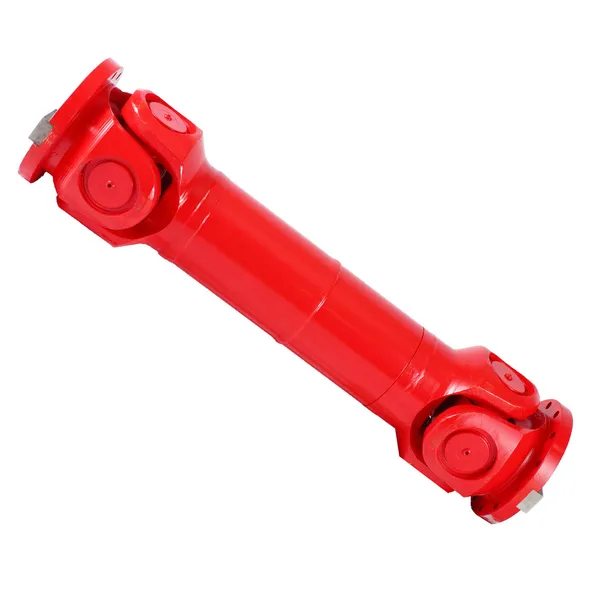
SWC-BH yoke and trunnion cross assembly – induction-hardened HRC 58-64 trunnion with sealed needle bearings.
Selecting the Correct SWC-BH Size for Your Drive
Universal coupling sizing starts with the nominal torque required by the driven machine under continuous operation. To this figure, apply the service factor appropriate to the duty class — typically 1.0 for steady-state pump and fan drives, 1.5 for moderate-shock crane and mining drives, and up to 2.5 for rolling mill spindle service with high-frequency torque reversal. The resulting design torque must not exceed the SWC-BH nominal torque rating Tn for the selected size.
Second, verify the gyration diameter D fits within the available installation envelope. Third, confirm the operating flex angle is within the 22-degree rated capacity, with margin for unplanned misalignment from foundation settlement. Fourth, check the bore size D₂ accommodates the driven shaft diameters — if the shafts are larger than the standard bore range, the welded yoke can be machined to suit during fabrication.
Installation, Operation, and Maintenance Best Practice
Installation of a welded-yoke universal coupling is more involved than a flanged variant because the welding process becomes part of the installation sequence rather than a factory operation. The work must be performed by qualified welders using the appropriate weld procedure for the shaft material — typically 35CrMo to AS 1554 or equivalent international standards. The following sequence covers the standard installation workflow for new equipment or coupling replacement.
Both shaft ends must be machined square, free of burrs, and prepared for the welding procedure. Confirm material grade and verify weldability documentation. Pre-heat may be required for thicker sections — follow the weld procedure specification.
Slide each yoke onto its respective shaft to the design position. Confirm the welded joint clears any adjacent equipment that could be damaged by weld heat. Set up appropriate heat shielding for bearings and seals on adjacent components.
Apply small tack welds to hold each yoke in position. Run the assembly slowly by hand and verify the trunnion cross rotates smoothly — no binding indicates correct angular alignment between the two yokes. Adjust before completing the full weld.
Run the full circumferential weld in multiple passes per the weld procedure. Allow controlled cooling — sudden cooling can crack the heat-affected zone. Post-weld heat treatment may be specified for thicker sections; follow the engineering specification.
After cooling, inspect each weld for surface defects. Verify the final installed dimension matches the engineering drawing. For critical applications, magnetic particle or ultrasonic testing of the welds is specified in the equipment dossier.
Run the drive at progressively increasing speed up to full operating speed. Monitor vibration and trunnion temperature for the first 50 operating hours. Inspect bearings and seals at the first scheduled maintenance interval after commissioning.
OEM Cross-Reference and Order Specification
Cross-reference is available for Voith Turbo cardan shafts, Rexnord universal joint couplings, SKF universal couplings, and GKN industrial cardan shafts. When replacing a worn unit from any of these OEM ranges, provide our Sydney team with the OEM model code, the gyration diameter, the nominal torque rating, and the shaft connection method (welded or flanged). We confirm the equivalent SWC-BH size and any minor dimensional differences before generating the order.
Trunnion cross replacement kits are stocked separately at our Condell Park warehouse for the most commonly specified sizes. When the cross becomes the wear-limiting component (typically after 40,000 to 60,000 operating hours in normal service), the kit allows the yokes and intermediate shaft to be returned to service without procuring a complete new coupling assembly. Provide the SWC size code and we confirm cross kit availability and price within one business day.
Why Choose Ever Power Australia
Ever Power Flange Couplings Australia Ltd. is the dedicated Sydney flange coupling supplier for SWC-BH and the full SWC and SWP universal coupling range across New South Wales and Australia. Our Condell Park warehouse stocks the most commonly specified SWC-BH sizes for same-day dispatch on confirmed stock orders, with trunnion cross replacement kits also held locally. Custom intermediate shaft length, non-standard bore configuration, and full ISO 9001 quality documentation are standard services from our in-house engineering team. Cross-reference work for Voith, Rexnord, SKF, and GKN OEM equivalents is included without additional charge.
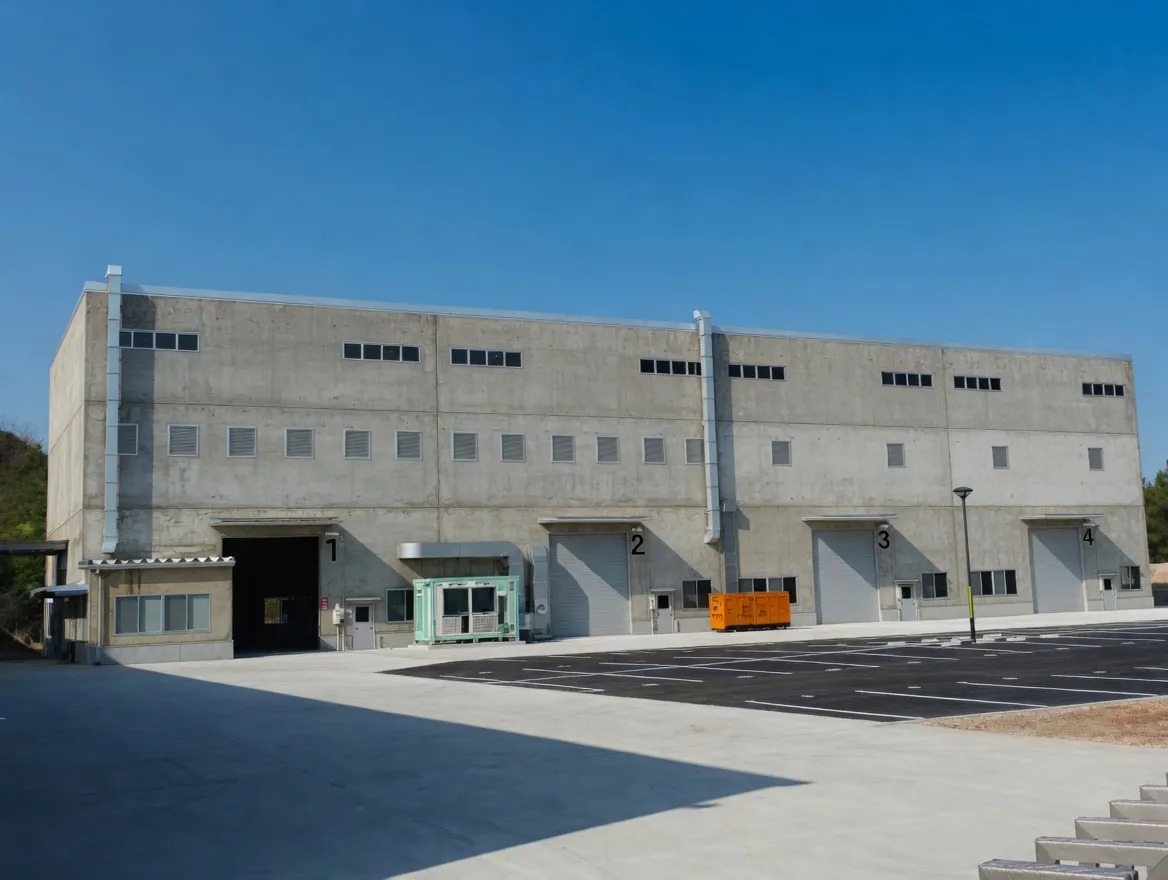
Ever Power manufacturing facility — ISO 9001 certified, 12,000 m², 108 dedicated coupling machines, 20+ years of production experience.
Every order placed with our Sydney team is backed by full material traceability, dimensional inspection certificates on request, and direct access to the engineers who specified, machined, and packed your coupling. We do not subcontract technical support — when you phone +61 2 9708 3322 during NSW business hours, you reach the people who actually know the product.
Frequently Asked Questions
Quick answers from our Sydney technical team. Contact us for application-specific guidance.
1. What is the difference between SWC-BH, SWC-CH, and SWC-DH? +
2. Can the SWC-BH be installed by site welders, or does it require factory welding? +
3. How long does a trunnion cross typically last in service? +
4. Is the SWC-BH compatible with Voith Turbo cardan shaft specifications? +
5. How quickly can I receive an SWC-BH from your Sydney warehouse? +
Request a Quote — Sydney NSW Stock
Tell us your motor power, shaft diameter, and operating environment. Our New South Wales coupling team confirms availability and pricing within one business day, with same-day dispatch on standard sizes from Condell Park.
Ever Power Flange Couplings Australia Ltd. · 27 Harley Crescent, Condell Park NSW 2200 · [email protected]