Description
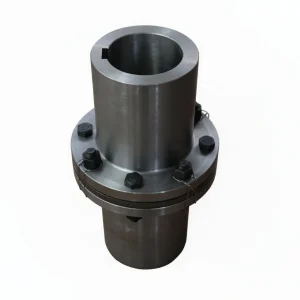
The SWC-BF is the Standard Flex flange-type variant of the SWC universal coupling family — the bolt-on alternative to the welded SWC-BH for installations where field welding is impractical, where the shaft material is not weldable, or where the coupling needs to be field-removable for routine maintenance. The flanged hub connection bolts directly to existing flanged shaft stubs through machined hub interfaces. This makes the SWC-BF the engineering choice for industrial pump, compressor, and conveyor drive installations where bolt-on installation is preferred over welded permanence.
SWC-BF Specifications and Dimensional Range
The SWC-BF range covers gyration diameters from 100 mm to 390 mm. Maximum flex angle is 15 degrees — lower than the welded SWC-BH (22°) because the bolted hub connection cannot match the torsional stiffness of a circumferential weld at extreme flex angles. The 15-degree limit is more than adequate for industrial pump, compressor, and conveyor applications where typical operating angles range from 1 to 5 degrees. Torque ratings match the SWC-BH equivalent sizes.
| Model | Gyration Ø D (mm) | Nominal Torque Tn (kN·m) | Fatigue Tn Tf (kN·m) | Flex Angle β (°) | Bore D₂ (mm) | Lmin (mm) |
|---|---|---|---|---|---|---|
| SWC100BF | 100 | 1.0 | 0.5 | ≤15° | 20–44 | 320 |
| SWC150BF | 150 | 4.0 | 2.0 | ≤15° | 30–65 | 420 |
| SWC200BF | 200 | 15 | 7.5 | ≤15° | 40–95 | 490 |
| SWC250BF | 250 | 32 | 16 | ≤15° | 55–115 | 590 |
| SWC285BF | 285 | 63 | 31.5 | ≤15° | 75–130 | 620 |
| SWC315BF | 315 | 100 | 50 | ≤15° | 85–150 | 680 |
| SWC390BF | 390 | 200 | 100 | ≤15° | 100–175 | 770 |
The flanged hub interface follows widely-used industrial dimensional conventions — bolt circle diameter, pilot register, and hub face thickness all match common industrial flange standards. This compatibility supports direct bolt-on installation against existing shaft flanges without machining or adapter plates. For non-standard flange interfaces, custom hub machining is available from our Sydney facility within standard production lead times.
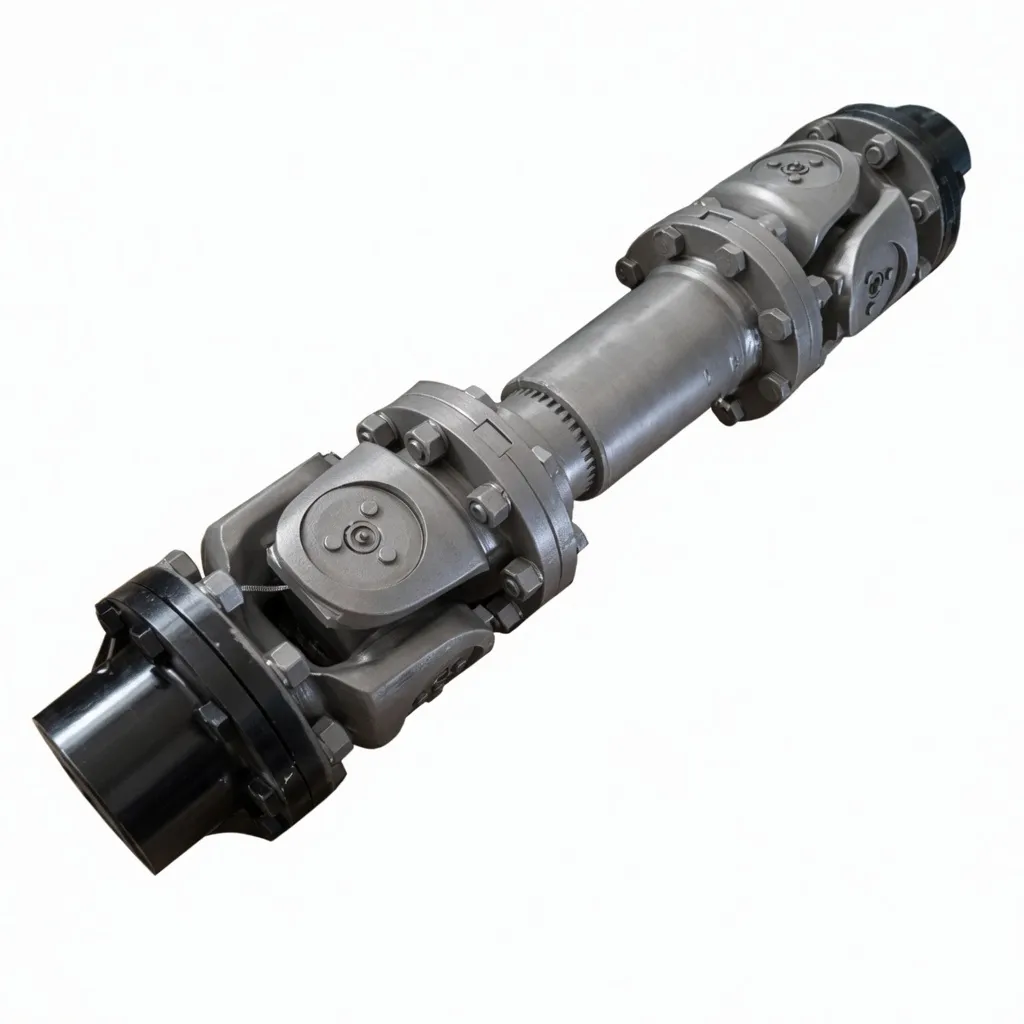
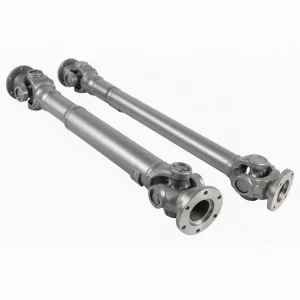
SWC-BF Standard Flex Flange Type Universal Coupling – bolted flanged hubs for field-removable installation. Ever Power Flange Couplings Australia Ltd.
What Distinguishes the SWC-BF from Other Universal Joint Types
The flange-type connection method is the defining engineering choice for SWC-BF specification. Where the welded SWC-BH variants commit the coupling permanently to the shaft, the flanged SWC-BF bolts onto existing flanged shaft stubs and can be removed for maintenance, replacement, or inspection without breaking the shaft connection. This benefit dominates the specification logic for industrial drives where periodic coupling inspection is part of the maintenance routine, or where shaft material restrictions prevent welding.
The trade-off is reduced maximum flex angle — 15 degrees versus 22 degrees on the welded variant. This is rarely a practical limitation because typical industrial drives operate at 1 to 5 degree flex angles, well below either limit. The flanged variant is unsuitable only for extreme-flex applications such as rolling mill spindle drives, where the welded SWC-BH remains the engineering choice.
Flange Interface and Bolt Pattern Compatibility
Standard flange interfaces follow widely-used industrial bolt circle and pilot diameter conventions. The SWC-BF hub bolts to existing shaft flanges through this standard interface, allowing direct retrofit replacement of older flange-type cardan shafts without modifying the existing shaft connections. Where the existing flange interface is non-standard (custom OEM equipment), our Sydney engineering team machines the hub to match — typically within standard production lead times.
Construction and Material Specification
Material specification follows the same 35CrMo alloy steel forging used across the SWC range. The full quench-and-temper heat treatment cycle is followed by induction hardening on the trunnion journals and spline teeth to HRC 58-64. The flanged hub face is machined to ISO surface finish standards to ensure proper bolt preload distribution and seal integrity at the bolted interface.
Sealed needle roller bearings are pre-lubricated at assembly. The flange bolts are typically supplied as high-tensile structural bolts (Property Class 10.9 or 12.9 depending on the size class) with appropriate washers. Bolt torque specifications are supplied with each coupling shipment and must be followed precisely — under-torqued bolts allow micro-movement at the interface, leading to fretting wear; over-torqued bolts risk thread stripping or bolt failure.
Field-removable installation without welding. Bolts to existing flanged shaft stubs through standard industrial flange interface. Suitable where shaft material is not weldable or where periodic coupling removal is required for maintenance.
Identical material and heat treatment to the welded SWC-BH equivalent. Trunnion cross and bearings interchangeable between welded and flanged variants of the same gyration diameter.
Pre-lubricated at assembly for the design service life. Lifetime sealing eliminates periodic re-greasing required by older universal joint designs.
Substantial headroom above the 1 to 5 degree operating angles typical of industrial pump, compressor, and conveyor drives. Lower than welded variant due to bolted joint stiffness limitation.
Bolt circle diameter, pilot register, and hub face dimensions follow widely-used industrial flange conventions. Direct retrofit compatibility with most existing flange-type cardan shaft installations.
Coupling can be removed for inspection, replacement, or repair without breaking the shaft connection. Reduces maintenance complexity compared to welded variants and supports planned-maintenance routines on industrial drives.
Industrial Applications Across Heavy Industry
SWC-BF applications cluster around industrial pump, compressor, and conveyor drives where the bolt-on installation method is the deciding factor. The lower flex angle limit compared to welded variants is rarely a practical constraint for these applications because typical operating angles are well within the 15-degree envelope. The field-removability is the defining engineering benefit.
Industrial Pump and Compressor Drives
Centrifugal pump motor drives, positive displacement pump installations, and large air compressor drives across NSW and Australian industry commonly specify SWC-BF couplings between the motor output and the driven equipment input. The bolt-on installation simplifies field replacement at planned maintenance windows. The 15-degree flex angle accommodates the typical 1 to 3 degree operating offset of well-aligned industrial drives with substantial headroom for foundation movement.
Belt Conveyor Drives and Material Handling
Bulk material handling conveyor head drives use SWC-BF couplings between the gearbox output and the head pulley shaft. The flanged installation supports periodic removal for conveyor maintenance without disturbing the gearbox or motor mounting. Container terminal conveyor drives, bulk port conveyor drives, and mine surface conveyors across Australia commonly specify this industrial shaft coupling variant for its reliable bolt-on service.
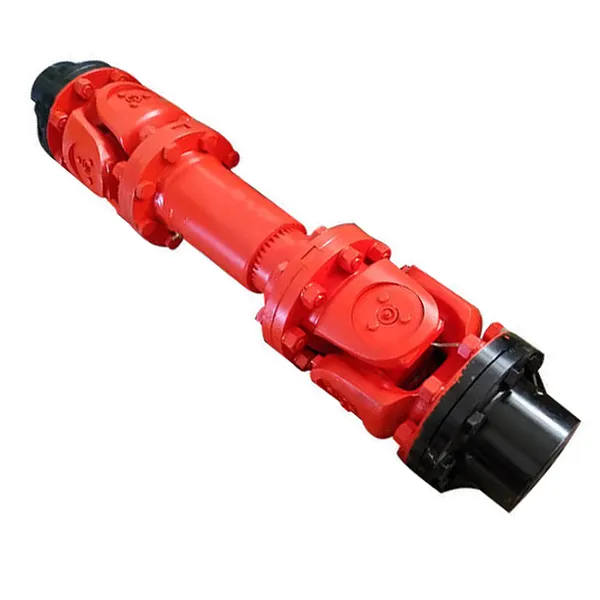
SWC-BF flanged hub – bolt-on connection to existing shaft flanges without site welding.
Selecting the Correct SWC-BF Size for Your Drive
Selection between SWC-BF and SWC-BH depends primarily on installation and maintenance philosophy rather than torque or flex capacity. If the shaft material is weldable and the coupling will not need to be removed during the equipment lifetime, the welded SWC-BH offers higher torsional stiffness and 22-degree flex angle. If the shaft material restricts welding, or if periodic coupling removal is part of the maintenance plan, the bolted SWC-BF is the correct choice.
Verify that the existing flange interface (bolt circle, pilot diameter, hub face thickness) matches the SWC-BF standard before order generation. Where the existing interface is non-standard, custom hub machining is available from our Sydney facility — provide a dimensioned drawing of the existing flange interface for engineering review.
Installation, Operation, and Maintenance Best Practice
Installation of a flanged variant is substantially simpler than welded installation because no field welding is required. The complete coupling assembly bolts onto existing shaft flanges through the standard interface, with bolt torque applied to the specified value. Field installation time is typically under 2 hours for an experienced maintenance crew.
Verify existing shaft flange dimensions match SWC-BF hub specifications. Clean flange faces to remove debris, corrosion, and surface contamination. Inspect bolt holes for damage that would compromise bolt preload.
Lift the coupling into position and engage the pilot register of each hub with the corresponding shaft flange. Verify smooth engagement without interference — pilot fit should be a light push fit, not requiring force.
Install all flange bolts and hand-tighten in a cross pattern. Do not fully torque any bolt before all bolts are installed and hand-tightened. This prevents uneven preload distribution and pilot misalignment.
Torque all bolts to 30 percent of final value in cross pattern. Repeat at 60 percent. Then apply final torque. Use a calibrated torque wrench — under-torque allows fretting; over-torque risks bolt thread damage.
After bolt torque is complete, verify the final installed flex angle and parallel offset are within the rated capacity. Adjust motor or driven machine position if alignment is outside the operating envelope.
Run at progressively increasing speed to full operating speed. Monitor vibration and bolt preload for the first 50 hours. Recheck bolt torque at the first scheduled maintenance interval after commissioning.
OEM Cross-Reference and Order Specification
Cross-reference is available for Voith Turbo flanged cardan shafts, Rexnord flange-type universal joint couplings, and SKF flanged industrial couplings. Provide OEM model code, gyration diameter, nominal torque, and flange interface dimensions for direct equivalent confirmation. Custom hub interfaces machined to non-standard OEM flange specifications are handled by our Sydney engineering team within standard production lead times.
For retrofit projects replacing worn OEM flanged universal couplings, send us a dimensioned drawing of the existing flange interface or a photograph with measurements. We confirm the SWC-BF equivalent and identify any custom machining requirements before order generation, eliminating fit surprises on site.
Why Choose Ever Power Australia
Ever Power Flange Couplings Australia Ltd. supplies the SWC-BF flange-type universal coupling range from our Sydney warehouse with the commonly specified sizes held in stock for same-day dispatch. Custom hub machining for non-standard flange interfaces is handled by our in-house engineering and machine shop without the lead time penalty of overseas supply chains. Cross-reference work for Voith, Rexnord, and SKF flanged universal coupling equivalents is included without additional charge.
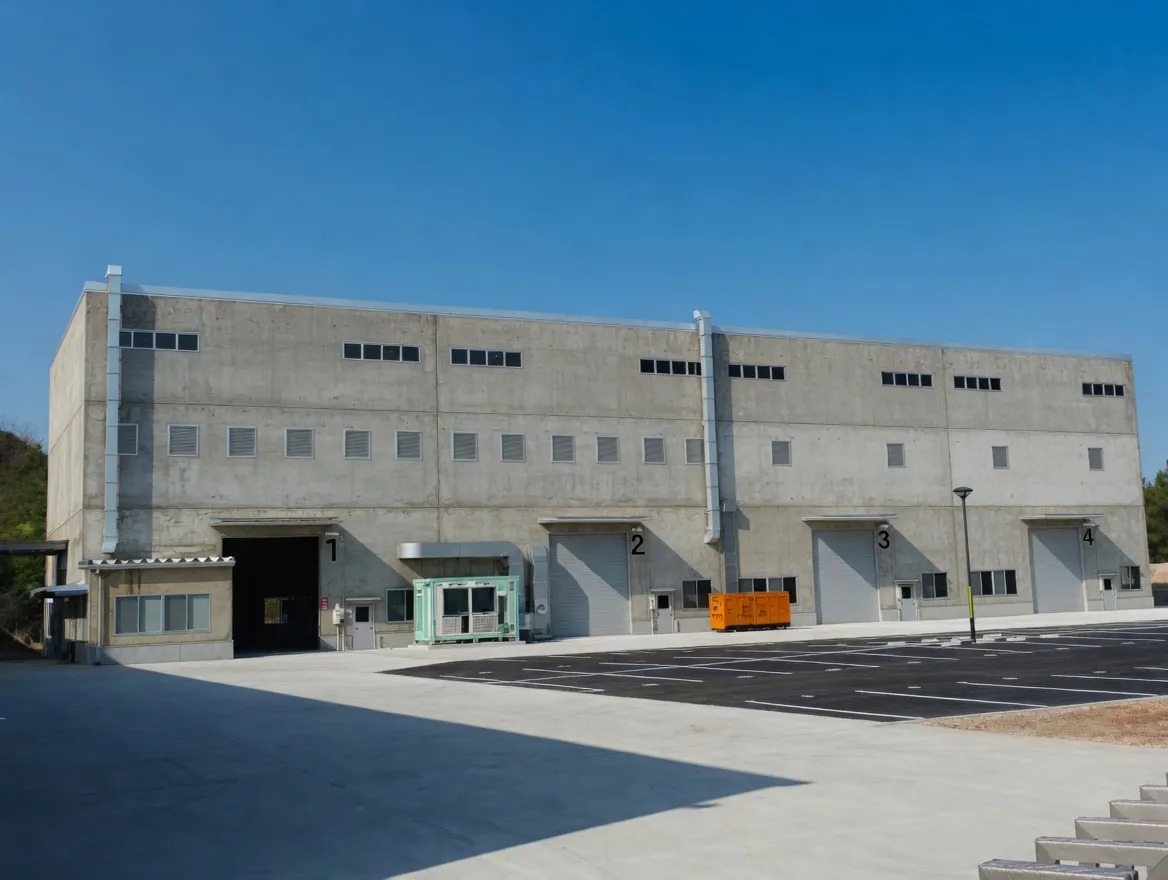
Ever Power manufacturing facility — ISO 9001 certified, 12,000 m², 108 dedicated coupling machines, 20+ years of production experience.
Every order placed with our Sydney team is backed by full material traceability, dimensional inspection certificates on request, and direct access to the engineers who specified, machined, and packed your coupling. We do not subcontract technical support — when you phone +61 2 9708 3322 during NSW business hours, you reach the people who actually know the product.
Frequently Asked Questions
Quick answers from our Sydney technical team. Contact us for application-specific guidance.
1. When should I choose SWC-BF over SWC-BH? +
2. Is the SWC-BF torque rating the same as SWC-BH for the same size? +
3. Can I retrofit an SWC-BF in place of a worn OEM flange-type cardan shaft? +
4. What bolt torque should I apply to the SWC-BF flange bolts? +
5. How quickly can I receive an SWC-BF from your Sydney warehouse? +
Request a Quote — Sydney NSW Stock
Tell us your motor power, shaft diameter, and operating environment. Our New South Wales coupling team confirms availability and pricing within one business day, with same-day dispatch on standard sizes from Condell Park.
Ever Power Flange Couplings Australia Ltd. · 27 Harley Crescent, Condell Park NSW 2200 · [email protected]