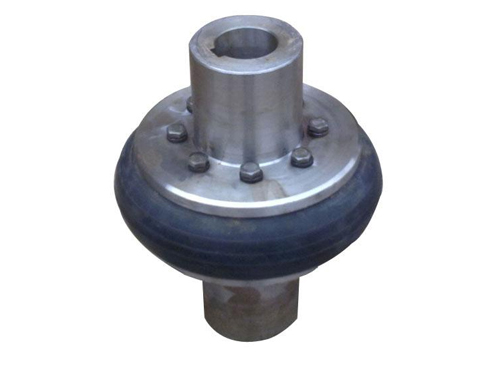
JMⅡ hole basic diaphragm coupling
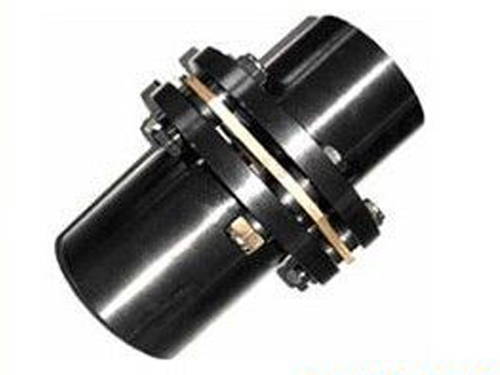
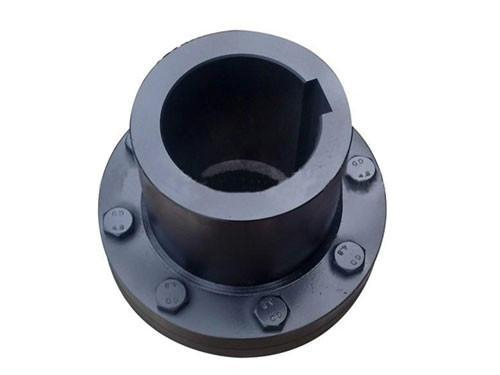
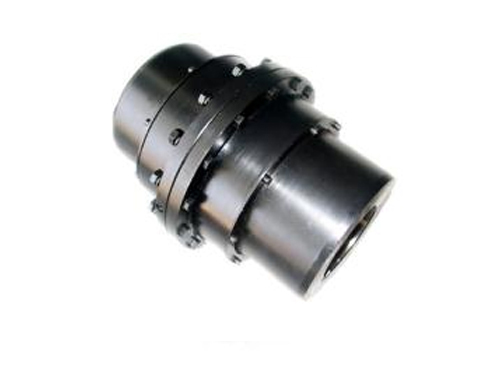
JMⅡ hole basic typeDiaphragm couplingIt is composed of several groups of diaphragms (stainless steel thin plate) which are connected with two halves of the coupling in a staggered manner with bolts. Each group of diaphragms is composed of several stacked ones. The diaphragms are divided into connecting rod type and whole piece type of different shapes.
The JMⅡ hole basic diaphragm coupling relies on the elastic deformation of the diaphragm to compensate for the relative displacement of the connected two shafts. It is a flexible coupling with metal elastic elements. It does not require lubrication, has a compact structure, and has a long service life. No rotation gap, not affected by temperature and oil pollution, acid and alkali resistance, suitable for shaft transmission in high temperature, high speed, and corrosive medium working conditions, and widely used in shaft transmission of various mechanical devices, such as Water pumps (especially high-power and chemical pumps), fans, compressors, hydraulic machinery, petroleum machinery, printing machinery, textile machinery, chemical machinery, mining machinery, metallurgical machinery, aviation (helicopters), high-speed power transmission systems for ships, After being dynamically balanced, it is relatively common to apply to high-speed transmission shafting.
Compared with gear coupling, JMⅡ hole basic diaphragm coupling has no relative sliding, no lubrication, sealing, no noise, basically no maintenance, more convenient manufacturing, and can partially replace gear coupling.
Tuning is installingThe important links can be realized by the following methods according to the types of machinery and equipment and the requirements for adjustment:
1. Use a dial indicator to measure the runout values on the end face and outer circle of the coupling mounting plate. This method is consideredThe exact method, but a little troublesome.
2. Use two dial gauges to measure the data on the outer circle of the coupling mounting plate at the same time. This method is good and fast. It does not need to consider the change of the shaft end, especially in the field can easily and easily complete the measurement work.
3. Straightedge and inner caliper method, this method is suitable for occasions with low requirements and low precision.
In order to facilitate the installation, put the two half couplings in the 120-150 incubator or oil tank for preheating, so that the inner hole size is enlarged and it is easy to install.After installation, the shaft head should not protrude from the end surface of the half coupling, so that it is flush and level.Detect the distance between the two halves of the coupling: take the average of the readings of 3-4 points measured along the two inner sides of the flange of the half of the coupling, and the sum of the measured dimensions of the extension and the two diaphragm sets, both The error should be controlled within the range of 0-0.4mm.Roughly align the active and passive half couplings on the host,Alignment steps for alignment installation.Note: Rough alignment: just useSimple means, use a ruler or vernier caliper and caliper to control whether the large end faces of the two halves of the coupling are relatively parallel.Precise alignment: is to use a dial indicator to carry out itposition.Attract the watch seat to be active or passive.
After the installation is complete, manually turn the car to check whether there is a gap between the diaphragm set and the screw hole; whether there is an opening between the diaphragms, if there is an opening, the installation accuracy is not in place, and the meter should be printed again after the foundation is fully compressed. Correct it to see if there is an over-standard error.Otherwise, it is very easy to damage the coupling and diaphragm or affect the life of the coupling.
JMⅡ hole basic diaphragm coupling parameters
| Allowable compensation | model | |||
| JMⅡ1~JMⅡ8 | JMⅡ9~JMⅡ17 | JMⅡ18~JMⅡ26 | JMⅡ27~JMⅡ30 | |
| Axial △x/min | 1 | 2.5 | 4 | 6 |
| Angular △α | 1 ° | |||
| model | Nominal torque Tn /Nm | 瞬时LTorque Tmax /Nm | LRotating speed nmax r / min | Axle hole straight Diameter d1, d2 | Length of shaft hole | D | D1 | t | Torsional stiffness × 10 | 质量 Kg | Moment of inertia kg.㎡ | |
| J1 type Y type | L recommended | |||||||||||
| L | ||||||||||||
| JMⅡ1 | 40 | 63 | 10700 | 14-28 | 27-62 | 35 | 80 | 39 | 8±0.2 | 0.37 | 0.9 | 0.0005 |
| JMⅡ2 | 63 | 100 | 9300 | 20-38 | 38-82 | 40 | 92 | 53 | 0.45 | 1.4 | 0.0011 | |
| JMⅡ3 | 100 | 200 | 8400 | 25-45 | 44-112 | 45 | 102 | 63 | 0.56 | 2.1 | 0.002 | |
| JMⅡ4 | 250 | 400 | 6700 | 30-55 | 60-112 | 55 | 128 | 77 | 11±0.3 | 0.81 | 4.2 | 0.006 |
| JMⅡ5 | 500 | 800 | 5900 | 35-65 | 60-142 | 65 | 145 | 91 | 1.2 | 6.4 | 0.012 | |
| JMⅡ6 | 800 | 1250 | 5100 | 40-75 | 84-142 | 75 | 168 | 105 | 14±0.3 | 1.42 | 9.6 | 0.024 |
| JMⅡ7 | 1000 | 2000 | 4750 | 45-80 | 84-172 | 80 | 180 | 112 | 15±0.4 | 1.9 | 12.5 | 0.0365 |
| JMⅡ8 | 1600 | 3150 | 4300 | 50-85 | 84-172 | 200 | 120 | 2.35 | 15.5 | 0.057 | ||
| JMⅡ9 | 2500 | 4000 | 4200 | 55-85 | 84-172 | 205 | 20±0.4 | 2.7 | 16.5 | 0.065 | ||
| JMⅡ10 | 3150 | 5000 | 4000 | 55-90 | 84-172 | 90 | 215 | 128 | 3.02 | 19.5 | 0.083 | |
| JMⅡ11 | 4000 | 6300 | 3650 | 60-95 | 107-172 | 100 | 235 | 132 | 23±0.5 | 3.46 | 25 | 0.131 |
| JMⅡ12 | 5000 | 8000 | 3400 | 60-100 | 107-212 | 250 | 145 | 3.67 | 30 | 0.174 | ||
| JMⅡ13 | 6300 | 10000 | 3200 | 63-110 | 107-212 | 110 | 270 | 155 | 5.2 | 36 | 0.239 | |
| JMⅡ14 | 8000 | 12500 | 2850 | 65-110 | 107-212 | 115 | 300 | 162 | 27±0.6 | 7.8 | 45 | 0.38 |
| JMⅡ15 | 10000 | 16000 | 2700 | 70-125 | 107-212 | 125 | 320 | 176 | 8.43 | 55 | 0.5 | |
| JMⅡ16 | 12500 | 20000 | 2450 | 75-130 | 107-252 | 140 | 350 | 186 | 32±0.7 | 10.23 | 75 | 0.85 |
| JMⅡ17 | 16000 | 25000 | 2300 | 80-140 | 132-252 | 145 | 370 | 203 | 10.97 | 85 | 1.1 | |
| JMⅡ18 | 20000 | 31500 | 2150 | 90-160 | 132-302 | 165 | 400 | 230 | 13.07 | 115 | 1.65 | |
| JMⅡ19 | 25000 | 40000 | 1950 | 100-170 | 167-302 | 175 | 440 | 245 | 38±0.9 | 14.26 | 150 | 2.69 |
| JMⅡ20 | 31500 | 50000 | 1850 | 110-180 | 167-302 | 185 | 460 | 260 | 22.13 | 170 | 3.28 | |
| JMⅡ21 | 35500 | 56000 | 1800 | 120-200 | 167-282 | 200 | 480 | 280 | 23.7 | 200 | 4.28 | |
| JMⅡ22 | 40000 | 63000 | 1700 | 130-200 | 202-352 | 210 | 500 | 295 | 24.6 | 230 | 5.18 | |
| JMⅡ23 | 50000 | 80000 | 1600 | 140-220 | 202-352 | 220 | 540 | 310 | 44±1 | 29.71 | 275 | 7.7 |
| JMⅡ24 | 63000 | 100000 | 1450 | 150-240 | 202-410 | 240 | 600 | 335 | 50±1.2 | 32.64 | 380 | 9.3 |
| JMⅡ25 | 80000 | 125000 | 1400 | 160-250 | 242-352 | 255 | 620 | 350 | 50±1.2 | 37.69 | 410 | 15.3 |
| JMⅡ26 | 90000 | 140000 | 1300 | 180-260 | 242-410 | 275 | 660 | 385 | 50.43 | 510 | 20.9 | |
| JMⅡ27 | 112000 | 180000 | 1200 | 190-280 | 282-470 | 295 | 720 | 410 | 60±1.4 | 71.51 | 620 | 32.4 |
| JMⅡ28 | 140000 | 200000 | 1150 | 220-300 | 282-470 | 300 | 740 | 420 | 93.37 | 680 | 36 | |
| JMⅡ29 | 160000 | 224000 | 1100 | 240-320 | 330-470 | 320 | 770 | 450 | 114.53 | 780 | 43.9 | |
| JMⅡ30 | 180000 | 280000 | 1050 | 250-340 | 330-550 | 350 | 820 | 490 | 130.76 | 950 | 60.5 | |
Hebei JMⅡ hole basic diaphragm coupling Hebei JMⅡ hole basic diaphragm coupling