LLB tire coupling
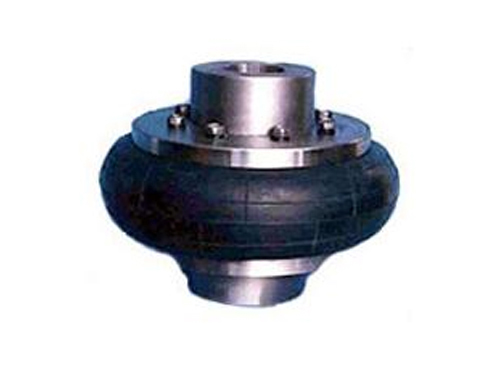
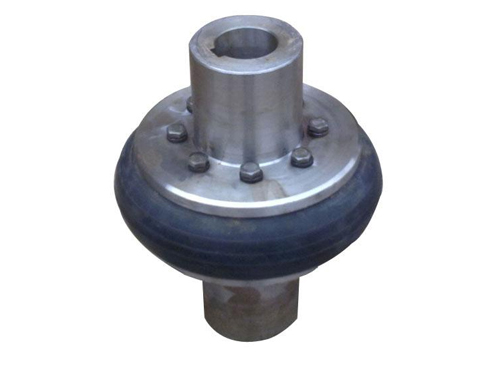
The LLB tire coupling is a highly elastic coupling with good shock absorption and buffering and inter-axis offset compensation performance. The working temperature is -20~80 degrees Celsius, and the transmission torque is 10~20000N.M. It is suitable for The working conditions are humid, dusty, shock, vibration, forward and reverse, and frequent starting. It is easy to disassemble and assemble, because the elastic element is an integral tire body, which is convenient for disassembly and maintenance without lubrication.
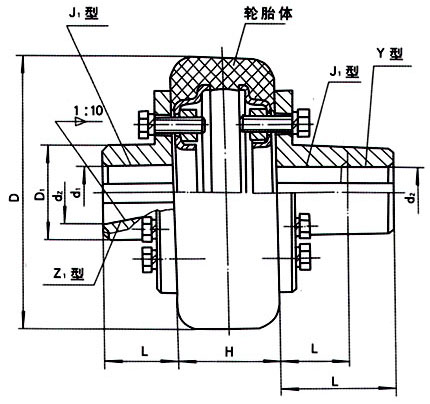
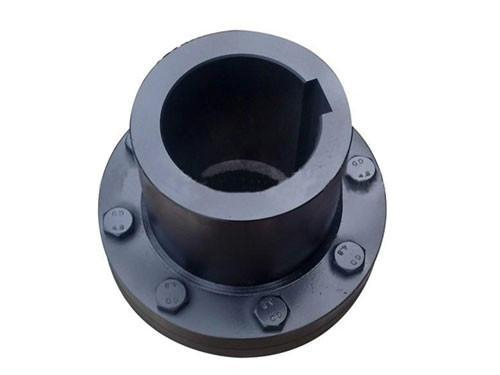
LLB tire coupling is a torsional elastic coupling, composed of two flanges with shaft holes and a rubber tire body. It has excellent shaft offset compensation and cushioning performance.
Tire couplings are divided into two categories: convex type and concave type. The convex type is divided into three types: integral type with frame, integral type without bone and radial cut type.The inner side of the tire ring is bonded to the steel frame by a vulcanization method, and the bolt holes on the frame are welded with nuts.When assembling, bolts are used to connect the flanges of the two halves of the coupling, and the torque is transmitted by the friction generated between the tire and the flange end surface by tightening the bolts. The torsional shear deformation of the tire ring occurs when the tire ring is working, so the tire coupling It has a high elasticity, a large ability to compensate the relative displacement of the two shafts, and has good damping, and has a simple structure, does not require lubrication, and is relatively convenient for assembly and disassembly and maintenance.The disadvantage is that the load capacity is not high and the overall size is large. As the relative torsion angle of the two shafts increases, the tire shape is twisted, and the axial size is slightly reduced, which will generate a large additional axial force on the two shafts. Increase the bearing load and reduce the life.When the tire coupling is running at high speed, the outer edge of the tire expands outward due to the centrifugal force, which will further increase the additional axial force.For this reason, measures should be taken when installing the coupling to make the direction of stress in the tire opposite to the direction of stress generated during work to offset part of the additional axial force and achieve the working conditions of the coupling and the two bearings.
Due to various reasons, the center of mass or inertial principal axis of the tire coupling does not coincide with the axis of rotation. During operation, the phenomenon of unbalanced centrifugal inertial force, centrifugal inertial couple and dynamic deflection (vibration shape) will be generated, which is called the non-uniformity of the rotor. Balance phenomenon, this kind of imbalance phenomenon will inevitably cause the vibration of the shaft system, which will affect the normal operation and service life of the machine, so we should pay attention to it.
In order to correct orTo minimize the unbalance of the tire coupling, you should select the appropriate balance level according to your needs, and after the product is manufactured and installed on the machine, on the balance (correction) plane designated by the coupling, increase Or reduce the appropriate quality to achieve the balance level requirements. This process is called balance correction, or balance for short.
The degree of unbalance (unbalance U) is usually expressed by the product mr of the mass m of the rotor and the distance r from the center of mass to the axis of rotation of the rotor, which is called the product of mass diameter. It is also expressed by the product of mass diameter per unit mass, which is called eccentricity. Distance e (not geometrically eccentric.) The mass diameter product mr is a relative quantity related to the mass of the rotor, while the eccentricity e is independent of the mass of the rotorQuantity. The former is more intuitive and is often used for specific balancing operations of a given rotor, while the latter is used to measure the pros and cons of the rotor balance or to check the balance accuracy. The balance grade standard of the tire coupling is evaluated by e.