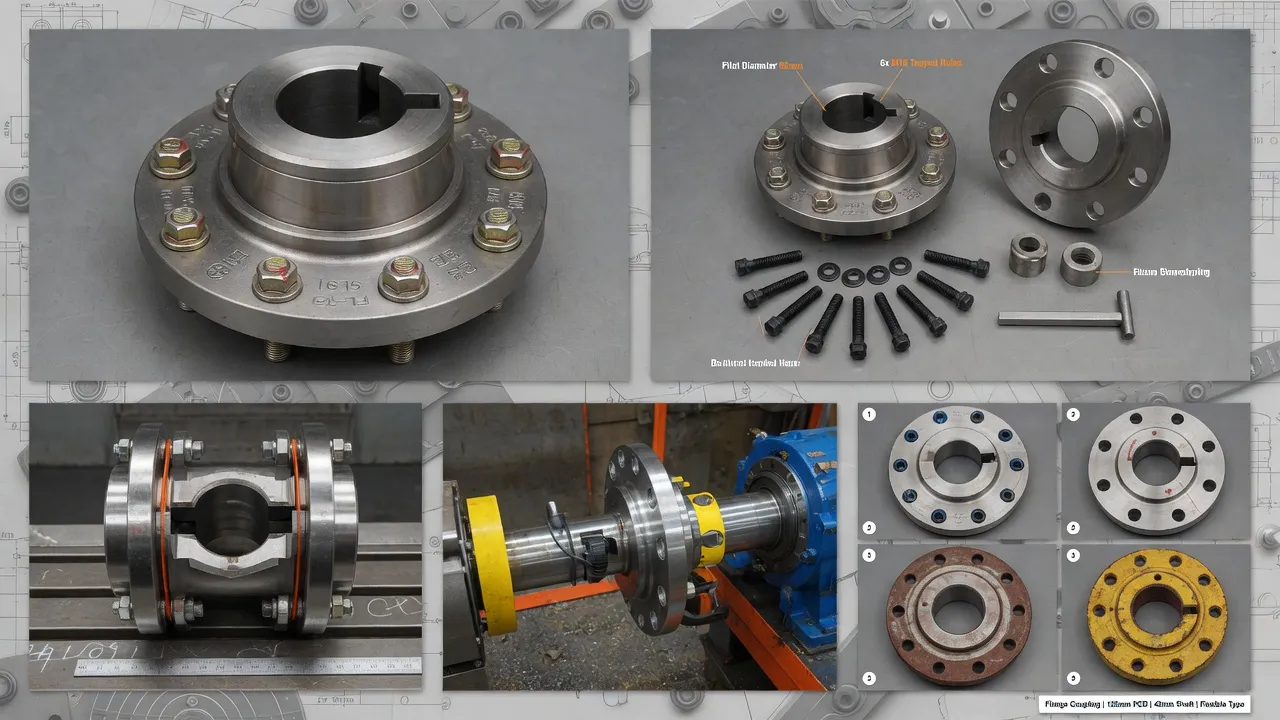
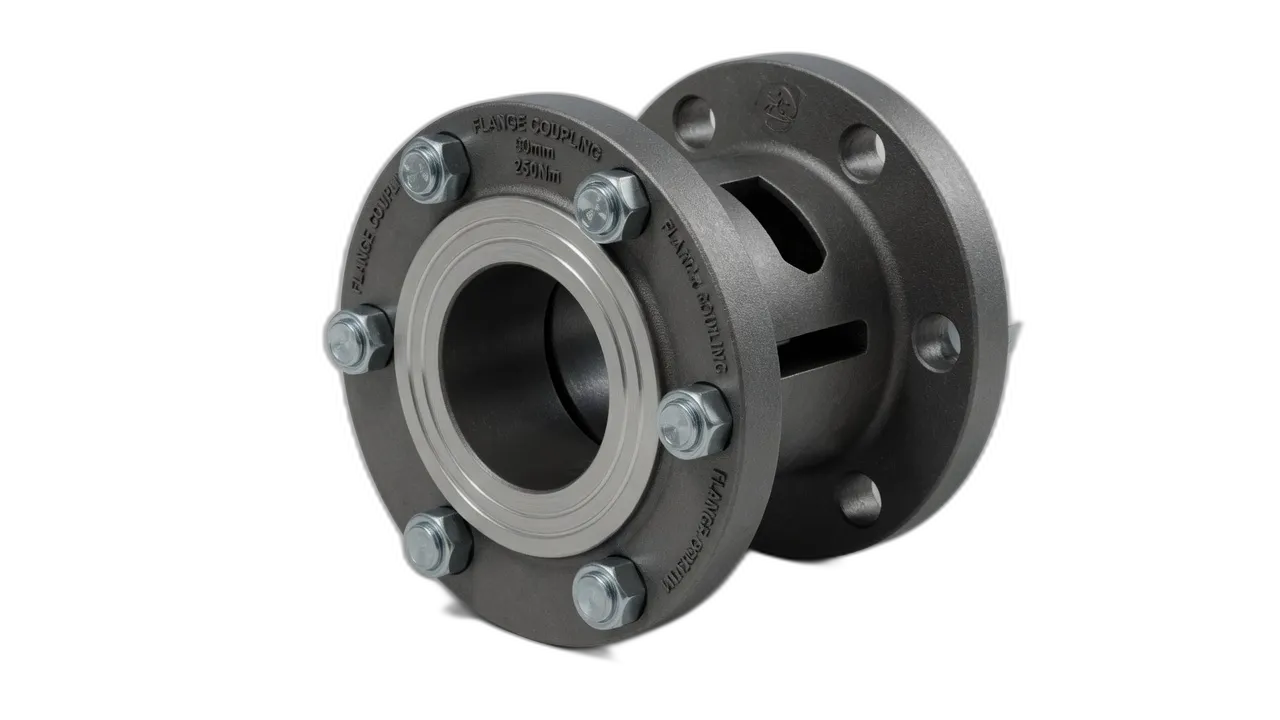
Specifying a shaft coupling for OEM equipment involves a set of considerations that differ from maintenance replacement or one-off project coupling selection. The OEM engineer must select a coupling that is correctly rated for the product’s full operating range, dimensionally compatible with the production line assembly process, documentable for the regulatory requirements of the markets the product serves, and available at the right price point and lead time for the production schedule. The EP-YL rigid flange coupling and the F-type flexible tyre coupling are the two Ever Power products most frequently incorporated into OEM equipment designs across Australian pump, fan, and industrial drive manufacturers.
The OEM Coupling Selection Process
1
Define the Torque Envelope Across the Product RangeStart with the highest-torque model in the product range and calculate the design torque: T = 9,550 × max kW ÷ min RPM × service factor. Select a coupling size that meets this design torque with margin. Verify that smaller sizes in the same coupling family cover the lower-torque models — this enables standardisation on one coupling family across the range.
2
Define the Bore Range RequiredIdentify the motor shaft diameters across all motor power options in the product range. The coupling must accommodate the largest bore without the hub becoming structurally inadequate, and the smallest bore must be achievable by machining the pilot bore down. Specify a pilot-bore coupling for maximum flexibility, with finished bores machined to your specification on delivery.
3
Confirm the DBSE for Your Machine DesignThe DBSE (distance between shaft faces) in your machine design must match the coupling’s specified axial gap. For flexible tyre couplings, the DBSE is defined by the tyre element’s natural length under the specified hub face separation — mismatching DBSE compresses or stretches the tyre element, reducing its torque capacity and fatigue life.
4
Define Environmental and Regulatory RequirementsIdentify the most demanding market or regulatory environment your product will be sold into. If your equipment goes into food processing, specify FDA-compliant elastomers. If it goes into marine applications, specify corrosion-resistant materials. If it goes into ATEX/IECEx zones, specify antistatic elastomers and non-sparking materials. The coupling specification for the most demanding market becomes the standard for the entire range — it simplifies inventory and ensures compliance across all markets.
5
Agree Documentation and Testing RequirementsDefine what documentation will accompany each coupling: dimensional drawing (always), torque rating datasheet (always), material certificate (for regulated markets), first-article inspection report (for new coupling introductions), and ongoing production inspection records (for quality-critical OEM programs). Establish these requirements at the supplier qualification stage, not at the first order.
Documentation Requirements by Market Sector
Market / Regulation
Minimum Documentation
Additional Requirements
General industrial Australia
Dimensional drawing + torque datasheet
None typically required
Food processing (FSANZ, SQF, BRC)
Material certificate + FDA compliance declaration for elastomers
Allergen declaration; hygiene design assessment
Marine (Lloyd’s, DNV-GL, BV)
Material certificate + balancing record
Classification society witnessed testing for safety-critical items
Mining (AS 2865, WHS Mines Reg)
Standard documentation
Ex certification (IECEx/ATEX) for underground coal zones
Pharmaceutical (GMP, TGA)
Material certificate + FDA compliance + surface finish records
Change control documentation; validated cleaning procedures
Oil & Gas (API, NORSOK)
Material certificate + balancing record + torsional analysis
Third-party inspection (TPI) for safety-critical drives
Volume Supply Arrangements for OEM Programs
For OEM programs producing consistent volumes — typically 50+ units per year of the same coupling size and bore — Ever Power offers consigned stock and kanban supply arrangements that reduce OEM inventory carrying cost and eliminate the lead time risk of last-minute ordering. The arrangement works as follows: Ever Power maintains an agreed quantity of finished-bore couplings at our Condell Park warehouse against a forecast provided by the OEM production planner; the OEM places call-off orders against this stock with same-day or next-day despatch; invoicing is on delivery. Contact our sales team to discuss volume thresholds and pricing for your specific OEM program.
Frequently Asked Questions
What information does an OEM need to specify a coupling?+
The minimum information required for OEM coupling specification is: motor power (kW) and speed (RPM) at the coupling position; bore diameter for each hub (motor side and driven side) and whether each shaft is keyed; the distance between shaft faces (DBSE) in the finished assembly; operating environment (temperature range, chemical exposure, indoor/outdoor); starting method (DOL, star-delta, VSD, fluid coupling); and the type and character of the driven load (smooth centrifugal, pulsating, shock). With this information, a correctly rated coupling can be specified in minutes.
Does a coupling supplier need to provide documentation for OEM equipment?+
For most OEM equipment, the minimum documentation is a dimensional drawing confirming that the coupling meets the space envelope in the machine design, and a performance datasheet confirming the torque rating and misalignment tolerance. For machines sold into regulated sectors — food processing, pharmaceutical, offshore, or mining equipment with explosion protection requirements — additional documentation including material certificates, surface finish records, and regulatory compliance declarations may be required. Ever Power maintains documentation infrastructure for all standard OEM requirements and can discuss project-specific needs at the quotation stage.
Can couplings be supplied with the motor hub pre-fitted for OEM assembly?+
Yes. For high-volume OEM programs, Ever Power can supply flexible coupling assemblies with the motor-side hub pre-fitted and set at the specified axial position, reducing assembly time on the OEM production line to fitting the pump-side hub only. Pre-fitted hub assemblies require the motor shaft specification — diameter, length, keyway dimensions, and shaft tolerance — provided at the time of order. Minimum order quantities apply for pre-fitted hub programs; contact our sales team for details.
How do I ensure coupling interchangeability across a product range?+
Interchangeability requires standardising on a single coupling family and selecting sizes that cover the full torque range of your product models. Select the coupling family based on the highest-demand model’s requirements, then confirm that smaller-bore versions of the same family are available for lower-power models in the range. Document the coupling size and bore specification for each product model in a standardised parts bill of materials. Avoid mixing coupling families — different coupling types with the same nominal size may not have matching flange geometry.
What lead times should I expect for OEM coupling supply?+
Standard coupling sizes with pilot bores are available ex-stock at Condell Park NSW for immediate despatch. Finished-bore couplings (machined to specific shaft diameters and keyways) have a 2–5 business day lead time for standard sizes. Large volume OEM programs with dedicated stock holding arrangements can reduce effective lead time to zero — we maintain a consigned stock at our warehouse drawn against a forecast provided by the OEM. Contact our sales team to discuss volume supply arrangements for your production schedule.
Need Expert Coupling Advice?
Our engineering team in Condell Park NSW is ready to help — free of charge.