Description
The EP-JSA snake spring coupling — also called a grid coupling or serpentine spring coupling — uses a sinusoidal hardened steel spring element that weaves through matching slots in the flanged teeth of each hub. The progressive contact pattern between the spring and the slot walls produces a non-linear torque-deflection characteristic that absorbs up to four times the shock energy of an equivalent rubber-element industrial shaft coupling. Direct dimensional replacement for Falk Steelflex T10 and T20 series is supplied from our Sydney stock.
EP-JSA Snake Spring Coupling Specifications
The EP-JSA range covers the working-machine torque envelope where reciprocating drives, crusher motors, and conveyor head pulleys generate the cyclic shock and torque-reversal loading that destroys rubber-element couplings within months. Below is the engineering envelope across the full size range — from JSA-50 for fractional-kilowatt drives up to JSA-280 for crusher and rolling-mill auxiliary service.
| Model | Nominal Torque (N·m) | Max Speed (rpm) | Bore Range (mm) | Outer Dia. (mm) | Weight (kg) |
|---|---|---|---|---|---|
| JSA-50 | 65 | 5500 | 12 – 30 | 100 | 1.2 |
| JSA-70 | 180 | 5000 | 18 – 45 | 140 | 2.8 |
| JSA-90 | 450 | 4500 | 25 – 55 | 180 | 5.6 |
| JSA-110 | 950 | 4000 | 32 – 68 | 220 | 9.4 |
| JSA-140 | 2200 | 3500 | 42 – 90 | 280 | 18 |
| JSA-170 | 4500 | 3000 | 55 – 115 | 340 | 32 |
| JSA-200 | 8500 | 2500 | 70 – 140 | 400 | 55 |
| JSA-240 | 18000 | 2200 | 85 – 170 | 480 | 98 |
| JSA-280 | 32000 | 1800 | 100 – 200 | 560 | 165 |
All EP-JSA sizes are supplied with horizontal-split steel housing as standard, allowing grease replenishment and spring inspection without disturbing hub-shaft fits. Vertical-split housing for vertical-shaft installations is available on request. Spring elements are stocked separately to allow element-only field replacement during scheduled maintenance windows. Dimensional cross-reference to Falk T10/T20 is published in our Sydney technical catalogue.
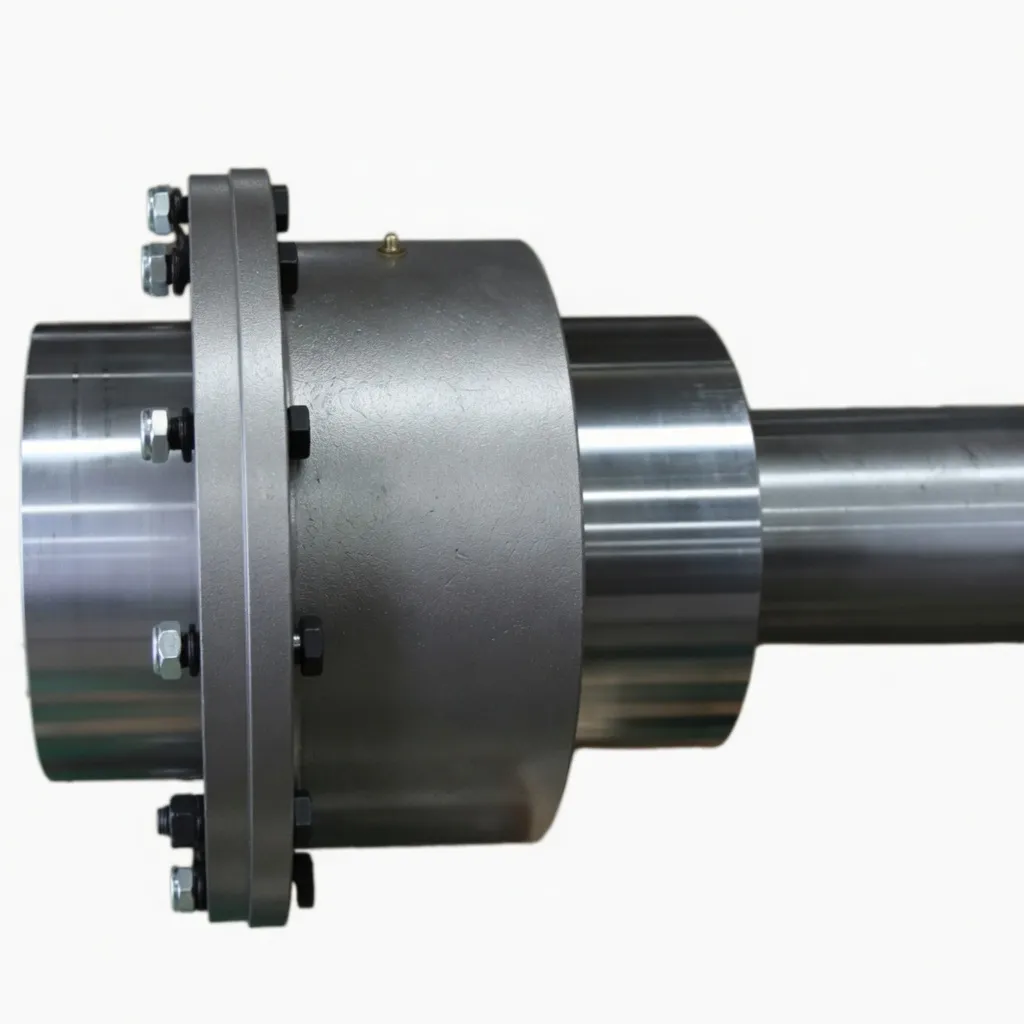
EP-JSA Series Snake Spring Coupling – hardened steel sinusoidal spring element, horizontal-split steel housing. Ever Power Flange Couplings Australia Ltd.
How the Snake Spring Coupling Transmits Torque
Two flanged hubs, each carrying a circumferential row of axial teeth, sit facing each other across a small axial gap. A single hardened steel spring — coiled and pre-bent into a sinusoidal wave shape — weaves alternately through the slots between the teeth on one hub and the next. Under no load, the spring sits centred in each slot with controlled clearance. Under torque, the spring deflects against one wall of each slot; the contact patch slides progressively along the spring length as torque rises.
This sliding contact is the defining mechanical feature of the snake spring coupling. At low torque, only a short section of the spring touches the slot wall, giving low effective stiffness and high shock absorption. As torque rises, the contact patch lengthens and the effective spring stiffness rises non-linearly. The coupling becomes progressively stiffer the harder it is loaded — exactly the characteristic needed to absorb starting shock and torque spikes while still transmitting full rated torque under steady-state load.
Why Non-Linear Stiffness Matters in Service
A linear-stiffness rubber-element flexible coupling faces an unwinnable trade-off: stiff enough to handle the running torque, but then too stiff to absorb starting shock; or soft enough to absorb shock, but then unable to transmit the running torque without excessive wind-up. The snake spring coupling resolves this trade-off by being mechanically different at different torque levels. The same coupling that absorbs the violent first quarter-revolution of a jaw-crusher start-up then settles into stiff steady-state operation under the running load.
Construction and Material Specification
The hubs are machined from ductile cast iron or forged steel depending on size and torque class. Teeth on the hub flange are precision-machined and induction-hardened on the bearing surfaces — the slot walls take the constant sliding contact from the spring under cyclic torque, so wear resistance directly determines coupling life. Bore tolerance is held to standard ISO H7 fit for keyed shaft connections; taper-bushed hubs are available for sizes JSA-90 and larger.
The spring itself is the wear part. Standard springs are cold-formed from oil-quenched-and-tempered alloy steel wire — high tensile strength, high fatigue resistance, and dimensionally stable through repeated deflection cycles. Spring wire diameter and pitch are matched to the hub size for the rated torque envelope. Stainless steel spring elements are available for corrosive-environment installations; high-temperature alloy springs extend the operating temperature range to +200°C for heat-stressed installations.
Engineering Features at a Glance
Effective torsional stiffness rises with torque level. Soft at low torque for shock absorption; stiff at high torque for full power transmission. Up to 4× energy absorption capacity of equivalent rubber-element coupling.
Oil-quenched-and-tempered alloy steel spring. No rubber compound degradation with age, oil exposure, or UV. Spring element field-replaceable without hub removal from shafts.
Horizontal-split steel housing retains grease at the spring-tooth contact patches. Grease ports on the cover allow replenishment without disassembly. Standard service interval 12 months in normal duty.
Dimensionally interchangeable with Falk Steelflex T10 and T20 grid coupling series. Drop-in replacement without baseplate modification or shaft re-machining.
Angular 0.25° per hub; parallel offset to 0.5 mm; axial float through spring axial compliance. Adequate for typical motor-to-driven-machine alignment after laser alignment to specification.
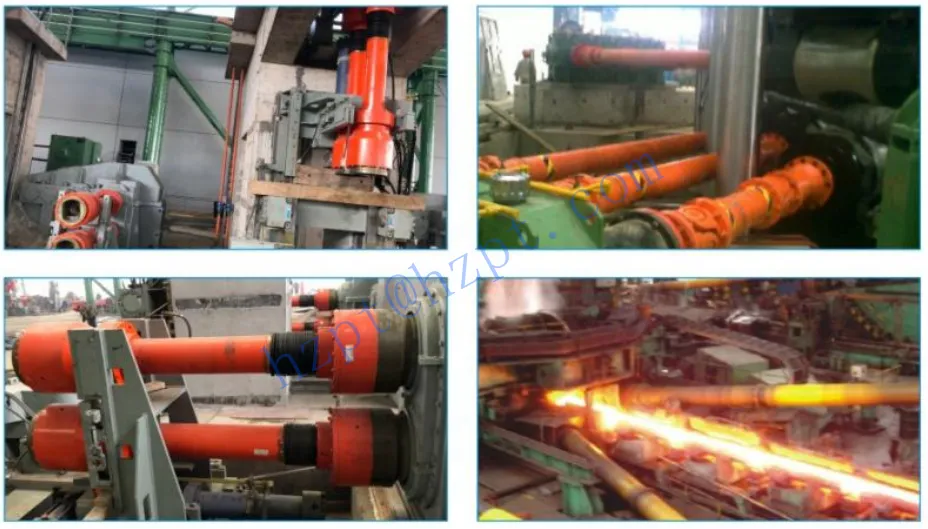
Snake spring element installed between toothed hub flanges – progressive contact pattern produces non-linear stiffness characteristic.
Application Field for the EP-JSA Grid Coupling
The EP-JSA snake spring coupling lives where the working machine punishes the drive train. Belt conveyor head drives in coal handling and bulk minerals — high starting torque, jam-up shock, and frequent load reversal during loaded restarts. Jaw crushers and cone crushers — torque spikes when the chamber catches an unbreakable rock. Reciprocating compressors and pumps — torque pulsations at firing frequency. All these duties chew through rubber-element couplings, but settle into long quiet service on a properly sized grid coupling.
Heavy-Duty Mining and Bulk-Handling Drives
Underground and surface mining drives across New South Wales and Queensland — coal conveyors, ore feeder conveyors, primary jaw crusher motors, secondary cone crusher drives, vibrating screen drives, and reclaimer drives — are the natural habitat of the EP-JSA. The progressive stiffness characteristic handles the violent loaded-start of a stalled conveyor better than any other flexible coupling type, while the steel spring shrugs off temperature swings and oil contamination that destroy rubber elements within months.
Selecting the Correct EP-JSA Size
Size selection starts with running torque from the motor or engine nameplate, multiplied by a service factor that reflects the cyclic and shock loading severity of the application. For steady-state pump drives the service factor is around 1.5; for jaw crusher and reciprocating compressor drives the service factor rises to 3.0 or higher. The resulting design torque is then matched against the EP-JSA nominal torque rating to select the appropriate size.
Bore selection follows the shaft diameter at each hub. The standard EP-JSA bore range covers most industrial shaft sizes with H7 fit and a standard parallel keyway. For larger heavy-duty drives, taper-bushed hubs provide higher torque-transmission reliability than parallel-bore keyed hubs. Specify the shaft diameters at order entry — our Sydney engineering team confirms the bore selection against the rated torque before shipment.
Installation and Grease Replenishment
EP-JSA installation is straightforward by industrial coupling standards — the lubricated steel-on-steel contact tolerates field alignment within commercially achievable laser alignment tolerances, and the split housing makes spring replacement a single-shift maintenance task. The five-step workflow below applies to all EP-JSA sizes from JSA-50 upward, with torque values supplied per size in the documentation pack.
Mount both hubs on their shafts with the tooth rows facing each other across the rated axial gap (dimension G in the documentation). Confirm shaft engagement length and parallel key fit. Bring driver and driven equipment to rough alignment with straight edge and feeler gauges.
Align to within 0.1° angular and 0.1 mm parallel offset using laser alignment equipment. This is well inside the rated envelope but provides headroom for foundation settlement and thermal growth. Document final alignment values in the maintenance record.
Lubricate the toothed faces with the specified high-pressure grease (NLGI 1 or 2 with EP additive package). Install the snake spring element by weaving it through the alternating slots; ensure the spring sits centred axially with no preload. Spring direction does not matter for symmetric drives.
Position both halves of the split housing over the spring element. Install all housing bolts and torque progressively in the specified pattern; correct torque is critical for the lip seals against the hubs. Fit the grease fitting on the cover and inject grease until clean grease appears at the seal.
Bump-start the drive and listen for any abnormal noise. Run for 30 minutes at progressive load and monitor housing temperature — normal running temperature is ambient plus 20–30°C. At the first scheduled maintenance interval (typically 1000 hours or 6 months), inject fresh grease through the housing port without disassembly.
Request a Snake Spring Coupling Quote
Maintenance Schedule and Wear Inspection
The EP-JSA is one of the longest-service flexible coupling types in industrial duty — properly sized and aligned, the standard service interval is 12 months in normal duty and 6 months in severe duty. The maintenance task is grease replenishment through the housing port; full disassembly is required only at spring replacement, typically every 3 to 5 years depending on duty cycle and alignment quality. Watch for the warning signs that indicate the spring or hub teeth are approaching service limit.
Grease purged with metal flakes during routine replenishment indicates tooth-face or spring wear. Vibration signature change at constant load indicates loss of spring pre-curvature or developing crack. Housing temperature above ambient plus 50°C at constant load indicates excessive friction from contaminated grease or worn parts. Any of these warning signs justifies removing the housing for direct inspection of the spring element and tooth faces during the next scheduled maintenance window.
Falk Steelflex and OEM Cross-Reference
Direct dimensional cross-reference is supplied from our Sydney office for Falk Steelflex T10 and T20 series, Rexnord Thomas grid couplings, and Renold grid coupling series. Provide the OEM size code (for example, Falk T10 1050) and our engineering team returns the EP-JSA equivalent size with confirmed bore range and torque rating within one business day. Documentation showing the dimensional comparison is provided for engineering record purposes.
Where OEM documentation is unavailable, the cross-reference can also be confirmed from the physical coupling. Measure the housing outside diameter and the hub bore — these two dimensions identify the size class. Photograph the spring element and the tooth face wear pattern for our engineering review. Cross-reference work is provided as a free service from our Sydney technical team for orders confirmed before specification finalisation.
Why Choose Ever Power Australia
Ever Power Flange Couplings Australia Ltd. holds standard EP-JSA snake spring coupling sizes in Sydney warehouse stock for same-day dispatch on JSA-50 through JSA-200. Falk Steelflex cross-reference work and replacement-element-only orders are supported directly from our New South Wales office. The ISO 9001 quality management system ensures consistent spring hardness, hub tooth profile, and housing fit across the size range — material traceability and heat-treatment certification available on request for mining and heavy industrial applications.
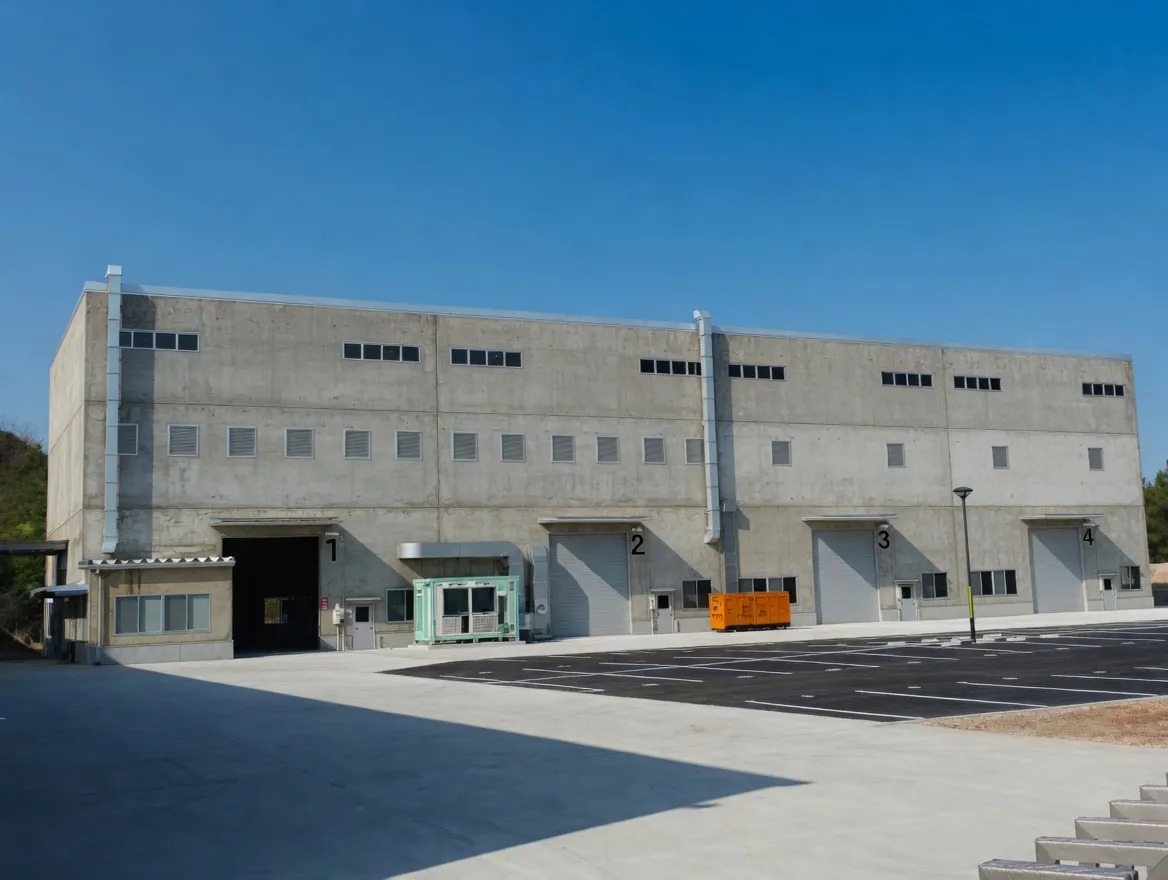
Ever Power manufacturing facility — ISO 9001 certified, 12,000 m², 108 dedicated coupling machines, 20+ years of production experience.
Every order placed with our Sydney team is backed by full material traceability, dimensional inspection certificates on request, and direct access to the engineers who specified, machined, and packed your coupling. We do not subcontract technical support — when you phone +61 2 9708 3322 during NSW business hours, you reach the people who actually know the product.
Frequently Asked Questions
Quick answers from our Sydney technical team. Contact us for application-specific guidance.
1. How does the snake spring grid coupling differ from a rubber-element coupling? +
2. Is the EP-JSA a direct replacement for Falk Steelflex T10 or T20? +
3. How often does the snake spring element need replacement? +
4. What grease should I use in the EP-JSA housing? +
5. Can the EP-JSA handle high starting shock from a stalled conveyor? +
Request a Quote — Sydney NSW Stock
Tell us your motor power, shaft diameter, and operating environment. Our New South Wales coupling team confirms availability and pricing within one business day, with same-day dispatch on standard sizes from Condell Park.
Ever Power Flange Couplings Australia Ltd. · 27 Harley Crescent, Condell Park NSW 2200 · [email protected]