
The question is not whether a spacer coupling costs more than a standard coupling — it clearly does. The question is whether the cost difference is justified by the maintenance savings it enables. For any centrifugal pump with a mechanical seal, the answer from decades of Australian water industry and process plant experience is unambiguously yes. A spacer coupling on a centrifugal pump is not an upgrade; it is the correct engineering specification for any installation where mechanical seal access matters.
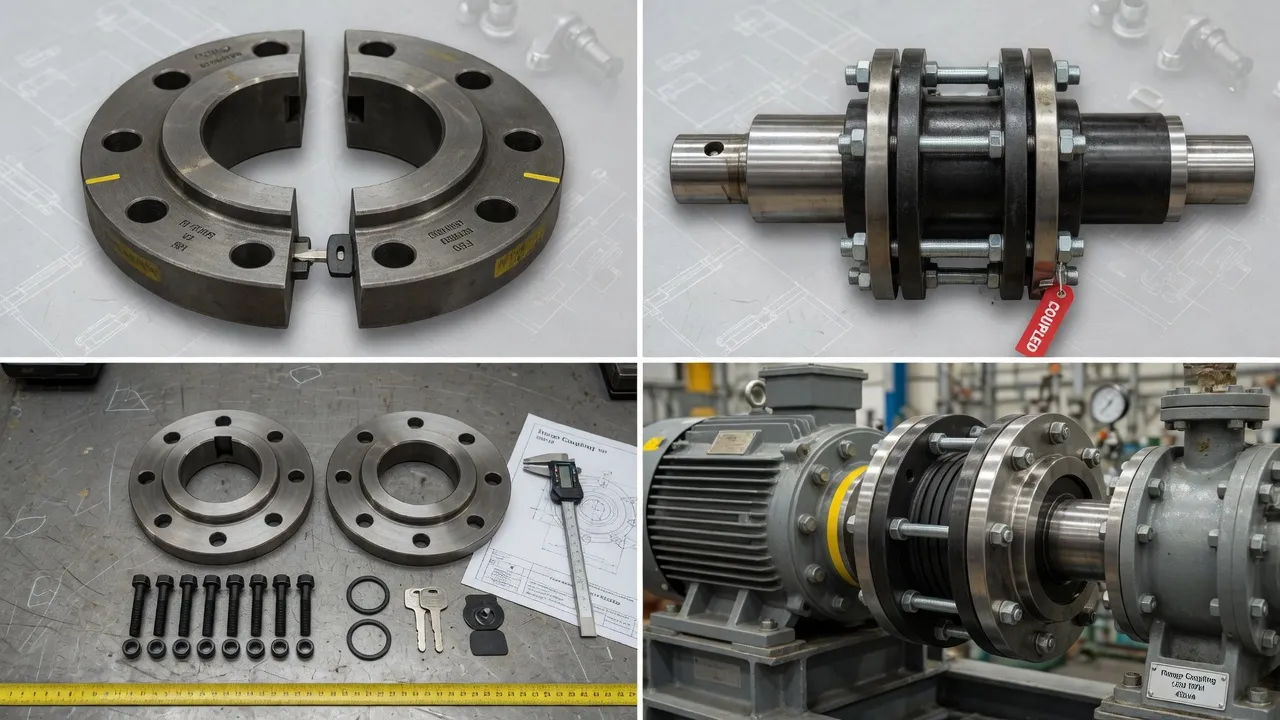
The Maintenance Problem That Spacer Couplings Solve
On a standard close-coupled pump without a spacer coupling, the mechanical seal sits just behind the stuffing box, accessible only after the pump casing or the motor is moved axially. In practice, moving the motor means: disconnecting the electrical supply, unbolting and removing the motor coupling hub, lifting the motor, replacing the seal, and reversing the entire process including realignment. On a medium-sized centrifugal pump, this sequence takes an experienced maintenance team 4–8 hours.
A spacer coupling inserts a machined steel tube between the two coupling hubs, increasing the shaft separation to 85–250 mm. With a drop-out spacer design, this tube can be removed without moving the motor or pump axially. The mechanical seal cartridge then slides out through the space left by the removed spacer. Total seal change time: 30–60 minutes. The motor alignment is never disturbed.
Types of Spacer Coupling Used on Pump Drives
Standard Spacer (Fixed Tube)
A rigid steel tube machined to the required DBSE is installed between the coupling hubs. Motor must be moved axially to remove the spacer. Simple and economical — appropriate where motor movement is practical.
Drop-Out Spacer (Split Tube)
The spacer tube is split along its length and retained by clamping rings. Removal requires no motor movement. Preferred for constrained installations and frequent maintenance intervals.
Floating Spacer (Flex at Both Ends)
Flexible coupling elements at both ends of the spacer tube provide misalignment accommodation at two points. Used on installations where significant misalignment between motor and pump is unavoidable.
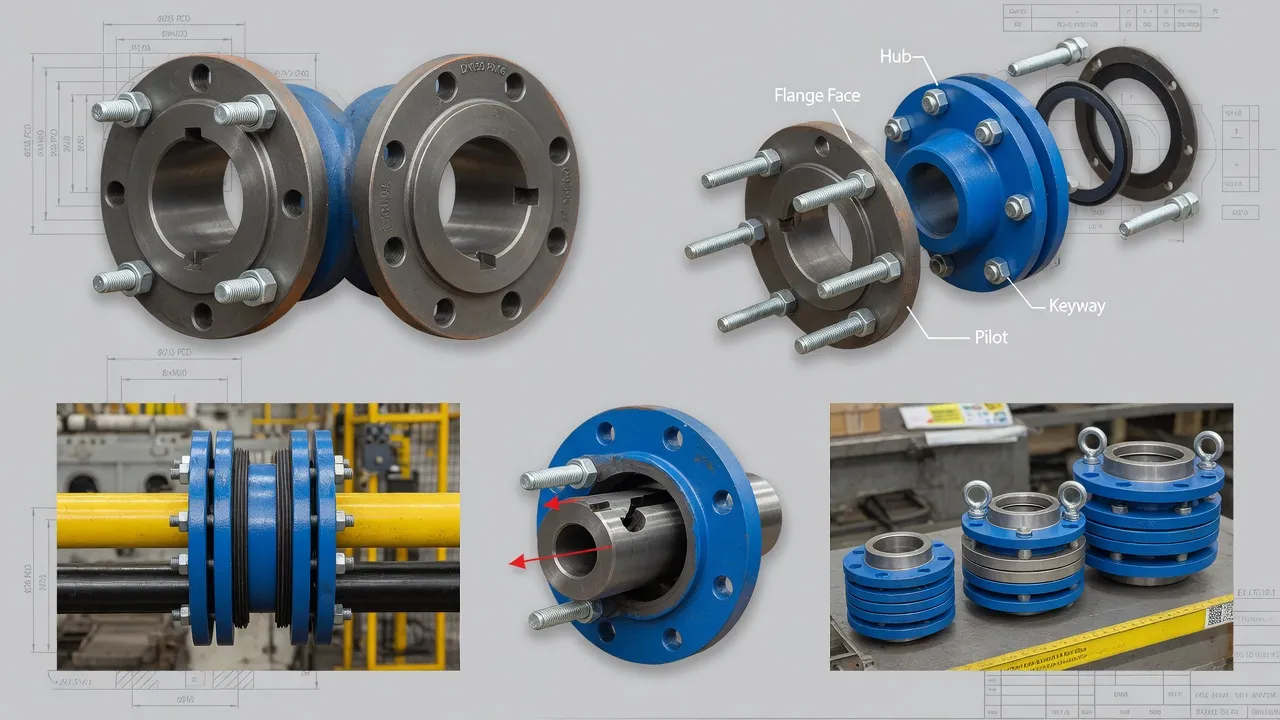
How to Specify the Correct DBSE for Your Pump
Measure the overall length of the seal cartridge from the shaft shoulder or sleeve flange to the outermost point of the gland plate. Add 15–20 mm safety margin. This gives the minimum DBSE. For cartridge seals on pumps up to 65 mm shaft size, 85 mm DBSE is usually sufficient. For larger pumps or back-pull-out designs where the impeller must also be removed through the spacer gap, 140–250 mm DBSE is required.
DBSE Selection Reference by Shaft Size
| Shaft Bore (mm) | Recommended Min. DBSE (mm) | Typical Seal Type | Spacer Style Recommended |
|---|---|---|---|
| 20–38 | 85 | Cartridge mechanical seal | Standard fixed spacer |
| 40–65 | 85–120 | Cartridge mechanical seal | Standard or drop-out |
| 65–100 | 120–180 | Cartridge seal / impeller removal | Drop-out spacer preferred |
| 100–150 | 180–250 | Back pull-out impeller access | Drop-out spacer required |
| Above 150 | 250+ | Large cartridge / full pull-out | Custom floating spacer |
Frequently Asked Questions
Need Expert Coupling Advice?
Our engineering team in Condell Park NSW is ready to help — free of charge.