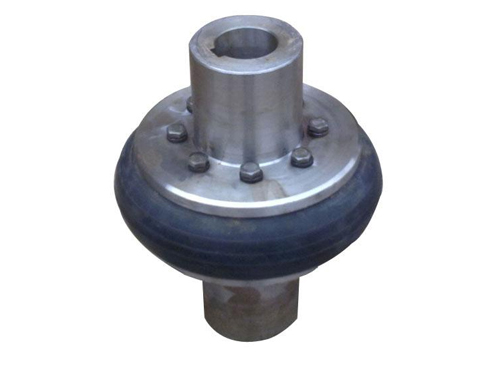
Coupling diaphragm
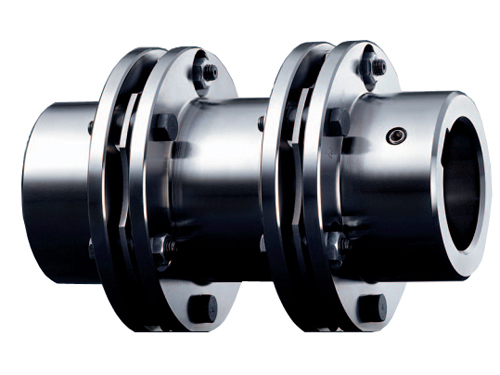
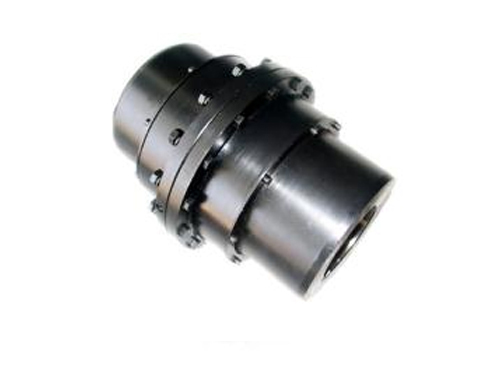
The diaphragm of the coupling consists of several groups of diaphragms (stainless steel thin plates) which are alternately connected with the two halves of the coupling with bolts. Each group of diaphragms is made up of several pieces. The diaphragms are divided into connecting rods and different shapes. Sliced.
Diaphragm couplingRelying on the elastic deformation of the diaphragm to compensate for the relative displacement of the connected two shafts, it is a flexible coupling with strong metal components. It does not require lubrication, has a compact structure, has a long service life, no rotation gap, and is not affected by temperature and Influenced by oil pollution, it has the characteristics of acid and alkali resistance, and is suitable for shafting transmission in high temperature, high speed, and corrosive medium conditions.
The coupling diaphragm consists of at least one diaphragm and two shaft sleeves.The diaphragm is fastened to the shaft sleeve with a pin and generally does not loosen or cause backlash between the diaphragm and the shaft sleeve.Some manufacturers provide two diaphragms, and some provide three diaphragms, with one or two rigid elements in the middle, and the two sides are connected to the shaft sleeve.The difference between the single diaphragm coupling and the double diaphragm coupling is the ability to handle various deviations. In view of the complex bending of the diaphragm, the single diaphragm coupling is not suitable for eccentricity.The double diaphragm coupling can bend in different directions at the same time to compensate for eccentricity.
The characteristic of the coupling diaphragm is a bit like a bellows coupling. In fact, the way the coupling transmits torque is similar.The diaphragm itself is very thin, so it is easy to bend when the relative displacement load is generated, so it can withstand up to 1.5 degrees of deviation, while generating a lower bearing load in the servo system.Diaphragm couplings are often used in servo systems. Diaphragms have good torque rigidity, but are slightly inferior to bellows couplings.On the other hand, the diaphragm coupling is very delicate and can be easily damaged if it is misused in use or not installed correctly.Therefore, the deviation is very large within the tolerance range of the normal operation of the coupling.
Coupling diaphragm application range
Coupling diaphragms are widely used in shaft transmission of various mechanical devices, such as water pumps (especially high-power, chemical pumps), fans, compressors, hydraulic machinery, petroleum machinery, printing machinery, textile machinery, chemical machinery, mining Machinery, metallurgical machinery, aviation (helicopter), naval high-speed power transmission systems, steam turbines, piston-type power mechanical transmission systems, crawler vehicles, and generator sets high-speed, high-power mechanical transmission systems, which are applied to high-speed transmission after dynamic balance Shafting has become more common.
Use and maintenance of coupling diaphragm:
1. Before installation, clean the end faces of the two shafts and check the fit of the key grooves on the end faces;
2. After the coupling is installed, run a shift normally, check all the screws, if found to be loose, tighten them, and repeat this for several shifts so as not to loosen;
3. In order to prevent the fretting of the diaphragm during high-speed operation, causing microcracks and damage to the bolt holes of the diaphragm, solid lubricants such as molybdenum disulfide can be applied between the diaphragms or the surface of the diaphragm can be coated with anti-friction Layer processing
4. Long-term overload use and operation accidents should be avoided;
5. During work and operation, check whether the diaphragm coupling is abnormal. If any abnormality occurs, perform maintenance;
6. Appropriate measures should be taken at various sites that may cause personal and equipment accidents due to operating couplings.Protective measures.