
Product Description
Di Water Pipe Fitting Cast Iron Universal HDPE Flange Adaptor Coupling for Ductile Iron Pipe
Range of usage
Based on the excellent overall performance, the flexible rubber expansion joint is widely used in chemical industry, construction, drainage, oil industry, light and heavy industry, refrigeration industry, sanitary system, plumbing system, firefighting, and power electrics, such as the connection with pump or valve and pipeline with vibration or large temperature changes.
Material list
| NO | NAME | Material |
| 1 | Cover | NR,NBR,EPDM |
| 2 | Reinforcing | Nylon |
| 3 | Tube | NR,NBR,EPDM |
| 4 | Retain rings | Steel |
| 5 | Flange | Carbon steel |
Technical conditions
| Working Pressure MPa(Kgf/cm2) |
1(10) | 1.6(16) | 2.5(25) |
| Explosion Pressure MPa(Kgf/cm2) |
3 (30) | 4.8 (48) | 5.5 (55) |
| Vacuum MPa(Kgf/cm2) |
53.3(400) | 86.7(650) | 100(750) |
| Applicable Temperature ºC |
-15-115, it can be -30-250 for special condition. | ||
| Applicabe Medium |
Air, compressed air, water,sea water, steam, oil, acid and alkali, etc | ||
Main joint dimension
| Size |
Inch |
Length | Extension | Compression | Horizonal |
Angular |
| DN32 | 1 1/4″ | 95 | 6 | 9 | 9 | 15° |
| DN40 | 1 1/2″ | 95 | 6 | 10 | 9 | 15° |
| DN50 | 2″ | 105 | 7 | 10 | 10 | 15° |
| DN65 | 2 1/2″ | 115 | 7 | 13 | 11 | 15° |
| DN80 | 3″ | 135 | 8 | 15 | 12 | 15° |
| DN100 | 4″ | 150 | 10 | 19 | 13 | 15° |
| DN125 | 5″ | 165 | 12 | 19 | 13 | 15° |
| DN150 | 6″ | 180 | 12 | 20 | 14 | 15° |
| DN200 | 8″ | 210 | 16 | 25 | 22 | 15° |
| DN250 | 10″ | 230 | 16 | 25 | 22 | 15° |
| DN300 | 12″ | 245 | 16 | 25 | 22 | 15° |
| DN350 | 14″ | 255 | 16 | 25 | 22 | 15° |
| DN400 | 16″ | 255 | 16 | 25 | 22 | 15° |
| DN450 | 18″ | 255 | 16 | 25 | 22 | 15° |
| DN500 | 20″ | 255 | 16 | 25 | 22 | 15° |
| DN600 | 24″ | 260 | 16 | 25 | 22 | 15° |
| DN700 | 28″ | 260 | 16 | 25 | 22 | 15° |
| DN800 | 32″ | 260 | 16 | 25 | 22 | 15° |
| DN900 | 36″ | 260 | 16 | 25 | 22 | 15° |
| DN1000 | 40″ | 260 | 18 | 26 | 24 | 15° |
Features
1. The flexible rubber expansion joint is of small volume, light weight, good flexibility and convenient installation and maintenance ;
2. The flexible rubber expansion joint has transverse displacement, axial displacement and angular displacement and not restricted by inconsistent pipeline and unparallel flange in installation;
3. The flexible rubber expansion joint reduces vibration and noise;
4. The flexible rubber expansion joint with seamless inside and resistance to high temperature which is developed by our company can prevent the corrosive medium from corroding the inner wall more efficiently in the pipeline of high temperature resistance, acid and alkali resistance and oil resistance.
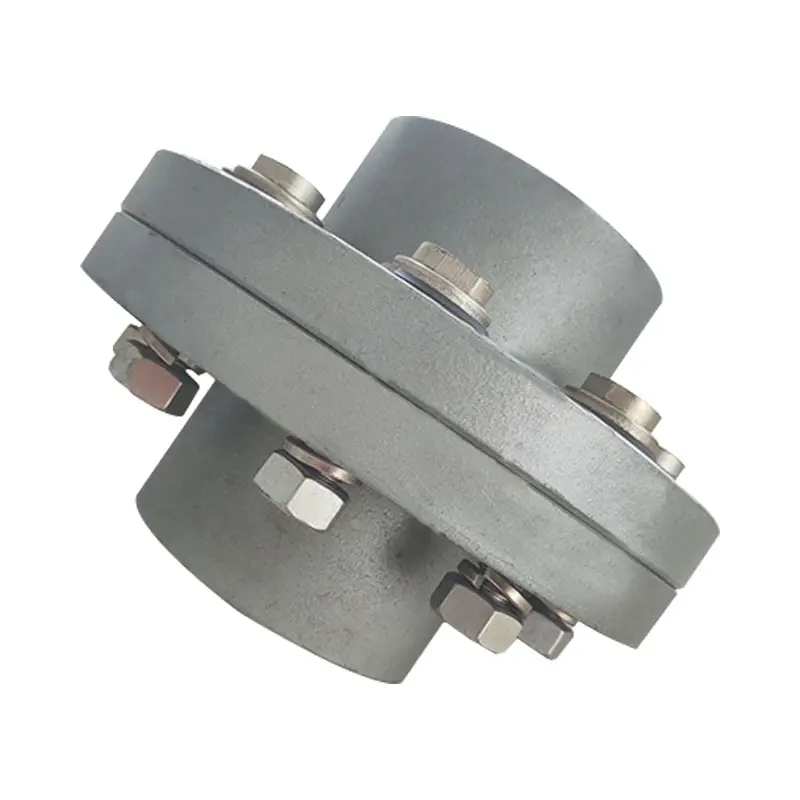
What Industries Commonly Use Flange Couplings for Power Transmission?
Flange couplings are widely used in various industries for power transmission due to their reliability and versatility. Some of the common industries where flange couplings are employed include:
1. Manufacturing: In manufacturing industries such as automotive, aerospace, electronics, and consumer goods, flange couplings are utilized in machinery and equipment to transmit power between different components.
2. Oil and Gas: The oil and gas industry often uses flange couplings in pumps, compressors, and turbines for power transmission in exploration, extraction, and refining processes.
3. Chemical and Petrochemical: Flange couplings are used in various equipment within the chemical and petrochemical industry, including mixers, agitators, and pumps, to transfer power efficiently.
4. Mining and Construction: Heavy-duty machinery in mining and construction applications relies on flange couplings to transmit power in demanding and challenging environments.
5. Power Generation: Power plants, including thermal, hydroelectric, and wind power facilities, use flange couplings in turbines, generators, and auxiliary systems for power transmission.
6. Marine: In the marine industry, flange couplings are utilized in propulsion systems, winches, and other equipment that requires power transmission in marine vessels.
7. Steel and Metal Processing: Steel mills and metal processing plants use flange couplings in various equipment, including rolling mills and conveyor systems.
8. Food and Beverage: The food processing and beverage industry use flange couplings in mixers, pumps, and conveyor systems to handle power transmission in hygienic environments.
9. Pharmaceutical: Pharmaceutical manufacturing equipment employs flange couplings for power transmission in processes such as mixing, granulation, and tablet compression.
10. Water and Wastewater: Flange couplings are used in water treatment plants and wastewater facilities to transfer power in pumps and other equipment.
These are just a few examples, and flange couplings are found in many other industries where reliable power transmission is essential for smooth operations.
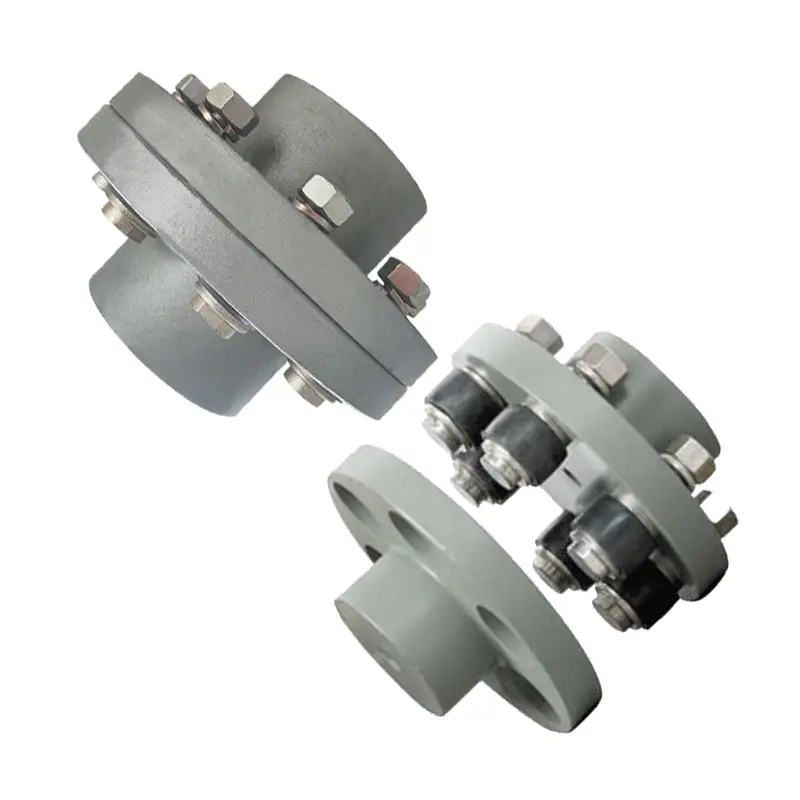
Flange Couplings and Variable Operating Conditions
Flange couplings are designed to accommodate a wide range of operating conditions and loads, making them versatile and suitable for various applications. The key factors that enable flange couplings to handle variable operating conditions and loads include:
- Flexible Design: Some flange couplings, such as flexible flange couplings or disc couplings, are designed to have some degree of flexibility. This flexibility allows them to compensate for misalignment between shafts, which is often encountered in real-world applications.
- Material Selection: Flange couplings are available in different materials to suit specific operating conditions. For example, stainless steel flange couplings are ideal for corrosive environments, while high-strength steel couplings are suitable for heavy-duty applications.
- Customization: Many flange coupling manufacturers offer customization options to tailor the coupling’s design to meet specific requirements. This may include modifying the coupling’s size, material, or torque capacity.
- Load Distribution: Flange couplings are designed to distribute loads evenly between the connected shafts. This even distribution of load helps prevent premature wear and reduces stress on the shafts and other connected equipment.
- High Torque Capacity: Flange couplings are available in various designs, including those suitable for high torque applications. This allows them to handle varying levels of torque without compromising performance.
- Temperature and Environmental Resistance: Flange couplings made from appropriate materials can withstand a wide range of temperatures and environmental conditions, making them suitable for both indoor and outdoor applications.
It is essential to consider the specific requirements of your application and the potential variations in operating conditions and loads when selecting a flange coupling. This ensures that the chosen coupling can reliably and efficiently transmit power while accommodating any changes in the operating environment.
Types of Flange Coupling Designs
Flange couplings are mechanical devices used to connect two shafts and transmit torque between them. They come in various designs, each suited for specific applications. Here are the different types of flange coupling designs:
- 1. Unprotected Flange Coupling: This is the simplest type of flange coupling, consisting of two flanges with flat faces that are bolted together to connect the shafts. It is cost-effective and easy to install but offers limited protection against misalignment.
- 2. Protected Flange Coupling: In this design, the flanges are fitted with a protective cover or casing, which helps prevent dust, dirt, and other contaminants from entering the coupling. It provides better protection to the coupling components, making it suitable for outdoor or harsh environments.
- 3. Flexible Flange Coupling: This design incorporates a flexible element, such as a rubber or elastomeric insert, between the flanges. The flexible element allows for some misalignment between the shafts and helps dampen vibrations, reducing wear on connected equipment. It is commonly used in applications where there may be slight shaft misalignment.
- 4. Rigid Flange Coupling: The rigid flange coupling is a solid coupling without any flexible elements. It provides a rigid connection between the shafts, which is ideal for applications where precise alignment is critical, such as high-speed machinery or precision motion control systems.
- 5. Sleeve Flange Coupling: In this design, a hollow sleeve fits over the ends of the shafts and is bolted to the flanges. The sleeve helps provide additional support and alignment for the shafts.
- 6. Half-Flanged Coupling: Half-flanged couplings consist of two flanges on one shaft and a single flange on the other shaft. This design is suitable for applications with limited space or where one shaft is fixed, and the other requires disconnection frequently.
The choice of flange coupling design depends on factors such as the level of misalignment, speed of rotation, available space, environmental conditions, and the required level of flexibility. Proper selection of the flange coupling type ensures efficient power transmission and extends the life of connected machinery and equipment.


editor by CX 2023-09-01