Shaft coupling misalignment is widely understood as the primary cause of coupling element wear and bearing failure. What is less widely appreciated is the geographic extent of the damage it causes ¡ª misalignment affects every rotating and sealing component in the drivetrain, not just the bearing closest to the coupling. Understanding this broader damage footprint changes how misalignment management is prioritised: it is not a coupling maintenance activity, it is a machine reliability activity that affects motor bearings, pump mechanical seals, gearbox gears and bearings, pipework connections, and structural foundations. The F-type flexible tyre coupling limits the transmission of misalignment forces through the coupling, and the spacer coupling design facilitates the frequent alignment checks that prevent misalignment from accumulating undetected.
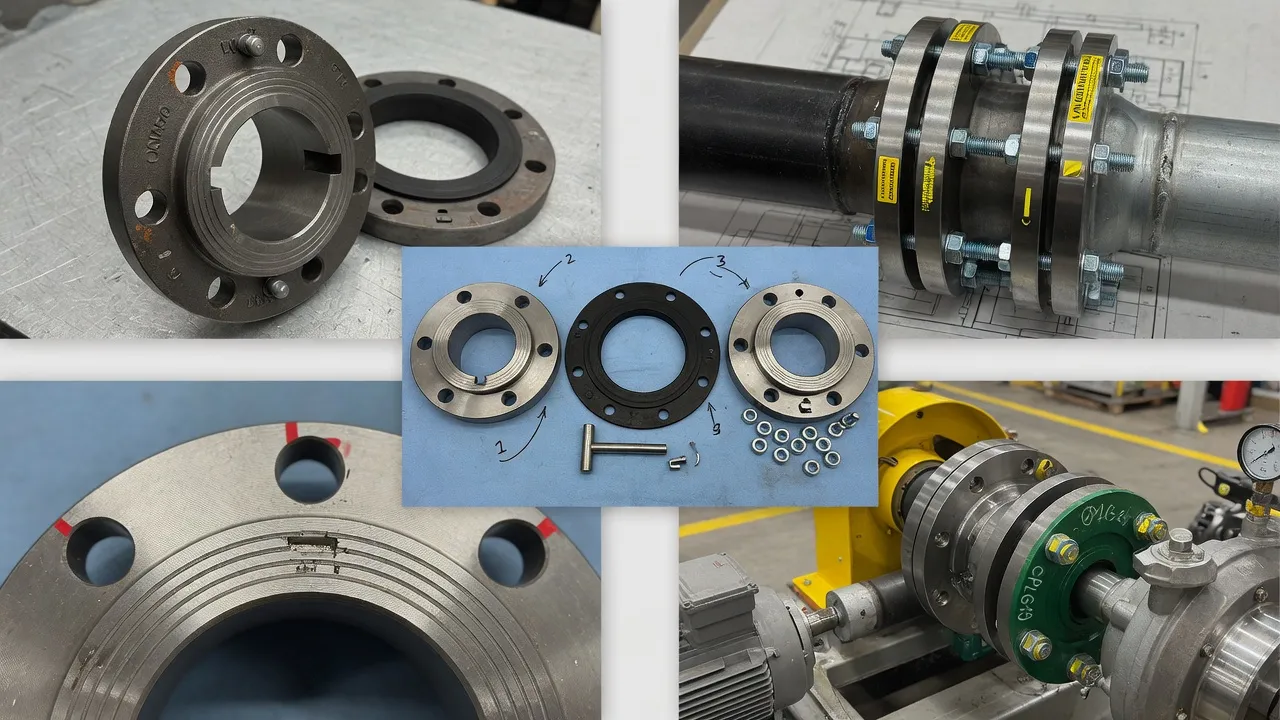
The Misalignment Damage Map ¡ª Every Component Affected
| Component | Damage Mechanism | Failure Mode | Typical Time to Failure (Severe Misalignment) |
|---|---|---|---|
| Motor DE bearing | Cyclic radial overload at 1¡Á and 2¡Á RPM | Spalling, flaking, overheating | 3¨C18 months |
| Motor NDE bearing | Lower radial overload transmitted through shaft | Spalling at later stage | 12¨C36 months |
| Coupling element (flexible) | Cyclic compression fatigue of elastomeric element | Cracking, chunking, failure | 6¨C24 months |
| Pump DE bearing | Cyclic radial overload from misalignment restoring force | Spalling, overheating | 3¨C18 months |
| Pump mechanical seal | Shaft deflection at seal face ¡ª wobble on every revolution | Face wear, leakage, face cracking | 3¨C12 months |
| Pump NDE bearing | Lower cyclic radial load through pump shaft | Spalling at later stage | 18¨C48 months |
| Pump impeller (close-clearance) | Shaft deflection closes impeller-to-wear-ring gap | Wear ring contact, rubbing, efficiency loss | 6¨C24 months |
| Gearbox input shaft bearings (if present) | Bending moment from misaligned motor coupling transmitted through input shaft | Spalling, seal leakage | 6¨C24 months |
| Pipe flanges and connections | Cyclic vibration at pump discharge and suction flanges | Flange face fretting, gasket failure, bolt loosening | 12¨C36 months |
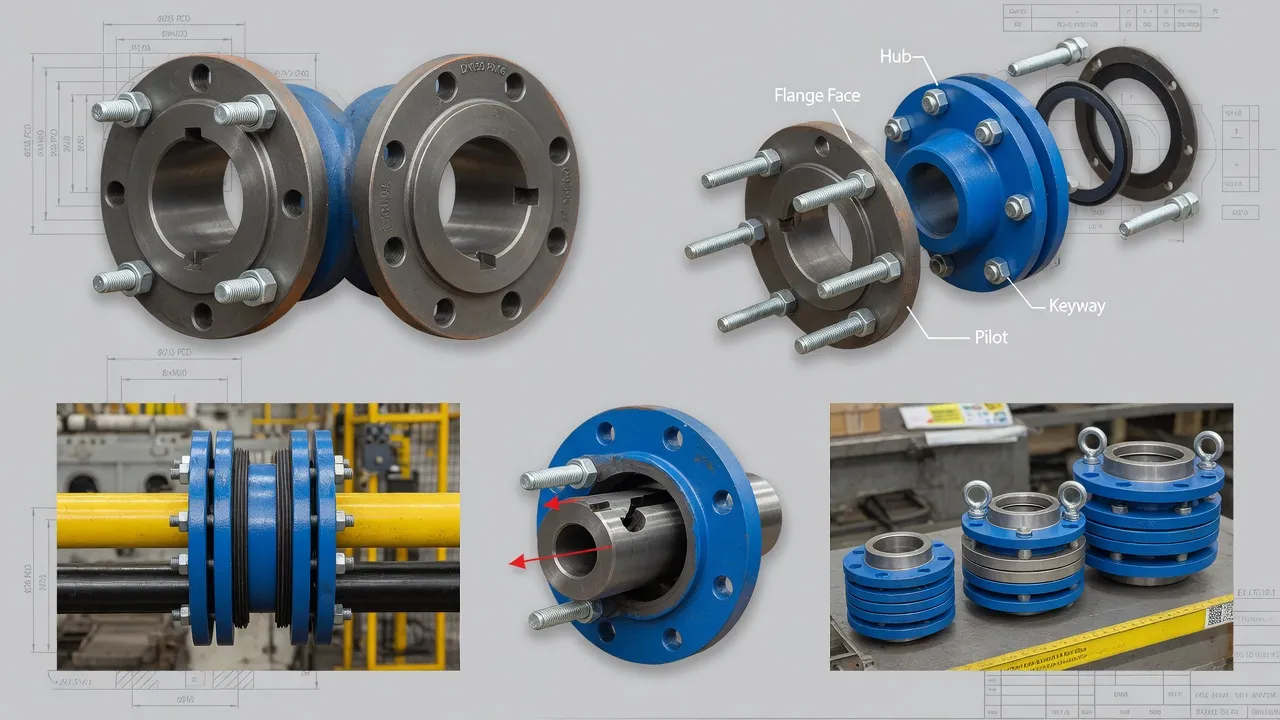
The Mechanical Seal Failure Path ¡ª A Closer Look
Pump mechanical seals are the most expensive single consequence of coupling misalignment on most pump drives. A modern cartridge mechanical seal for an industrial centrifugal pump costs AUD 800¨C4,000 depending on size and material, and its replacement requires 4¨C8 hours of maintenance labour on a standard pump without a spacer coupling. The seal is designed to operate with shaft deflection (lateral movement of the shaft at the seal face) of less than 0.05 mm. Misalignment-induced deflection routinely exceeds this on drives that are not regularly realigned.
The damage mechanism is this: when the shaft deflects cyclically at the seal face, the rotating seal face tilts relative to the stationary face with each revolution. At the bottom of the deflection cycle, the faces open slightly, allowing process fluid to enter the seal face gap. The fluid cannot be expelled fast enough before the faces close again, leaving a contamination layer between the faces. This contamination abrades both seal faces over time, reducing face flatness, increasing leakage, and eventually producing face cracking through thermal shock from the fluid entering the hot seal face zone.
How a Flexible Coupling Limits the Damage Radius
A correctly specified flexible flange tyre coupling absorbs misalignment forces through the elastic deformation of the tyre element rather than transferring them as rigid bending forces to the motor and pump shafts. The result is that the motor and pump bearings experience a significantly lower cyclic radial load from the same misalignment condition than they would with a rigid coupling. Published field studies consistently show motor DE bearing radial load reductions of 40¨C70% when a rigid coupling is replaced by a correctly sized flexible tyre coupling under the same misalignment conditions.
However ¡ª and this is critical ¡ª the flexible coupling is not an alternative to shaft alignment. It limits the damage from misalignment that exists; it does not eliminate the misalignment itself. A flexible coupling with 1.5 mm of misalignment will still impose measurable bearing overload. The correct programme is: specify a flexible coupling AND maintain accurate shaft alignment ¡ª these two interventions together produce far better bearing and seal life than either alone.
Frequently Asked Questions
Need Expert Coupling Advice?
Our engineering team in Condell Park NSW is ready to help ¡ª free of charge.