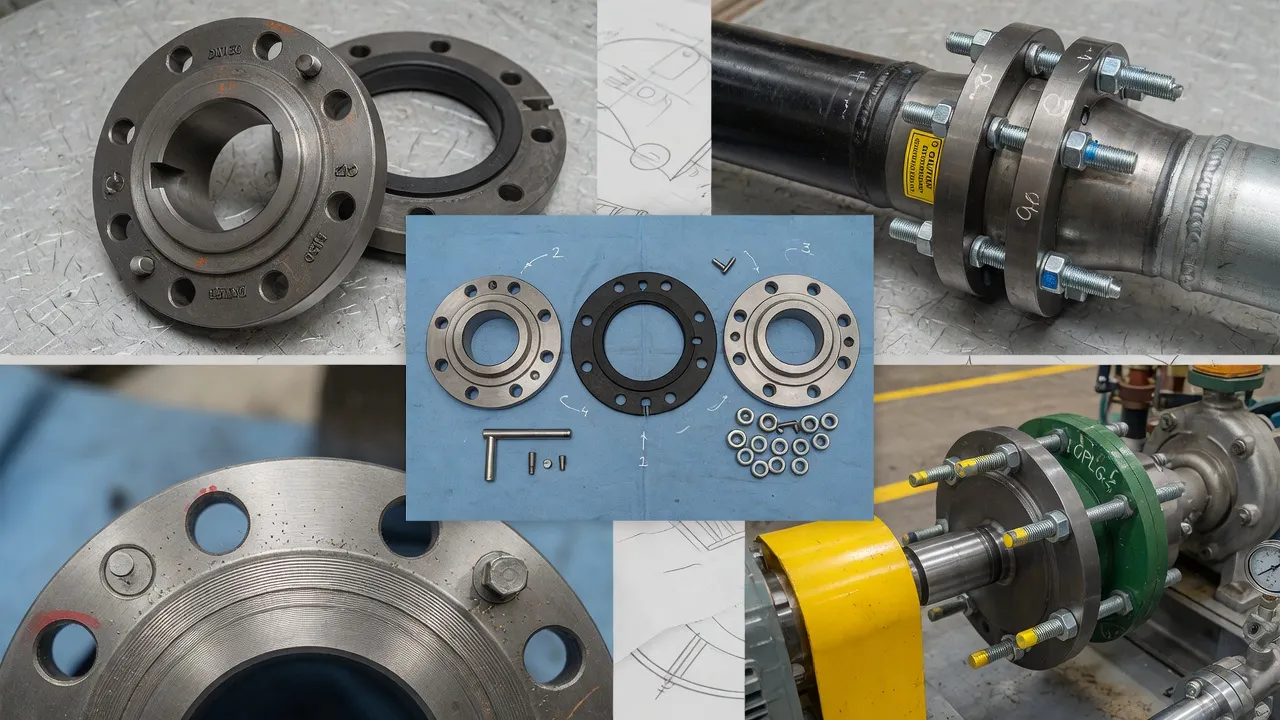
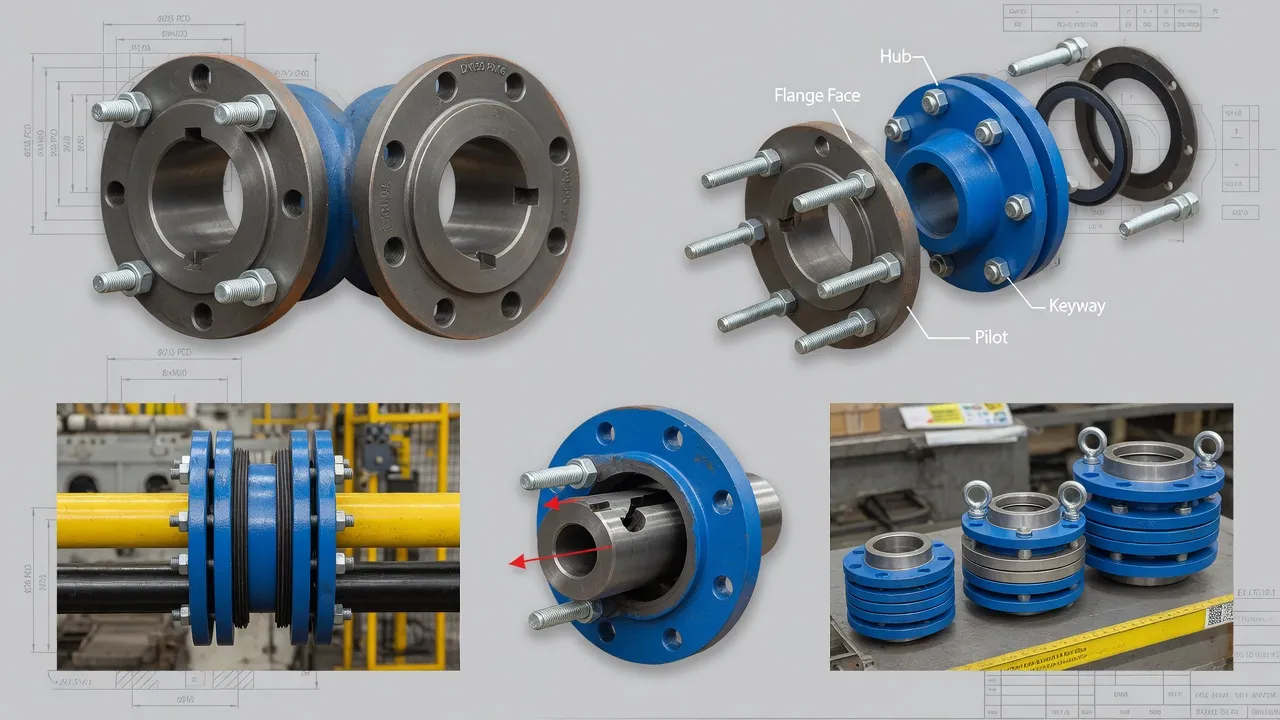
Reducing vibration in existing rotating machinery is one of the most common challenges in industrial maintenance engineering — and one where the correct coupling change, combined with shaft alignment, consistently delivers measurable results without major plant downtime or capital expenditure. The F-type flexible tyre coupling and the NM elastomeric coupling are the two Ever Power products most frequently specified as vibration-reduction retrofits on Australian pump, fan, and compressor installations where the original rigid or metallic coupling is transmitting rather than isolating drive vibration. This guide covers what a flexible coupling retrofit can and cannot achieve, how to quantify the improvement, and how to select the right flexible coupling for your specific vibration problem.
What a Flexible Coupling Retrofit Can Achieve
Reduced Motor Bearing Vibration
The elastomeric element absorbs torsional vibration and attenuates the radial bearing loads from misalignment. Motor front bearing vibration amplitude typically falls 30–60% after a rigid-to-flexible coupling change on a misaligned pump drive.
⏱️
Extended Bearing and Seal Life
Lower bearing loads translate directly to longer L10 bearing life (the relationship is cubic — halving the radial load gives 8× the bearing life). Pump mechanical seal life also improves as shaft deflection at the seal face is reduced.
Reduced Operational Noise
Lower vibration amplitude on motor and pump casings reduces the sound radiated by these surfaces. A 6 dB vibration reduction corresponds to roughly half the perceived loudness in nearby occupied areas.
Better Misalignment Tolerance
A machine that has developed misalignment through baseplate settling or thermal growth can operate within acceptable vibration limits with a flexible coupling, where the same misalignment would have produced unacceptable bearing loads with a rigid coupling.
What a Flexible Coupling Retrofit Cannot Achieve
Understanding the limits of a coupling retrofit prevents misplaced expectations and ensures the correct additional interventions are identified:
Cannot fix rotor imbalance
Vibration from an unbalanced motor rotor or pump impeller is generated at the rotor and transmitted radially through the machine structure to the bearings. A flexible coupling reduces torsional vibration transmission but does not attenuate the lateral vibration from a radially unbalanced rotor. If the vibration spectrum shows a dominant 1× RPM component that does not reduce significantly after alignment correction, rotor imbalance is the likely source — the rotor must be balanced.
Cannot fix structural resonance
If the machine structure resonates at or near the running speed frequency, vibration amplitude will be amplified regardless of coupling type. Structural resonance requires changes to the structural mass or stiffness (additional bracing, anti-vibration mounts, or modified support geometry) rather than a coupling change.
Cannot replace shaft alignment
A flexible coupling accommodates misalignment — it does not correct it. A machine with 1.5 mm parallel misalignment fitted with a flexible coupling rated for 3 mm will run without coupling failure, but the bearing loads from the misalignment will still exceed the motor bearing’s rated radial load. Coupling change plus alignment correction delivers the full benefit; coupling change alone delivers partial benefit.
How to Measure the Vibration Improvement from a Coupling Change
1
Baseline Measurement Before the ChangeWith the machine running at its normal operating load and speed, measure and record the vibration level at the motor DE bearing housing (axial and radial), the motor NDE bearing housing, and the pump DE bearing housing. Use overall velocity (mm/s RMS) for the primary measurement. Take a vibration spectrum if available — record the dominant frequency components.
2
Perform the Coupling Change and AlignmentInstall the new flexible coupling following the manufacturer’s procedure. Perform laser shaft alignment to within 0.1 mm parallel and 0.1° angular before closing the coupling guard. Re-check alignment after final bolt tightening.
3
Post-Change Measurement at Identical ConditionsAllow the machine to reach thermal equilibrium (30–60 minutes of operation). Measure vibration at the same points, same operating conditions, same measurement procedure as the baseline. Record and compare.
4
Document and TrendRecord both sets of readings in the equipment file. These measurements become the new baseline for quarterly trending. If vibration returns to pre-change levels within 6–12 months, misalignment drift is the likely cause — re-check and correct alignment.
Selecting the Right Flexible Coupling for a Vibration Reduction Retrofit
Confirm both shaft diameters are within the coupling’s bore range. Different bores on each hub — specify individually.
3
Elastomeric Grade
80A Shore for maximum vibration damping. 92A for general use. 98A if torsional stiffness is also required.
4
DBSE
Measure current shaft gap. Select coupling with matching DBSE, or adjust shaft position slightly at motor.
5
Guard Clearance
Confirm coupling OD fits within existing guard, or plan for guard replacement.
Frequently Asked Questions
Can I retrofit a flexible coupling to replace a rigid coupling on an existing machine?+
Yes, in the majority of cases. The retrofit requires that the replacement flexible coupling’s bore range covers both shaft diameters, the coupling outer diameter fits within the existing guard, and the DBSE of the flexible coupling matches or can be accommodated by the existing axial gap between shaft faces. In many cases the shaft separation must be adjusted slightly to match the flexible coupling’s specified DBSE. Ever Power can advise on the correct flexible coupling selection for your specific shaft dimensions and existing installation constraints — contact [email protected] with shaft diameters and motor power.
How quickly will I see vibration improvement after fitting a flexible coupling?+
The vibration improvement is immediate upon first operation. If the original vibration was caused by misalignment forces being transmitted through a rigid coupling, replacing it with a flexible coupling reduces the radial bearing loads from that misalignment in the first revolution after start-up. You can measure the improvement with a vibration meter on the motor bearing housing before and after the coupling change — a reduction of 30–60% in overall vibration level is typical for machines where misalignment was the primary vibration source.
Does a flexible coupling help with noise as well as vibration?+
Yes. Vibration-induced noise is generated by the vibration of structural surfaces — motor casing, pump casing, pipework, and baseplate — radiating sound waves. Reducing vibration amplitude at these surfaces directly reduces the radiated sound level. The relationship is not linear: a 6 dB reduction in vibration amplitude corresponds to a roughly 6 dB reduction in sound level from the radiating surface, which is perceived as approximately halving the loudness by a nearby observer.
What is the most cost-effective coupling change to reduce pump vibration?+
Replacing a rigid coupling with a flexible tyre coupling (F-type) and simultaneously performing laser shaft alignment is the most cost-effective combination for reducing pump vibration. The coupling change provides vibration isolation; the alignment ensures the coupling is operating within its design envelope and the motor bearing is not carrying misalignment-induced loads. Either intervention alone delivers benefit; both together deliver substantially more than the sum of the individual improvements.
Can a flexible coupling fix vibration caused by a worn pump impeller?+
No. A flexible coupling reduces torsional vibration transmitted between motor and pump, and reduces radial bearing loads from coupling misalignment. It does not fix vibration from a worn, corroded, or cavitation-damaged pump impeller — this vibration originates at the impeller and is transmitted through the pump structure directly to the bearings, not through the coupling. Impeller-induced vibration requires impeller replacement or refurbishment. A flexible coupling may slightly reduce the portion of impeller vibration transmitted to the motor side, but the dominant improvement requires addressing the impeller itself.
Need Expert Coupling Advice?
Our engineering team in Condell Park NSW is ready to help — free of charge.