Direct-on-line motor starting is the simplest and cheapest way to start a motor. It is also, from a drivetrain engineering perspective, one of the most violent. Every DOL start applies 2–3 times the rated running torque as a shock load to the gearbox, coupling, and driven machine in the first fraction of a second — and repeats this shock on every start cycle, for the entire service life of the equipment. On high-inertia loads like conveyors, crushers, large fans, and ball mills, this starting shock is the primary driver of premature drivetrain failures. The YOX series fluid coupling provides an entirely mechanical solution to this problem — one that requires no electronics, no control hardware, and no programming.
How a Fluid Coupling Controls Starting Torque
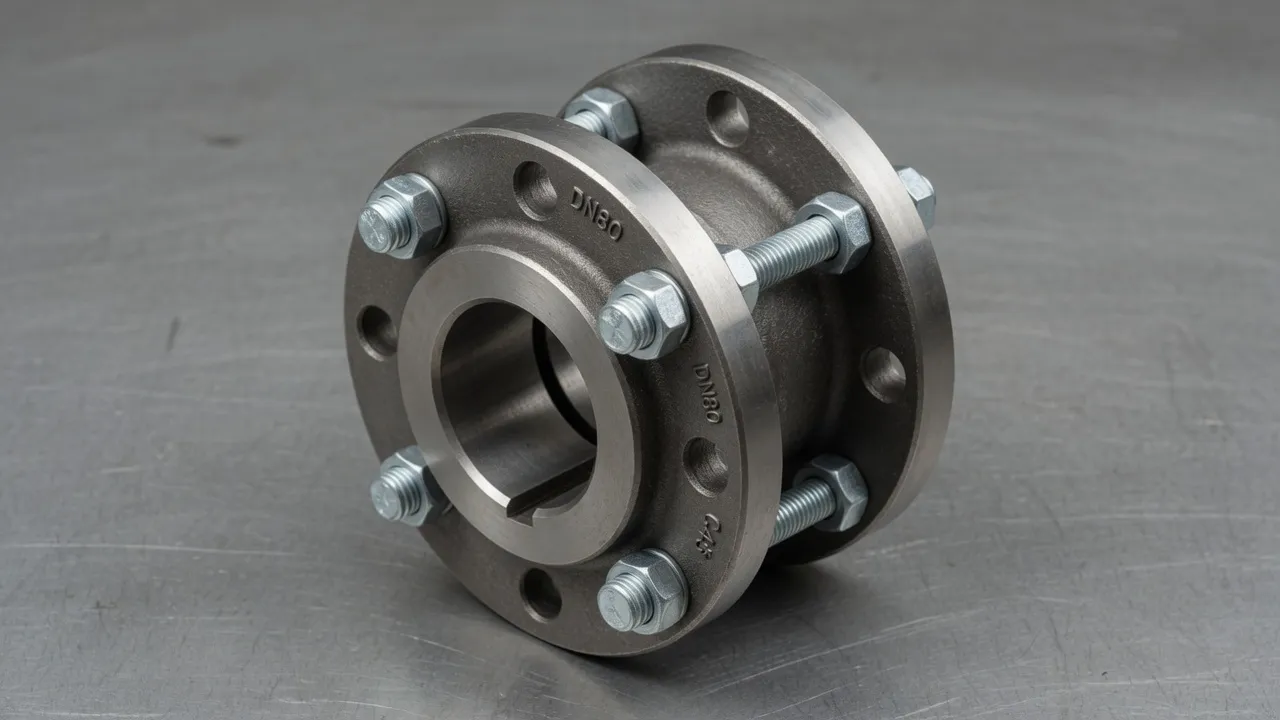
A fluid coupling consists of a pump impeller — connected to the motor shaft — and a turbine runner — connected to the driven machine shaft — enclosed in a sealed housing filled with mineral turbine oil. When the motor starts, the impeller rotates and accelerates the oil through centrifugal action. The circulating oil exerts a tangential force on the turbine blades, causing the turbine to accelerate and transmit torque to the driven machine. The key is that this torque transmission is entirely through fluid shear — there is no rigid mechanical connection between the motor and driven machine.
At start-up, the turbine is stationary and the impeller is at motor speed. The speed difference (slip) between them is at its maximum. Counterintuitively, the transmitted torque at this point is relatively low — typically 1.3–1.5× rated torque — because hydrodynamic torque capacity scales with the square of the turbine speed ratio. As the driven machine accelerates and the turbine speed approaches the impeller speed, the transmitted torque rises smoothly to the running level. This produces a controlled, progressive acceleration that protects every component in the drivetrain from the shock associated with DOL starting.
YOX Series Fluid Coupling — Technical Specifications
| Model | Power Range (kW) | Input Shaft (mm) | Output Shaft (mm) | Oil Volume (L) | Max RPM |
|---|---|---|---|---|---|
| YOX200 | 2.2–7.5 | 20–28 | 20–28 | 0.8 | 3,000 |
| YOX315 | 7.5–30 | 30–45 | 30–45 | 2.5 | 3,000 |
| YOX450 | 30–90 | 50–75 | 50–75 | 8.0 | 1,800 |
| YOX600 | 90–280 | 75–100 | 75–100 | 22 | 1,500 |
| YOX750 | 200–630 | 100–140 | 100–140 | 55 | 1,000 |
| YOX900 | 500–1,600 | 140–180 | 130–160 | 120 | 1,000 |
Applications That Benefit Most from Fluid Coupling Soft Start
Belt Conveyors
Long-belt conveyors carry high inertia loads. DOL starting without a fluid coupling produces belt slip and splice failures. The fluid coupling’s controlled acceleration eliminates belt surge and dramatically extends belt life.
Jaw Crushers & Ball Mills
Crushing equipment starts against a partially loaded chamber. The fluid coupling limits starting torque to safe levels and absorbs the shock of the first material contact, protecting the crusher drive shaft and gearbox.
Large Centrifugal Fans
ID and FD fans on boilers and furnaces carry high rotational inertia. Soft start reduces mechanical stress on the fan shaft and eliminates the high inrush current spikes that cause voltage sags on the supply network.
Screw Conveyors
Starting a loaded screw conveyor against the weight of material requires controlled torque delivery. The fluid coupling provides consistent torque limiting regardless of how loaded the conveyor is at start.
The Fusible Plug — Fluid Coupling Safety Device
Fluid Coupling vs Other Soft-Start Methods
| Soft-Start Method | Mechanism | Starting Torque Control | Overload Protection | Energy Loss at Full Load | Maintenance |
|---|---|---|---|---|---|
| Fluid Coupling (Fixed Fill) | Hydrodynamic slip | Passive — 1.3–1.8× rated | Inherent — slip limits stall torque | 2–4% | Annual oil change |
| Electronic Soft Starter | Voltage ramp on motor terminals | Moderate — not as smooth as VSD | Motor thermal protection only | Negligible | Minimal — electronics |
| Variable Speed Drive (VSD) | Motor frequency and voltage control | Precise — fully programmable | Electronic current limiting | Negligible at full speed | Filter, capacitor maintenance |
| Star-Delta Starter | Winding reconnection at ~80% speed | Limited — torque dip at transition | None — direct coupled at run speed | Negligible | Contactor maintenance |
Frequently Asked Questions
Need Expert Coupling Advice?
Our engineering team in Condell Park NSW is ready to help — free of charge.