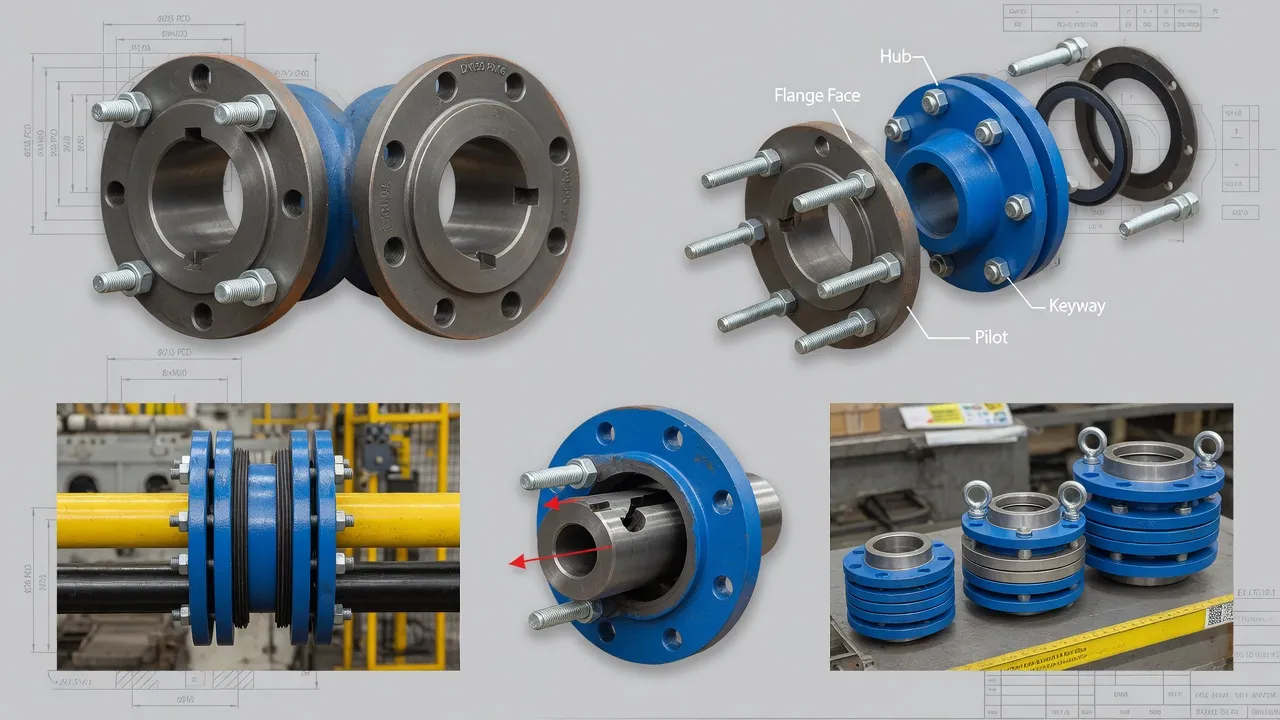
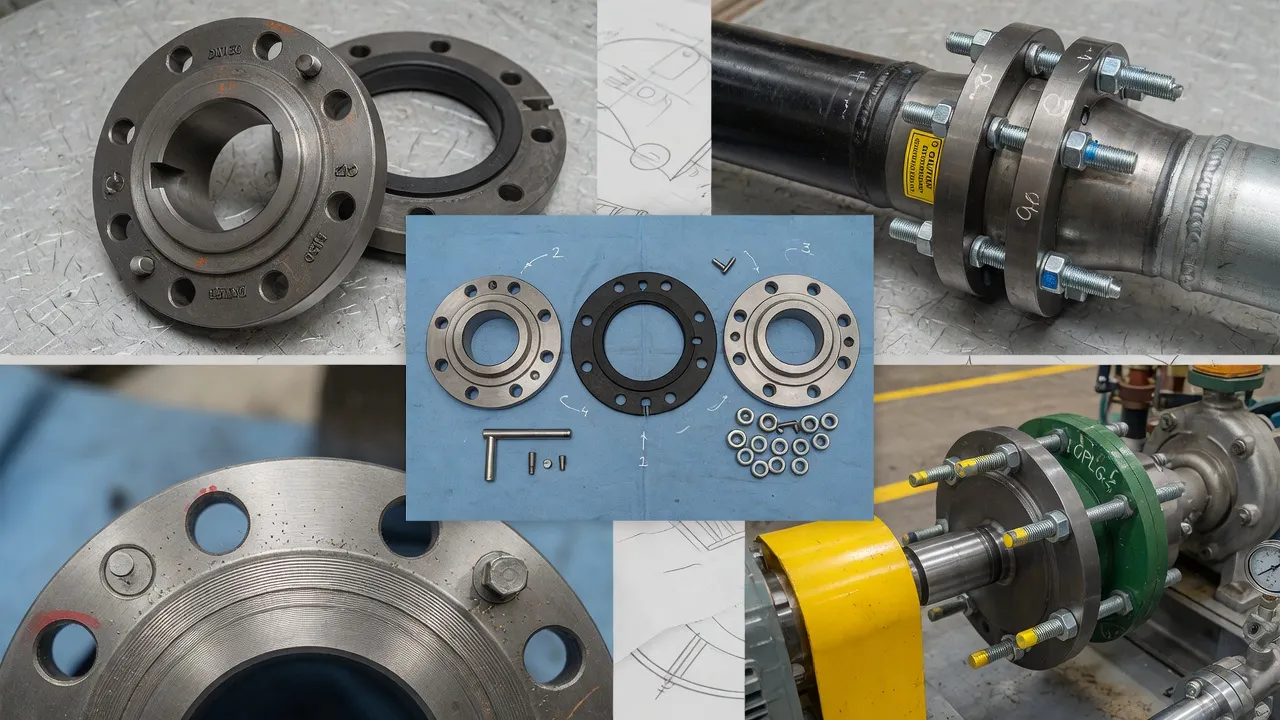
Pump coupling selection involves balancing at least six competing factors simultaneously. The best flange coupling for pump applications is the one that gets all six right for your specific installation — not the cheapest unit that fits the shaft. This guide works through the decision logic that our engineering team at Ever Power Flange Couplings Australia applies to every pump coupling enquiry received from engineers across New South Wales and nationally.
The Six Factors That Determine the Right Pump Coupling
1
Pump Type and Load CharacterCentrifugal pumps produce a smooth, continuous load and are the most forgiving application for coupling selection. Reciprocating pumps produce a pulsating torque load that cycles at the pump’s stroke frequency — requiring a coupling with enough torsional flexibility to absorb these pulses without transmitting them to the motor. Gear pumps and screw pumps fall between the two.
2
Motor Starting MethodDirect-on-line (DOL) starting applies 2–3× rated torque as a shock load at each start. Star-delta and soft-starter systems reduce this to 1.5–2×. VSD starting can reduce it further to near 1×. The coupling service factor must account for the starting method — a DOL-started pump on frequent start-stop cycles needs a higher service factor.
3
Shaft Alignment Achievable at InstallationThe physical constraints of the installation determine what shaft alignment is practically achievable. If the baseplate is flexible, access is limited, or alignment tools are basic, a flexible coupling with generous misalignment tolerance is the only prudent choice.
4
Maintenance Access and Servicing ModelA split-body or drop-out spacer flange coupling allows the elastomeric element to be replaced without disturbing motor or pump alignment — a significant advantage on installations where motor removal requires a crane lift or pump room de-flooding.
5
Environmental ConditionsOperating temperature, chemical exposure, and UV radiation all affect elastomeric element selection. Natural rubber degrades in oil-contaminated environments. EPDM tolerates chemical splash better than neoprene. Specify the elastomer grade based on actual site conditions.
6
Operating Speed and Dynamic BalanceFor pumps operating above 3,000 RPM, verify the coupling has been dynamically balanced to ISO 1940 G6.3 or better. An unbalanced coupling at high speed generates centrifugal forces that add directly to the bearing radial load.
Coupling Type Comparison for Pump Applications
Coupling Type
Best Pump Application
Key Advantage
Key Limitation
Flexible Flange (Tyre Type)
Centrifugal pumps, HVAC, water treatment
Misalignment tolerance + vibration damping
Spider element requires periodic inspection
Rigid Flange
Close-coupled precision pump sets, test rigs
Zero flex loss, maximum torque efficiency
Zero misalignment tolerance
Spacer Coupling
Pumps needing frequent seal access
Seal/impeller replacement without motor removal
Longer DBSE increases overhung load
Marine Flange Coupling
Engine-driven pumps offshore and in vessels
Torsional analysis, classification certs
Higher cost vs standard industrial types
Disc Coupling
High-speed pump turbines, boiler feed pumps
Maintenance-free, high temperature rated
Less vibration damping than elastomeric types
The Cost of Choosing the Wrong Pump Coupling
The cost of a wrong coupling choice is rarely the coupling itself — it is the collateral damage to the motor bearings and pump mechanical seal. A rigid coupling fitted where a flexible one is needed transfers all misalignment forces to the motor front bearing. Published bearing life equations show that a 20% increase in radial bearing load cuts L10 bearing life in half. Against these failure costs — motor bearing replacement, pump seal replacement, downtime, and labour — the price difference between a correctly specified flexible coupling and an incorrectly specified rigid one is negligible.
Frequently Asked Questions
Should I use a rigid or flexible coupling between my motor and pump?+
For the vast majority of pump applications, a flexible flange coupling is the correct choice. Even on well-aligned pump sets, thermal growth during operation introduces dynamic misalignment that a rigid coupling transfers directly to the motor bearings and pump mechanical seal. Rigid couplings are reserved for close-coupled pump sets on rigid, precision-aligned bases where shaft-to-shaft alignment can be maintained within 0.05 mm TIR under all operating conditions.
How do I know what size flange coupling I need for my pump?+
Calculate the nominal torque: T (Nm) = 9,550 × kW ÷ RPM. Apply a service factor of 1.5–2.5 depending on pump type and starting method. The coupling’s rated torque must exceed this design torque. Then confirm the bore range covers both your motor and pump shaft diameters. Contact [email protected] for a sizing confirmation at no charge.
What is the best coupling for a chemical dosing pump?+
A flexible flange coupling with a neoprene (CR) or EPDM elastomeric element is recommended — these grades resist oil, solvent, and chemical splash that would degrade natural rubber. If the pump runs at variable speed on a VSD, specify a higher-hardness spider element (92A or 98A) to maintain torsional stiffness across the operating speed range.
Can I use a flange coupling on a vertical pump?+
Yes. Flange couplings are regularly used on vertical inline and vertical turbine pumps. For vertical installation, ensure the coupling design includes provision to support the weight of the upper shaft — check the coupling datasheet for axial load capacity.
What coupling is used on a submersible pump?+
Where a submersible pump is connected to an external motor via an exposed drive shaft in a dry pit, a marine-grade flexible flange coupling in corrosion-resistant materials (316SS fasteners, neoprene element, corrosion-protected hubs) is the appropriate specification.
Need Expert Coupling Advice?
Our engineering team in Condell Park NSW is ready to help — free of charge.