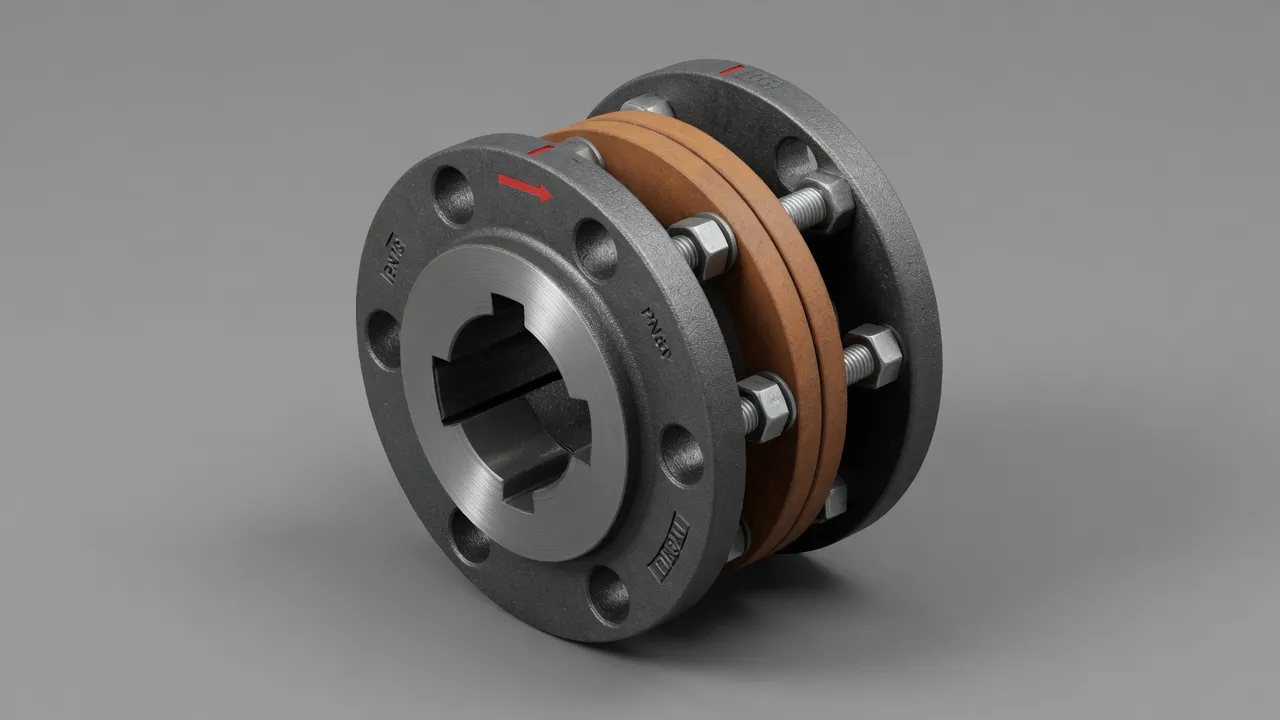
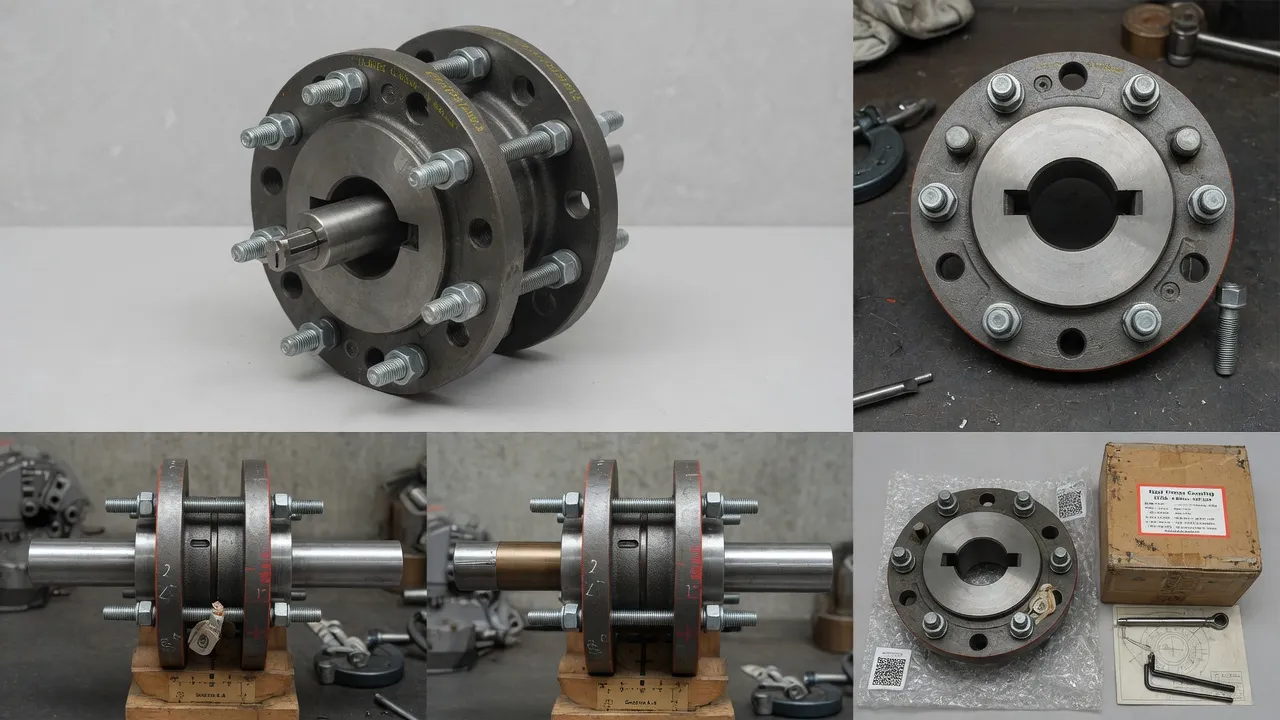
The diaphragm coupling is the coupling of choice for the highest demands in rotating machinery ¡ª turbine-driven compressors, large centrifugal pumps in oil and gas service, hot gas expanders, and heavy industrial drives where the combination of high torque, high speed, zero backlash, and maintenance-free operation cannot be met by any elastomeric or gear coupling design. The EP-JZM series heavy machinery diaphragm coupling from Ever Power covers torque ratings from 500 Nm to 200,000 Nm, with material options from standard stainless steel through to high-temperature Inconel alloys for process gas and turbomachinery applications. Where the diaphragm’s higher misalignment accommodation is not needed and torsional stiffness is the priority, the disc coupling provides the alternative.
How a Diaphragm Coupling Works
A diaphragm coupling consists of two hubs connected by one or two metallic diaphragm elements ¡ª thin annular discs with a profiled cross-section that allows controlled flexure. Unlike a disc coupling, where the flexibility comes from bending in multiple flat discs, a diaphragm coupling’s single formed element flexes in a complex stress pattern that combines bending and membrane tension. This stress pattern is carefully optimised through finite element analysis to provide maximum fatigue life at the rated misalignment and torque.
Torque is transmitted through shear stress in the diaphragm element between the inner and outer bolt circles ¡ª similar in concept to a disc coupling but in a single, continuous element rather than a laminated stack. The axial movement accommodation of a diaphragm coupling is inherently higher than an equivalent disc coupling because the formed diaphragm profile provides more axial spring compliance per unit of angular stiffness.
Installation note: Diaphragm couplings are designed to operate with a specified axial pre-stretch ¡ª the diaphragm element is installed in a slightly stretched (elongated) axial position so that the axial movement in service keeps the element within its designed stress range. Installing a diaphragm coupling at zero axial pre-stretch, or with excessive pre-compression, moves the element outside its design operating range and dramatically reduces fatigue life. Always follow the manufacturer’s axial gap specification precisely during assembly.
Frequently Asked Questions
Is a diaphragm coupling the same as a disc coupling?+
No, but they are closely related. Both are metallic flexible couplings that transmit torque without backlash and require no lubrication. The disc coupling uses a stack of thin flat metallic discs (a disc pack) to provide flexibility, while the diaphragm coupling uses a single formed metallic diaphragm ¡ª typically contoured or profiled ¡ª that flexes in a different stress pattern. Diaphragm couplings generally accommodate larger axial movement and angular misalignment than disc couplings of equivalent torque, while disc couplings provide higher torsional stiffness per unit size.
What are diaphragm couplings used for in industry?+
Diaphragm couplings are used in high-power, high-torque applications where maintenance-free operation, zero backlash, and high misalignment accommodation are all required simultaneously ¡ª conditions that neither elastomeric couplings nor standard disc couplings can always meet. Typical applications include turbine-driven compressors and pumps in the oil and gas industry, large industrial centrifugal compressors, hot end couplings in high-temperature process drives, and heavy machinery drives such as rolling mills and large mining equipment.
What materials are used in diaphragm couplings?+
The diaphragm element is typically made from high-strength stainless steel (17-4PH or 15-5PH precipitation hardening stainless) or Inconel alloy for the highest temperature applications. These materials combine the fatigue strength needed to withstand millions of flex cycles with corrosion resistance suitable for process gas environments. Hubs are typically machined from carbon steel or stainless steel. All fasteners are high-tensile stainless. For offshore and marine applications, all external surfaces are coated with a corrosion-resistant system.
What is the maximum temperature a diaphragm coupling can operate at?+
Standard stainless steel diaphragm couplings (17-4PH) are rated to approximately 300¨C350¡ãC. Inconel 718 diaphragm couplings extend the range to 450¨C550¡ãC. At these temperatures, bearing materials and lubricants also become limiting factors ¡ª the diaphragm coupling’s advantage is that it is the coupling element that reaches these temperatures last in the drivetrain, as its all-metallic construction has no temperature-sensitive polymer or elastomeric element to degrade first.
How long does a diaphragm coupling last?+
On a correctly specified and aligned installation, a diaphragm coupling is designed to run for the full service life of the connected machinery ¡ª typically 20+ years in turbomachinery applications. The design life is set by the fatigue life of the diaphragm element, which is calculated to provide a minimum safety factor of 2.0 against fatigue failure at the maximum rated misalignment and torque conditions. Exceeding the rated misalignment ¡ª particularly angular misalignment ¡ª is the primary cause of premature diaphragm fatigue.
Need Expert Coupling Advice?
Our engineering team in Condell Park NSW is ready to help ¡ª free of charge.