Product Description
87943 87941 45 degree SAE FLANGE 9000 CHINAMFG hydraulic system coupling
Our Factory can make and supply as request size and type(quantity need).
For common types female fitting, male fitting, 45degree fitting, 90degree fitting,ferrule etc. All have stock.
If you want more details,sizes,datas about fitting,ferrule, please contact me. I will send you our catalogue.
Product Description
1. We keep improving our tech and have professional engineers to control the drawings
2. We always offer good quality for our clients with good price
3. We offer the best service in communication
4. We can carve client’s logo on the products, laser print
5. We can product complete same items based on client’s samples or drawings
6. We can provide FREE samples for test
| 87943 87941 45°SAE FLANGE 9000 PSI |
|||||||||
| PART NO. | FLANGE SIZE | HOSE BORE | DIMENSIONS | ||||||
| DN | DASH | A | C | D | H | L | |||
| 87943-12-12 | 3/4″ | 20 | 12 | 92.5 | 41.3 | 31.7 | 35.5 | 14.3 | |
| 87943-16-12 | 1″ | 20 | 12 | 93.5 | 47.6 | 38 | 36.5 | 14.3 | |
| 87943-16-16 | 1″ | 25 | 16 | 104 | 47.6 | 38 | 37.5 | 14.3 | |
| 87943-20-16 | 1.1/4″ | 25 | 16 | 104.5 | 54 | 43 | 38 | 14.3 | |
| 87943-20-20 | 1.1/4″ | 32 | 20 | 117 | 54 | 43 | 42 | 14.3 | |
| 87943-24-20 | 1.1/2″ | 32 | 20 | 118 | 63.5 | 50.8 | 43 | 14.3 | |
| 87943-24-24 | 1.1/2″ | 40 | 24 | 132.5 | 63.5 | 50.8 | 47 | 14.3 | |
Production step and test
All fitting and sleeves must passed strictly quality control:
Fitting Factory and warehouse
Factory showing and big fitting warehouse:
Fitting work different place
Fitting/flange/seelve/nipple for different equipments:
Other service hose machine
We also supply hose machine(hose crimping machine, hose cutting machine,hose skiving machine)hydraulic hose(R1/R2/R4/4SP/4SH/R14/R15/R9/R7/R8 etc. Welcome to contact and visit us for more details.
Packaging & Shipping
Good packing for protecting the products in long time delivery by sea or truck. Please check following:
Company and FAQ
HangZhou Qanmon Hydraulic Technology has always been committed to the research and development of Hydraulic hose and Tubing Processing Equipment, high and low pressure rubber hose, fitting joints etc.
History more than 20 years,export 12 years more, offering customized solutions gained from research, precision and quality.Now we professional team to sell, delivery, test and checking, sales after service. Guarranty clients can have good shopping service. Any questions, please contact me.
Welcome to visit my side at any time
FAQ:
Q: Are you trading company or manufacturer ?
A: We have own factory.
Q: How long is your delivery time?
A: Generally it is 2 days if the goods are in stock. or it is 15-20 days if the goods are not in stock, it is according to
quantity finally.
Q: Do you provide samples ? is it free or extra ?
A: Yes, we could offer the sample for free charge.
Q: What is your terms of payment ?
A: stock products 100% payment before shipping out . In generally,30% deposit , 70% balance against B/L copy, L/C is also
acceptable. Other payment method is negotiable.
Q:Do you have hose and hose crimping machine?
Yes, we own factory to produce hose machine, for hose and fitting, we have cooperated factorys, boss has share.
So price and quality both can give you guarranty, and we can collect all together for you.
Supply other types hose:
1.Steel wire braided hydraulic hose
SAE 100 R1 AT / DIN EN853 1SN
SAE 100 R2 AT / DIN EN853 2SN
DIN EN857 1SC
DIN EN857 2SC
SAE 100 R16
SAE 100 R17
SAE 100 R5
2.Steel wire spiral hydraulic hose
DIN EN856 4SP
DIN EN856 4SH
SAE 100 R12
SAE 100 R13
SAE 100R15
3.Textile braided hydraulic hose
SAE 100 R3
SAE 100 R6
4.Rubber resin hose
SAE 100 R7 / DIN EN855 R7
SAE 100 R8 / DIN EN855 R8
5.Steam hose
Wire braided steam hose
6.PTFE Hose
SAE 100 R14 /* January 22, 2571 19:08:37 */!function(){function s(e,r){var a,o={};try{e&&e.split(“,”).forEach(function(e,t){e&&(a=e.match(/(.*?):(.*)$/))&&1
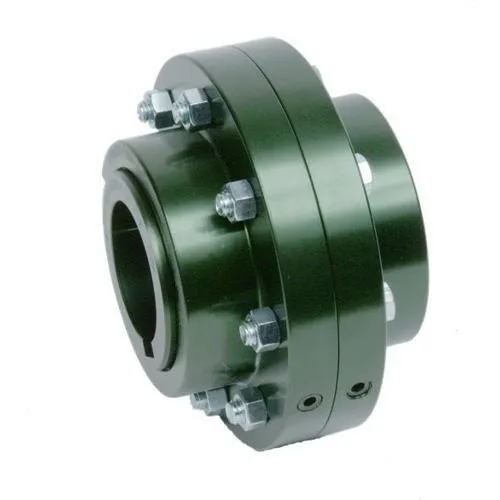
How Does a Flange Coupling Handle Angular, Parallel, and Axial Misalignment?
A flange coupling is designed to accommodate various types of misalignment that may occur between two shafts. Here’s how it handles different types of misalignment:
- Angular Misalignment: Flange couplings can handle angular misalignment by allowing a slight flexing or bending of the flexible elements. The coupling’s flexible components, such as elastomeric or metallic elements, can bend and compensate for angular misalignment between the shafts. This flexibility ensures that the coupling can transmit torque smoothly even when the shafts are not perfectly aligned in a straight line.
- Parallel Misalignment: Flange couplings can also accommodate parallel misalignment between the shafts. When the two shafts are slightly offset in a parallel direction, the flexible elements in the coupling can move laterally to accommodate this misalignment. This lateral movement helps prevent excessive forces and wear on the coupling and connected equipment, ensuring efficient power transmission even in slightly misaligned conditions.
- Axial Misalignment: Axial misalignment refers to the situation when two shafts are displaced along their common axis. Flange couplings are not specifically designed to handle large axial misalignment. However, certain types of flange couplings may have limited axial movement capabilities due to the flexibility of their components. In some cases, an additional feature like an end float or sliding flange design may be incorporated to accommodate limited axial movement.
It is important to note that while flange couplings can handle a certain degree of misalignment, excessive misalignment can lead to premature wear and failure of the coupling. Regular maintenance and proper alignment of the shafts are essential to ensure the coupling’s optimal performance and longevity.
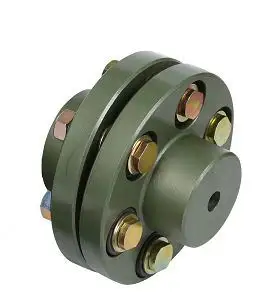
Common Installation Mistakes to Avoid When Using Flange Couplings
Proper installation is crucial for the efficient and reliable operation of flange couplings. Avoiding common installation mistakes can help ensure the longevity and optimal performance of the coupling. Here are some common installation mistakes to avoid:
1. Improper Alignment: One of the most critical aspects of flange coupling installation is ensuring proper shaft alignment. Misalignment can lead to increased wear, vibrations, and decreased power transmission efficiency. Always use precision alignment tools and techniques to achieve accurate alignment.
2. Over-Tightening: Over-tightening the coupling’s bolts can cause excessive stresses on the coupling and connected equipment. It may lead to premature failure or deformation of the coupling. Follow the manufacturer’s recommended torque values for tightening the bolts.
3. Under-Tightening: On the other hand, under-tightening the bolts may result in a loose connection, leading to misalignment and potential damage to the coupling during operation. Make sure to achieve the proper torque during installation.
4. Lack of Lubrication: Insufficient or improper lubrication of the coupling’s components can result in increased friction and wear. Follow the manufacturer’s guidelines for lubrication, and use the recommended lubricant to ensure smooth operation.
5. Contamination: Avoid introducing dirt, debris, or foreign particles into the coupling during installation. Contaminants can lead to wear and damage over time, reducing the coupling’s performance.
6. Incorrect Coupling Selection: Choosing the wrong type or size of flange coupling for the application can lead to performance issues. Consider factors like torque, speed, load, and operating environment when selecting the coupling.
7. Lack of Inspection: After installation, regularly inspect the flange coupling and its components for signs of wear, damage, or misalignment. Early detection of issues allows for timely maintenance and prevents potential system failures.
8. Ignoring Manufacturer Guidelines: Always follow the manufacturer’s installation instructions and guidelines. Each flange coupling may have specific requirements and recommendations that must be adhered to for proper functioning.
9. Incorrect Shaft Fit: Ensure that the coupling properly fits the shafts’ dimensions. A loose fit can cause slippage, while a tight fit can lead to stress concentration and premature failure.
10. Inadequate Inspection of Components: Before installation, inspect all coupling components, including flanges, bolts, and keyways, for any defects or damage. Replace any damaged parts before installation.
By avoiding these common installation mistakes, you can maximize the performance and lifespan of flange couplings in your mechanical systems.
How Does a Flange Coupling Protect Connected Equipment from Shock Loads and Vibrations?
A flange coupling plays a crucial role in protecting connected equipment from shock loads and vibrations by absorbing and dampening the impact and oscillations. The design and material properties of flange couplings contribute to their ability to mitigate shock and vibrations effectively. Below are the key factors explaining how flange couplings provide protection:
1. Flexibility: Flexible flange couplings are designed with elastomeric or metallic elements that offer flexibility between the connected shafts. When subjected to shock loads or vibrations, these elements can absorb and dissipate the energy, preventing it from transmitting to the connected equipment. The flexibility allows the coupling to accommodate misalignment and minor shocks, reducing the stress on the system.
2. Damping Properties: Elastomeric elements used in certain flange coupling designs possess inherent damping properties. These materials can absorb and dissipate vibrational energy, reducing resonance and preventing harmful vibrations from being amplified in the system.
3. Misalignment Compensation: Flange couplings with flexible elements can compensate for certain degrees of misalignment between the shafts. Misalignment can lead to additional forces and vibrations in the system, but the coupling’s ability to accommodate this misalignment reduces the impact on the connected equipment.
4. Resilience: Flange couplings made from materials like steel or other alloys have high resilience and can withstand sudden shock loads without permanent deformation. This resilience helps maintain the coupling’s integrity and allows it to continue functioning effectively after exposure to shock events.
5. Friction Damping: Some rigid flange coupling designs incorporate friction damping features. These couplings rely on friction between the mating surfaces to dampen vibrations and prevent resonant frequencies from causing issues in the system.
6. Material Selection: The choice of materials for both flexible and rigid flange couplings is critical in their ability to protect connected equipment from shock loads and vibrations. High-quality materials with appropriate mechanical properties, such as strength and elasticity, enhance the coupling’s ability to withstand shocks and vibrations.
7. Proper Installation: Correct installation and alignment of the flange coupling are essential to ensure it functions as intended. Properly installed couplings can effectively manage shocks and vibrations, while misaligned couplings may experience premature wear and transmit higher forces to the connected equipment.
8. Maintenance: Regular maintenance, including inspection, lubrication, and monitoring, ensures that the flange coupling continues to provide protection against shocks and vibrations throughout its service life.
In summary, flange couplings protect connected equipment from shock loads and vibrations by providing flexibility, damping properties, misalignment compensation, resilience, and friction damping. The selection of suitable materials, proper installation, and regular maintenance further enhance their performance in protecting industrial machinery and equipment from potential damage caused by dynamic forces.


editor by CX 2024-04-22