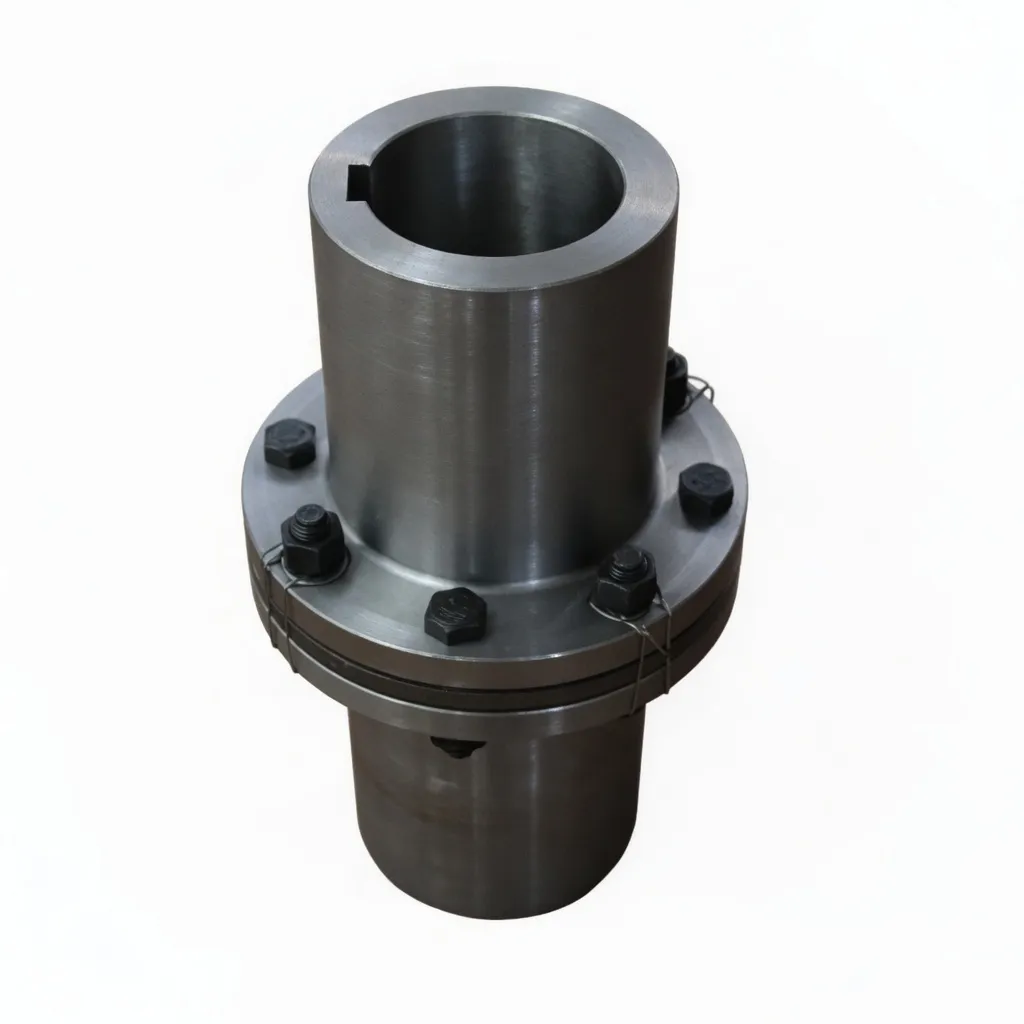
Description
✦ Alloy Steel Construction
✦ Large Bore Diameters Available
✦ ISO 9001 Certified
✦ Sydney NSW Stock & Custom
What Is the GICL Drum Gear Coupling?
The GICL Series and its EP-branded evolution, the EP-GIICL, are drum-tooth gear couplings — the definitive heavy duty shaft coupling category for industrial drives where torque levels, bore diameters, or operating conditions exceed what flexible elastomeric or rigid disc coupling types can accommodate. At their core, gear couplings transmit torque through meshing crowned (drum-shaped) external gear teeth on each hub engaging with internal straight teeth in a flanged sleeve. The crowned tooth profile is what makes them a high torque coupling with genuine misalignment capacity: the spherical tooth crowning allows up to 2° of angular offset per coupling end while maintaining full tooth contact across the face width.
Ever Power Flange Couplings Australia Ltd. supplies the GICL and EP-GIICL range from our Condell Park, Sydney warehouse — covering nominal torque from 0.4 kN·m at GICL1 through to 4,500 kN·m at the upper EP-GIICL grades. That torque span covers the full spectrum of Australian industrial drive requirements, from medium gearbox shaft connections through to primary rolling mill drives, large conveyor head pulleys, and ship propulsion shaft trains. All units are manufactured from high-grade alloy steel — typically 42CrMo or 35CrMo — heat-treated to achieve the surface hardness and core toughness combination required for sustained heavy load operation over years of continuous running.
The coupling is classified as a rigid-type in the sense that its torsional stiffness is very high — there is minimal rotational compliance in the torque path. However, the drum tooth geometry provides genuine angular and limited parallel misalignment compensation, which distinguishes it from a plain rigid flange coupling and makes it suitable for drives where thermal growth and structural deflection make perfect shaft alignment difficult to maintain throughout the operating cycle. For Australian mining, metals processing, and heavy manufacturing operations, the GICL drum gear coupling represents one of the most reliable high-load shaft connection solutions available.
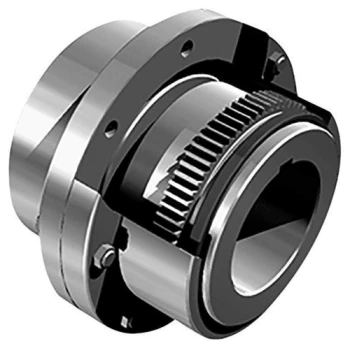
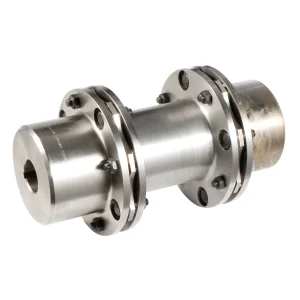
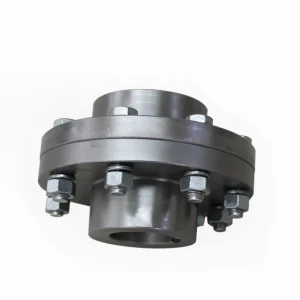
GICL Series drum gear coupling — heavy duty alloy steel construction, supplied by Ever Power Flange Couplings Australia Ltd., Condell Park NSW 2200
GICL vs GICLZ — Choosing the Right Configuration
The GICL series is available in two primary configurations that differ in one important dimension: the distance between shaft ends. Selecting the correct variant comes down to your shaft arrangement and the required axial clearance for maintenance. Both configurations share identical torque ratings, tooth geometry, and alloy steel construction — the choice is purely dimensional.
Type GICL — Standard Shaft Separation
The standard GICL configuration suits the majority of industrial applications where the motor or driver and the driven machine are mounted on a common baseplate with a fixed, relatively short shaft-to-shaft distance. The coupling consists of two alloy steel hubs with crowned external teeth, an internal-toothed outer sleeve on each side, and a centre spacer piece of fixed length. GICL1 through GICL30 cover nominal torques from approximately 1.25 kN·m to 3,200 kN·m. Bore diameters across the standard range extend from 18 mm at GICL1 to 460 mm at GICL30 — making it a genuine large bore coupling option for heavy machinery shafts that exceed the capacity of any elastomeric coupling type. The operating temperature range is −20°C to +80°C, and both the external and internal gear teeth require periodic oil or grease lubrication — typically at 6–12 month intervals depending on operating speed and load.
Type GICLZ — Extended Spacer for Long Shaft Separation
When the driven machine’s shaft is positioned at a greater distance from the driver — a common situation in pump installations where the pump body must be elevated above a sump, in ship propulsion arrangements, or in roll mill stands where the coupling must bridge a gear stand — the GICLZ variant provides an extended spacer tube to span the gap without requiring intermediate shaft bearings. The GICLZ range covers nominal torques from 800 N·m to 3,200,000 N·m. The spacer tube is manufactured from seamless alloy steel tube to maintain torsional stiffness over the extended length, and the overall assembly weight is managed through careful wall thickness optimisation. For shaft separations where a standard GICLZ spacer length still falls short, custom-length spacers are available from our Sydney team on a made-to-order basis.
Specifications — GICL & EP-GIICL Drum Gear Coupling Range
The table below presents representative parameters across the GICL standard range. The EP-GIICL Series follows the same dimensional and torque standards as GICL but includes enhanced tooth profile geometry and optional surface treatments — nitriding and induction hardening — that further extend service life under continuous heavy load. All bore dimensions are machined to H7 tolerance with keyways to h9 as standard; type J (stepped bore) is available for the larger sizes to reduce hub weight. Contact our Sydney team for the full dimensional data sheet for any specific model.
| Model | Nominal Torque (kN·m) | Max Speed (rpm) | Bore d (mm) | Outer Dia. D (mm) | Angular Misalign. | Material |
|---|---|---|---|---|---|---|
| GICL1 | 1.25 | 6300 | 18–32 | 105 | 1.5° | 42CrMo |
| GICL3 | 4.0 | 5000 | 25–50 | 145 | 1.5° | 42CrMo |
| GICL5 | 16 | 4000 | 40–80 | 195 | 1.5° | 42CrMo |
| GICL8 | 63 | 3150 | 63–125 | 285 | 1.5° | 35CrMo |
| GICL12 | 250 | 2500 | 100–200 | 420 | 1.5° | 35CrMo |
| GICL16 | 800 | 1800 | 150–280 | 590 | 1.5° | 35CrMo |
| GICL20 | 2000 | 1400 | 200–355 | 780 | 1.5° | 35CrMo |
| GICL30 / EP-GIICL | Up to 4,500 | 1000 | 280–460+ | 1050+ | 1.5°–2° | 35CrMo / custom |
Operating temperature: −20°C to +80°C. Parallel (radial) offset: 0.01–0.02 inch (0.25–0.5 mm) per end. All units require oil or grease lubrication. GICLZ extended-spacer variants available for all sizes. Nitriding and surface quenching by agreement. Contact our Sydney team for GIICL-specific dimensional data.
The Drum Tooth Advantage — Engineering Features Explained
The term “drum gear” describes the crowned profile of the external gear teeth on the hub — each tooth is machined to a convex arc rather than a straight-sided spur tooth. This seemingly small design detail is what separates the GICL from a straight-tooth gear coupling and is responsible for its superior misalignment capacity, load distribution, and long-term reliability in high vibration environments. The following features explain exactly what this design delivers in practice.
Crowned Tooth Profile — Even Load Distribution
Straight-tooth gear couplings concentrate contact stress at the tooth edges under angular offset — a condition called edge loading that rapidly pits and wears the tooth faces. The drum (crowned) tooth profile of the GICL shifts contact to the tooth centre under all misalignment conditions, distributing stress evenly across the full tooth face width. This is the primary reason drum gear couplings outlast straight-tooth alternatives by a factor of two to five in field service under misaligned conditions.
Extreme High Torque Transmission Density
Gear couplings transmit torque through metal tooth mesh — inherently stiffer and more compact than any elastomeric coupling of equivalent torque rating. A GICL12 handling 250 kN·m fits within a 420 mm outer diameter, where a tyre coupling of equivalent capacity would require a substantially larger envelope. For machine designs where shaft centreline height, bearing span, or guard clearance constrains the coupling diameter, the gear coupling’s high torque-to-size ratio is a decisive advantage.
Alloy Steel — Built for Impact and Shock Loading
GICL hubs and sleeves are manufactured from 42CrMo or 35CrMo alloy steel coupling material — a chromium-molybdenum grade that combines high tensile strength with excellent toughness under cyclic impact loading. Gear teeth are induction-hardened or through-hardened to HRC 40–50 to resist the sliding wear inherent in gear coupling tooth contact. Optional nitriding treatment is available on EP-GIICL units for applications requiring even greater surface hardness and resistance to adhesive wear in high-speed or light-lubrication conditions.
Angular Misalignment Capacity
Each GICL coupling end accommodates up to 1.5° of angular misalignment — a double-ended assembly therefore handles up to 3° total — while the parallel (radial) offset capacity at rated torque is 0.25–0.5 mm per coupling. For heavy drive systems where the mass and structural compliance of large machines makes precision alignment difficult to maintain, this misalignment tolerance prevents the bearing overload that would arise in a rigid coupling while preserving the high torque capacity that an elastomeric coupling cannot match.
Large Bore Capacity
At the upper end of the GICL range, bore diameters extend to 460 mm and beyond on custom EP-GIICL units — covering the massive shaft dimensions found on rolling mill main drives, large compressor shafts, and primary crusher drives in Australian hard-rock mining operations. These are shaft sizes where no other standard coupling family offers a viable catalogue solution, making the gear coupling the default specification for the heaviest industrial drives.
High-Speed Capability When Balanced
At the smaller end of the GICL range, maximum speed ratings reach 6,300 rpm — suitable for gas turbine output shafts, high-speed gearbox pinion connections, and centrifugal compressor drives. Dynamically balanced GICL assemblies can operate at even higher speeds on turbomachinery applications. The combination of high-speed capability and large torque capacity across the full size range is unique to the gear coupling family among standard catalogue coupling types.
Industrial Applications — Where Gear Couplings Are the Right Answer
The GICL drum gear coupling occupies the heavy end of the power transmission spectrum — the applications where torque levels, shaft sizes, or environmental severity have eliminated every lighter coupling type from contention. The sectors below represent the core markets Ever Power serves from Sydney across New South Wales and Australia, where this heavy duty shaft coupling is the standard engineering specification.
The Australian mining industry’s appetite for mining coupling solutions at the upper torque end of the GICL range is driven by the scale of primary processing equipment — SAG mills with 10–20 MW drive systems, gyratory crushers requiring 1,000–3,000 kN·m on the main shaft connection, and large-diameter conveyor drives at remote mine sites in the Pilbara, Hunter Valley, and NSW coalfields. GICL gear couplings handle the combination of extreme torque, cyclic shock loading from rock impacts, and shaft misalignment from ground subsidence and frame deflection that eliminates all other coupling options at this scale. The gear coupling also survives the dusty, high-vibration environment of underground operations that rapidly deteriorates the elastomeric elements of lighter coupling types.
Rolling mill main drive connections are the application that originally drove development of the drum gear coupling design. The combination of enormous torque peaks during billet bite-in, continuous cyclic loading during rolling, and large shaft diameters demanded a coupling that was both extremely strong and capable of accommodating the misalignment caused by roll wear and frame deflection. GICL and GICLZ couplings remain the standard specification for roughing and finishing mill stands in flat and long-product rolling operations across Australian steel production.
Long-haul bulk-materials conveyor coupling applications — coal, iron ore, mineral concentrates — demand couplings that handle high starting torque, occasional belt snag shock loads, and outdoor exposure without deterioration. GICL units at head pulley and take-up drive stations handle shaft diameters up to 280 mm and torques to 2,000 kN·m, meeting the requirements of multi-kilometre conveyor systems in Australian mining and port infrastructure. Sealed versions with extended lubrication intervals are available for remote installations with infrequent maintenance access.
Gas turbine generator connections, large steam turbine–gearbox shaft couplings, and primary compressor drives in LNG processing and gas distribution all use drum gear couplings as the standard high-torque connection at high speed. The combination of torque density, misalignment accommodation, and balance-quality manufacture at smaller GICL sizes supports turbomachinery applications where shaft runout constraints are tight. Dynamically balanced units to G2.5 or better are available on request from our Sydney team.
Ship propulsion shaft systems — particularly the engine-to-gearbox and gearbox-to-shaftline connections — use GICLZ extended-spacer gear couplings where the gearbox output shaft and propeller shaft are separated by a larger distance than a standard GICL can bridge. The coupling must absorb shaft misalignment caused by hull deflection under sea load, propeller thrust, and temperature-differential growth between the hot engine room and cold underwater shaft bearing arrangement. Stainless or nickel-alloy coated versions are available for offshore and marine corrosion environments.
Rotary kiln drives, ball mill and rod mill connections in cement and mineral processing, large paper machine roll drives, and primary mixer gearbox outputs in chemical processing plants all rely on GICL gear couplings at the medium-to-high torque end of the range. In these applications, the coupling runs continuously at low to moderate speed under constant heavy load — exactly the duty cycle that alloy steel gear couplings, with their lubricated metal-to-metal tooth contact, handle more reliably over long service intervals than any elastomeric alternative.
Lubrication & Maintenance — Keeping Your Gear Coupling in Service
Unlike the elastomeric flexible coupling types in our range, gear couplings require periodic lubrication — a characteristic that distinguishes their maintenance requirements from tyre or jaw couplings. This is a straightforward requirement that adds minimal burden to a plant maintenance schedule, but it is important to understand and plan for. The following guidance covers lubrication selection, interval, and the routine inspection points that prevent the most common failure modes.
Lubricant Selection
Gear coupling manufacturers universally specify high-viscosity gear grease or, on larger sizes and higher-speed applications, a splash-oil lubrication arrangement within a sealed outer sleeve. For standard GICL sizes running below 1,500 rpm, an NLGI Grade 1 or 2 coupling grease with EP (extreme pressure) additive is appropriate — specifically formulated coupling greases from major lubricant suppliers (Shell Tivela, Klüber Petamo, Mobilgrease XHP) are preferred over general-purpose greases. For higher-speed units, consult our Sydney team for a specific recommendation based on your operating speed and ambient temperature range.
Lubrication Interval
Standard lubrication intervals for GICL gear couplings under normal industrial duty range from 6 to 12 months. Applications with higher angular misalignment running continuously, elevated ambient temperatures, or dusty environments that may contaminate the grease through worn sleeve seals should move to a 6-month or shorter interval. At each lubrication service, inspect the outer sleeve seals and replace if worn or extruded — a degraded seal allows grease loss and dust ingestion that accelerates tooth wear independently of lubrication frequency.
Routine Inspection Points
At each maintenance shutdown, check: tooth wear depth on hub external teeth (remove one outer sleeve and measure with a tooth caliper — replace hub when wear depth exceeds 25% of original tooth height); condition of outer sleeve internal teeth for pitting or spalling; integrity of outer sleeve clamping bolts and torque; seal condition. Vibration monitoring between maintenance shutdowns is recommended — a noticeable increase in running vibration at the coupling’s rotational frequency or its harmonics indicates tooth wear or misalignment progression and should trigger an early maintenance inspection.
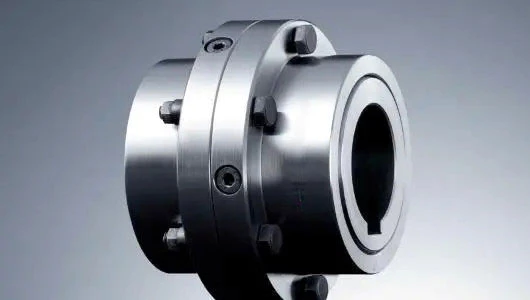
GICL Series drum gear coupling on a heavy industrial drive — alloy steel hub, crowned tooth engagement, sealed outer sleeve
Installation Procedure for GICL Drum Gear Couplings
Correct installation of a drum gear coupling requires more care than a flexible elastomeric coupling but less than a rigid flange coupling in terms of alignment precision — the gear teeth provide some forgiveness of installation misalignment up to the rated angular capacity. The steps below reflect best practice for GICL installation in Australian industrial settings.
Thread Outer Sleeve onto the Shaft First
Before mounting either hub, slide the outer sleeve (flange half) onto the appropriate shaft — the sleeve cannot pass over the hub once the hub is mounted. This sequence is a common installation error on first-time GICL installations. For GICLZ extended-spacer types, the spacer tube must also be positioned before hub mounting.
Press or Heat-Mount the Hubs
For interference-fit bores (standard on larger GICL sizes), heat the hub in an oven to 150–180°C or use a hydraulic puller kit — never apply axial impact to the outer sleeve flanges. For clearance-fit bores, press the hub squarely onto the shaft using a hydraulic press and a suitable driving tool that loads only the hub bore face. Insert the key and confirm seating with no play.
Pack and Seal with Coupling Grease
Before sliding the outer sleeve into mesh with the hub external teeth, pack the internal tooth cavity of the sleeve with the specified coupling grease — fill approximately 30–40% of the cavity volume. Distribute grease evenly across all tooth faces of both the hub external teeth and the sleeve internal teeth before engagement. Verify seals are seated correctly after meshing and before torquing the flange bolts.
Align Shafts and Assemble Flanges
Align the drive to within the coupling’s rated angular capacity — targeting less than 0.5° misalignment at each gear end for maximum tooth service life. Bring the two outer sleeve flanges together, engage the coupling bolts, and torque in a cross-pattern sequence to the specified value. Verify alignment has not shifted under bolt preload before commissioning.
Commission & First Lubrication Check
Run at reduced load for the first hour, monitoring coupling temperature — a correctly lubricated gear coupling running within misalignment limits will reach thermal equilibrium near ambient temperature. Elevated coupling temperature indicates either insufficient lubrication or misalignment beyond the rated capacity. Check grease distribution through the inspection plug after the first operating period. Schedule the first lubrication service at 3 months on a new installation, then extend to the standard 6–12 month interval if inspection shows satisfactory grease condition.
Why Specify Ever Power for Your Heavy Duty Shaft Coupling
Sourcing a high torque coupling at the GICL scale is not a commodity purchase — the lead time, dimensional accuracy, material certification, and technical support provided by the supplier have a direct impact on your project schedule and on-site commissioning outcome. Ever Power Australia offers the combination of technical depth and local presence that heavy industrial procurement demands.
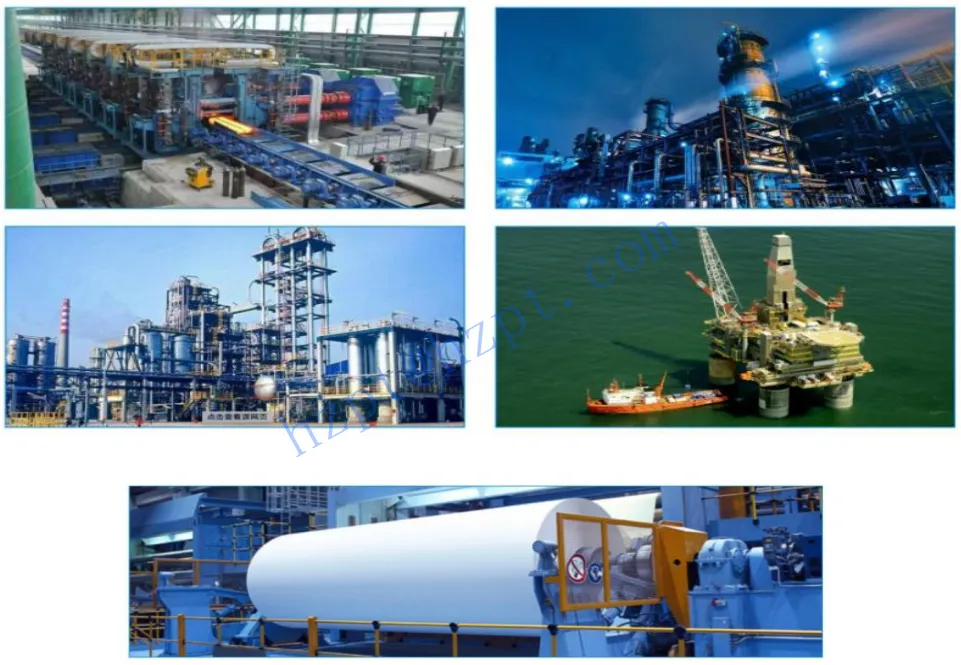
GICL Series — large bore alloy steel gear coupling for mining and heavy conveyor drives, ISO 9001 certified manufacture
Heavy Duty Coupling Supplier — Sydney, New South Wales
Ever Power Flange Couplings Australia Ltd. is the Sydney specialist for GICL and EP-GIICL drum gear couplings across New South Wales and Australia. From our Condell Park warehouse we serve the mining operations of the Hunter Valley and Central West NSW, the port and stevedoring industry of Sydney Harbour and Botany Bay, and the heavy manufacturing and process industry corridor of south-western Sydney — with technical support, competitive pricing, and the ability to supply both stock and custom-specification units without the import delays that affect direct offshore purchasing.
Australia Ltd.
Condell Park NSW 2200
New South Wales, Australia
Frequently Asked Questions
Technical and procurement questions from our Sydney heavy industry customer base.
Enquire About Your GICL Gear Coupling
Share your power (kW), speed (rpm), shaft diameters, and application — our Sydney team will confirm the right GICL model, size, and torque class within one business day, with a firm price and lead time.
Ever Power Flange Couplings Australia Ltd. · 27 Harley Crescent, Condell Park NSW 2200 · [email protected] · flangecoupling.net