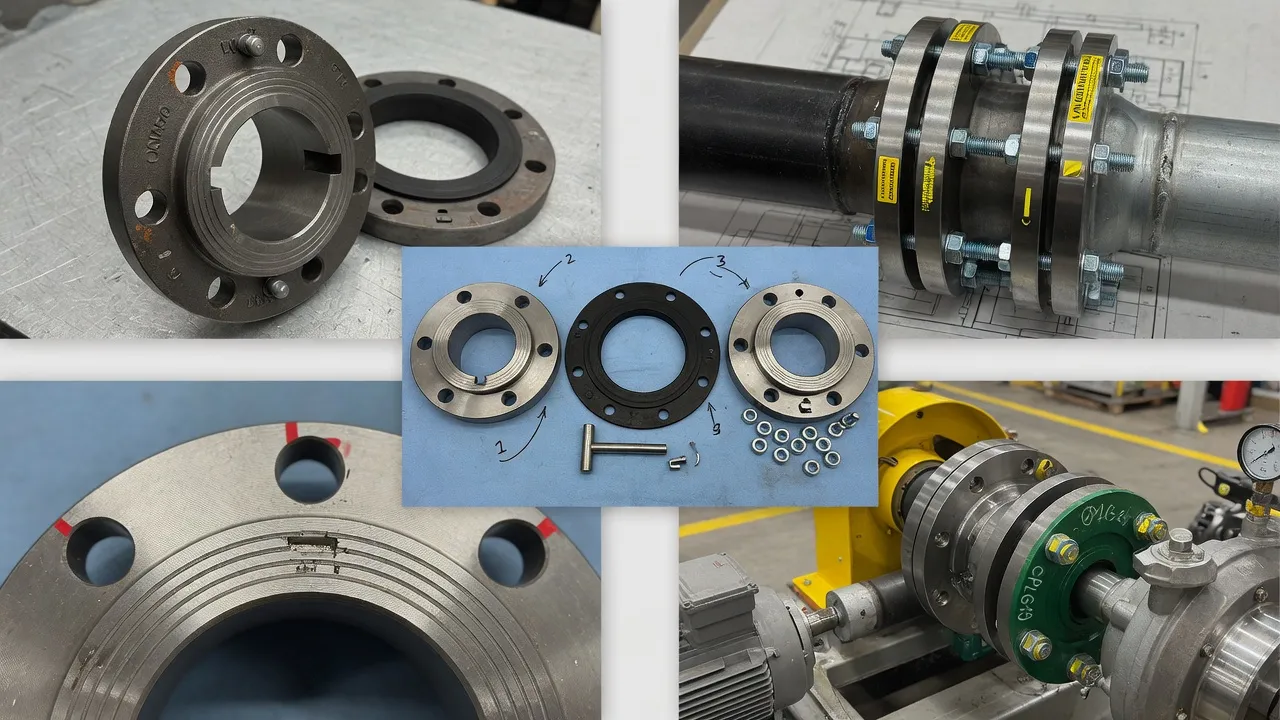
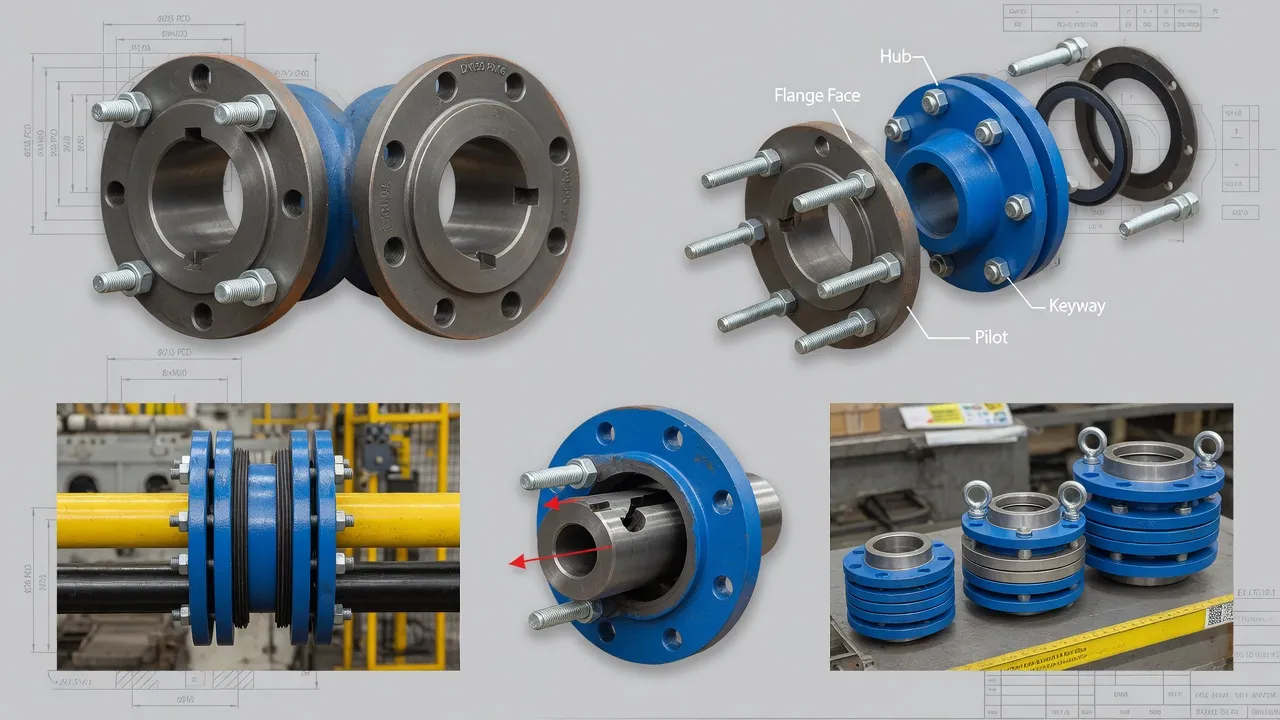
Shaft coupling maintenance is one of the highest return-on-investment maintenance activities available in any rotating machinery plant. The parts are inexpensive, the tasks are straightforward, and the consequences of neglect ¡ª bearing failures, mechanical seal replacements, and unplanned shutdowns ¡ª are disproportionately expensive relative to the cost of the coupling element that could have prevented them. This guide provides a complete annual maintenance schedule for the two most common coupling types in Australian industrial plant ¡ª the F-type flexible tyre coupling and the rigid flange coupling ¡ª plus guidance on how to use the spacer coupling design to make that maintenance faster and less disruptive.
Building the Annual Coupling Maintenance Schedule
The starting point for any coupling maintenance programme is a complete register of all coupled drivetrains in the plant ¡ª machine tag, coupling type and size, bore diameters, last alignment date, last element replacement date, and current vibration baseline. Without this register, maintenance is reactive. With it, maintenance can be planned, budgeted, and completed efficiently during scheduled plant shutdowns rather than during unplanned failures.
Task
Frequency
Time Required
Tools Needed
Who Performs
Vibration baseline reading (non-invasive)
Quarterly
5 min per machine
Vibration meter or smartphone app
Operator or fitter
Audible check ¡ª listen for coupling knock
Monthly
1 min per machine
None
Operator on walkround
Visual spider/tyre inspection (guard removed)
Annually
15¨C30 min per coupling
Guard removal tools, inspection light
Mechanical fitter
Laser shaft alignment check
Annually
30¨C60 min per machine
Laser alignment system
Trained fitter or specialist
Coupling bolt torque verification
Annually
10 min per coupling
Calibrated torque wrench
Mechanical fitter
Spider/tyre element replacement
Every 2 years (high duty) or as required
30¨C60 min per coupling
Standard hand tools
Mechanical fitter
Motor hold-down bolt torque check
Annually
10 min per motor
Torque wrench
Mechanical fitter
Full coupling replacement (if hub damage found)
As required
2¨C4 hours
Full coupling kit, puller, alignment system
Mechanical fitter
Quarterly Non-Invasive Check: Vibration Baseline
The quarterly vibration baseline check is the maintenance programme’s early warning system. With the machine running at its normal operating condition, place a handheld vibration meter on the motor DE bearing housing (in line with the shaft axis) and record the overall vibration level in mm/s RMS. Do the same at the pump DE bearing housing. Record both values in the equipment file.
The absolute level matters less than the trend. A motor bearing reading of 2.5 mm/s that rises to 3.5 mm/s over two quarterly measurements is a stronger signal than a static reading of 4.0 mm/s that has been consistent for two years. A 25% increase above the established baseline triggers an investigation; it does not necessarily trigger a shutdown. This graduated approach allows corrective maintenance to be scheduled in the next planned window rather than forcing an emergency response.
Annual Inspection: What to Look For and How to Respond
1
Spider or Tyre Element ConditionRemove the coupling guard completely. Rotate the coupling by hand through one full revolution, observing the elastomeric element from all accessible angles. Four-stage assessment: Stage 1 (slight surface cracking) ¡ª monitor, replace at next opportunity. Stage 2 (deeper cracking, small chunks, rubber dust in guard) ¡ª replace within the current maintenance window. Stage 3 (major chunking, significant debris) ¡ª replace immediately. Stage 4 (metal-to-metal contact, hub jaw damage) ¡ª emergency replacement with hub inspection.
2
Laser Alignment VerificationWith the coupling guard removed and the machine cold, perform a laser alignment check. Record angular and parallel values for both vertical and horizontal planes. Compare to the original commissioning values if available. If misalignment exceeds 0.1¡ã angular or 0.1 mm parallel (for flexible couplings) or 0.05¡ã / 0.05 mm (for rigid couplings), correct before the machine is returned to service.
3
Coupling Bolt TorqueApply a calibrated torque wrench to each coupling bolt in turn. If any bolt turns before reaching the specified torque, the bolt has relaxed. Re-torque all bolts in a cross-pattern to the specified value. If bolt holes in the flange face show elongation in the direction of shaft rotation, the coupling has been transmitting torque through bolt shear rather than flange friction ¡ª inspect flange faces and increase bolt preload at next replacement.
4
Motor Hold-Down Bolt Check and Soft-Foot VerificationCheck all motor hold-down bolts for correct torque. If any have relaxed, the motor may have shifted position since the last alignment ¡ª re-check alignment after re-torquing. Check for soft-foot by individually loosening each hold-down bolt and observing whether the shaft position changes ¡ª any movement above 0.05 mm indicates soft-foot that must be corrected before finalising alignment.
How a Spacer Coupling Makes Annual Maintenance Faster
On pump installations fitted with a drop-out spacer coupling, the annual element inspection can be completed in under 20 minutes: remove the coupling guard, unclamp the split spacer tube halves, remove the spacer tube, inspect the flexible elements at each end, and refit. The motor alignment is never disturbed. Compare this to a standard close-coupled pump where element inspection requires partial motor dismounting ¡ª and the maintenance time difference justifies the small cost premium of the spacer coupling design on any pump that requires annual inspection access.
Frequently Asked Questions
What is the minimum maintenance a shaft coupling needs?+
The absolute minimum maintenance for a flexible elastomeric coupling is an annual visual inspection of the elastomeric element (spider or tyre) with the coupling guard removed. This inspection takes 10¨C15 minutes and catches the majority of degradation before it leads to failure. For rigid couplings, the minimum maintenance is an annual check of coupling bolt torque and a laser alignment verification. This simple programme, applied consistently across all coupled drivetrains in a plant, prevents the majority of coupling-related unplanned shutdowns.
How do I record coupling maintenance to build a useful maintenance history?+
Record at minimum: the date of inspection, the condition found (spider/tyre grade and observed wear stage), the vibration baseline reading taken at the motor and pump bearing housings on the day of inspection, the laser alignment readings (angular and parallel, both planes), the shim stack at each motor foot, and any corrective action taken. Store this record in the equipment file alongside the motor and pump maintenance history. A trend of increasing vibration between annual inspections is the most reliable early warning of developing coupling or alignment problems.
Does a rigid flange coupling need any maintenance?+
A rigid flange coupling requires minimal but not zero maintenance. Annual maintenance tasks include: verify coupling bolt torque (bolts can relax over time from vibration and thermal cycling); inspect flange faces for fretting corrosion (a ring of reddish oxide at the contact diameter indicates insufficient bolt preload); check hub runout with a dial indicator if vibration has increased; and perform laser shaft alignment to detect any drift from the original installation values. A rigid coupling that receives no maintenance will eventually develop bolt looseness or fretting that degrades its performance and produces bearing damage.
How do I know when a coupling guard needs replacing?+
Replace a coupling guard when: the fastener holes are elongated or stripped (the guard cannot be securely tightened); any section is cracked, buckled, or missing (the guard no longer provides full coverage); the guard material is corroded through in a wet environment; or the guard’s sealing features (gaskets, lip seals) are damaged and allow contamination ingress to the elastomeric element. A damaged coupling guard is a safety and maintenance concern ¡ª the guard protects both personnel and the coupling element from UV and contamination.
Can I do coupling maintenance myself or do I need a specialist?+
Spider and tyre element replacement, coupling bolt torque verification, and visual inspection are routine maintenance tasks that any competent mechanical fitter can perform following the coupling manufacturer’s procedure. Laser shaft alignment requires a calibrated laser alignment system and training in its use ¡ª many plants now have their own systems; others hire alignment specialists for annual work. For specialist tasks ¡ª torsional analysis, disc coupling inspection, or marine coupling certification ¡ª our engineering team at [email protected] provides on-site or remote support.
Need Expert Coupling Advice?
Our engineering team in Condell Park NSW is ready to help ¡ª free of charge.