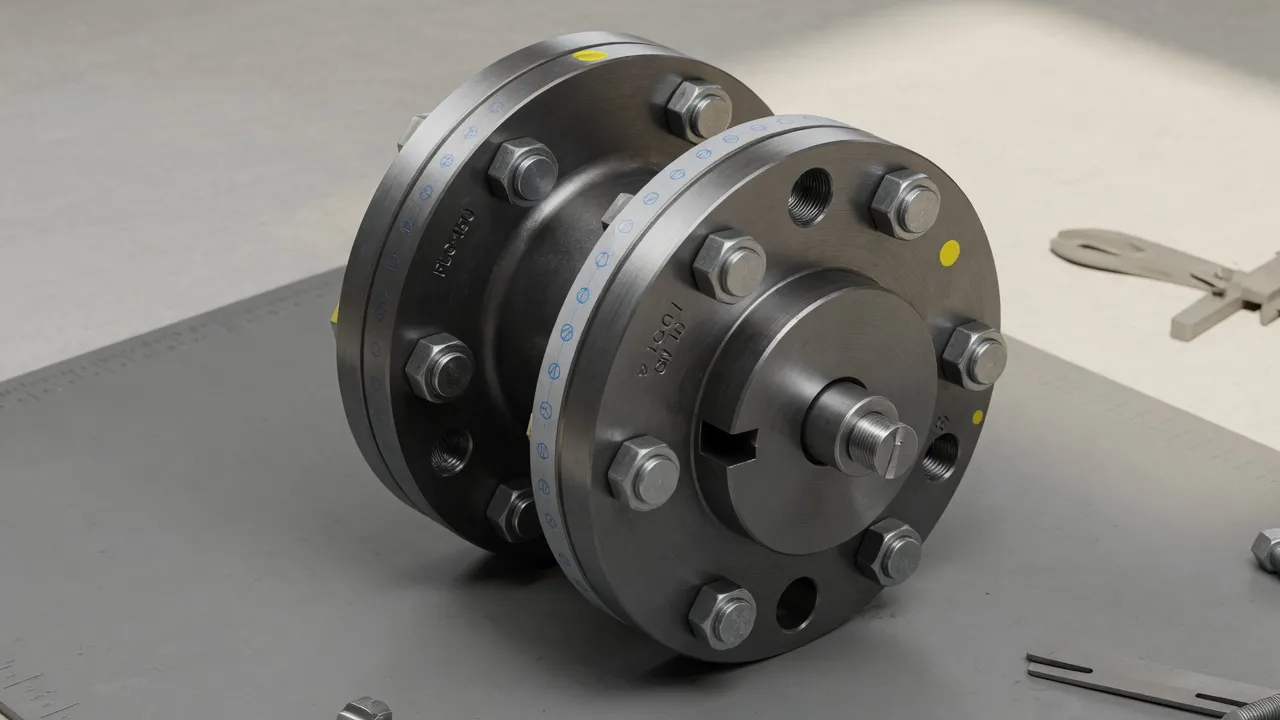
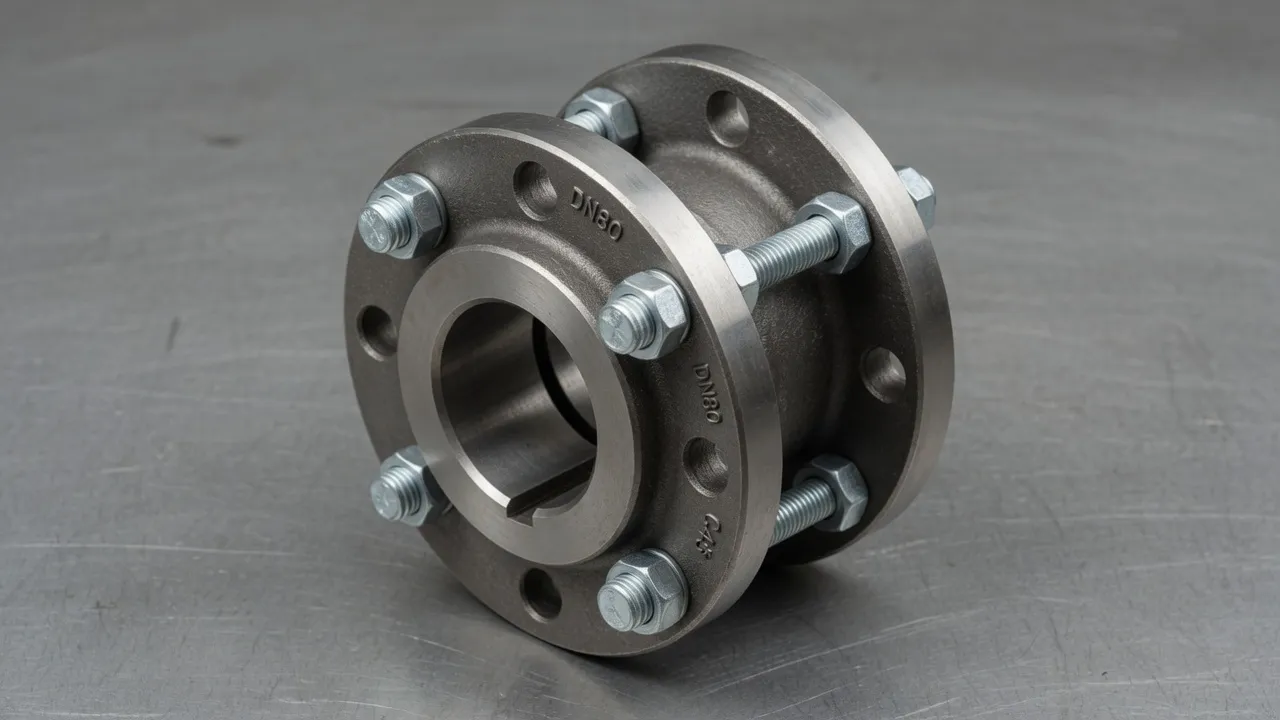
A coupling hub that will not come off a shaft is one of the most frustrating and time-consuming problems in rotating machinery maintenance. What should be a 30-minute coupling replacement turns into a multi-hour or multi-day extraction exercise, delaying pump, motor, or gearbox repair and extending the equipment downtime. The situation is almost always avoidable ¡ª with the right installation practice and the right extraction method when removal becomes necessary. This guide covers both: why coupling hubs seize, how to remove them safely without damaging the shaft or the machine, and how to prevent recurrence. Relevant context for anyone replacing cast iron or steel rigid flange coupling hubs or removing spacer coupling assemblies for pump seal maintenance.
Why Coupling Hubs Seize: The Three Mechanisms
Fretting Corrosion (Most Common)
Cyclic micro-slip between the hub bore and shaft OD generates finely divided iron oxide (Fe?O?) at the interface. This oxide accumulates in the gap, creating a brown-red powder visible at the hub face when fretting is active. Over time, the powder layer consolidates under bearing pressure into a hard, abrasive film that bonds the two surfaces. Hubs that have been in service for 5+ years on DOL-started machinery in wet or outdoor environments are the most likely candidates for fretting-induced seizure.
Keyway Yielding and Peening
When a coupling hub operates under torque loads that approach or exceed the keyway’s rated shear capacity ¡ª either through under-specification or through an overload event ¡ª the key can yield locally. The yielded key material flows into the clearance between the key and keyway, effectively locking the hub axially on the shaft. This failure mode is most common on couplings that have experienced jam loads, and the key itself will show visible deformation when examined after removal.
Corrosion Bonding (Long-Term Assemblies)
On older machinery where the same coupling hub has been in place for a decade or more, oxidation at the bore-to-shaft interface in a wet or chemically active environment can progress from fretting debris to a continuous oxide layer that bonds the surfaces. This is most common on marine, mining, and outdoor applications. The interface may also have been contaminated with concrete, scale, or chemical deposits that have hardened in the annular space.
Safe Removal Methods ¡ª Matched to the Seizure Type
1
Assess the Fit Type and Seizure Severity FirstBefore applying any force, determine whether the hub has puller holes, what the specified fit class was (clearance, transition, or interference), and how long the hub has been in service. A clearance-fit hub stuck by fretting corrosion responds to moderate puller force plus penetrating oil. An interference-fit hub requires heat plus a hydraulic puller. A keyway-seized hub requires a different approach entirely ¡ª axial force alone will not release it if the key has mushroomed.
2
Apply Penetrating Oil ¡ª Allow Adequate Soak TimeFor fretting-corroded hubs, apply penetrating oil (e.g. Wurth Rost Off, CRC Freeze Off, or equivalent) at the hub-shaft interface around the full circumference. Allow a minimum of 4 hours soak time ¡ª preferably overnight. The oil wicks into the oxide layer by capillary action, reducing the bond strength before puller force is applied. Do not attempt force removal immediately after applying oil ¡ª the soak time is what makes the difference between a hub that comes off and one that does not.
3
Apply Controlled Puller ForceUse a hydraulic bearing puller or a three-arm gear puller engaged in the hub’s puller threaded holes. Apply force gradually ¡ª do not jack the puller to maximum force in one movement. Apply moderate force, hold for 30 seconds (allowing the interface to creep), then increase. Most fretting-corroded hubs release with a sharp crack as the oxide layer fractures, followed by relatively easy removal. If the hub does not release at the puller’s rated capacity, proceed to heat application.
4
Apply Controlled Heat (Induction or Blanket)With the puller engaged and at partial preload, apply controlled heat to the hub body using an induction heater or heat blanket. Target 100¨C150¡ãC at the hub bore. As the hub expands, the differential growth between hub and shaft breaks the fretting interface. Apply or increase puller force immediately as the temperature rises ¡ª the window of maximum differential expansion is brief. For safety: keep the puller handle clear of the heat source; never apply heat with the puller ram directly behind a person.
5
Address a Seized Key SeparatelyIf the hub has released axially but stops at a point where the key is binding, do not force further. Remove the hub partially, identify the position of the seized key section, and either drive it out with a brass drift through the keyway slot or use a key extractor. Inspect the shaft keyway for deformation ¡ª a peened keyway must be dressed with a fine file before a new key is fitted.
Preventing Hub Seizure on Reinstallation
Prevention Measure
Application
Expected Benefit
Anti-seize compound on shaft OD and bore
Apply thin film before every hub installation
Eliminates fretting initiation ¡ª most effective single prevention measure
Correct fit class selection
Verify bore-to-shaft fit at every replacement
Loose fits promote micro-slip and fretting; correct fit minimises slip
Puller holes in hub design
Specify when ordering replacement hubs
Enables controlled removal at future maintenance ¡ª avoids destructive extraction
Stainless key material in wet environments
Specify 316SS key for marine and outdoor
Reduces corrosion bonding between key and keyway
Annual hub movement check
At each planned maintenance, verify hub can be moved axially by hand (transition fits)
Early warning of fretting progression ¡ª enables removal before full seizure
Frequently Asked Questions
What causes a coupling hub to get stuck on a shaft?+
Three mechanisms are responsible for the vast majority of stuck coupling hubs: fretting corrosion between the hub bore and shaft OD (which welds the two surfaces together through oxidised iron debris under cyclic micro-slip loading); thermal bonding when a hub fitted at room temperature has not been removed for many years and the bore-to-shaft interface has corroded into a continuous layer; and keyway interference, where a key has been deformed or peened by overloading and physically locks the hub axially on the shaft. All three produce the same result ¡ª a hub that cannot be pulled off by hand or light mallet ¡ª but each requires a different removal approach.
Can I use a standard bearing puller to remove a coupling hub?+
A standard bearing puller can remove a coupling hub if the hub has puller threaded holes or a flange that the puller arms can grip. Most coupling hubs above 50 mm bore are supplied with M6 or M8 threaded holes in the flange face specifically for puller engagement. For hubs without puller holes, a three-arm universal puller gripping behind the hub face is often sufficient for moderate interference fits. Never use a puller that applies the pulling force through the coupling bolts or the keyway ¡ª this can fracture the hub.
Is it safe to use heat to remove a stuck coupling hub?+
Controlled heating is one of the most effective methods for removing a seized coupling hub ¡ª but direct flame heating is not safe or effective. An induction heater or oven-heated blanket delivers controlled, even heat to the hub body without exposing the shaft to thermal stress. Heat the hub to 100¨C150¡ãC (the hub should be too hot to touch briefly). Apply the puller immediately while the hub is hot ¡ª the differential thermal expansion between the hub and shaft breaks the fretting interface and allows removal. Never heat a coupling hub with a gas torch held at one point ¡ª this creates localised thermal stress that can crack cast iron hubs.
What if the keyway is damaged and the key is stuck?+
A deformed or peened key can be driven out with a brass drift and mallet once the hub has been moved axially even slightly ¡ª the key is only engaged over part of its length once the hub shifts. If the hub cannot be moved at all, use a screw extractor or a key removal tool to apply direct axial force to the key while simultaneously heating the hub. In extreme cases where the key has yielded and mushroomed inside the keyway, a milling cutter may be needed to remove the key in-situ ¡ª a machining operation rather than a field maintenance task.
How do I prevent a coupling hub from seizing on the shaft again after replacement?+
Apply a thin film of anti-seize compound (copper-based or nickel-based) to the shaft OD and hub bore before assembly ¡ª this prevents the direct metal-to-metal contact that initiates fretting corrosion. Ensure the shaft and bore are within the specified fit tolerance ¡ª excessively loose fits promote micro-slip and fretting. At each planned maintenance shutdown where the hub is not removed, verify that the hub can still rotate slightly on the shaft by hand (for transition-fit assemblies) ¡ª if it cannot, the fretting process has already begun.
Need Expert Coupling Advice?
Our engineering team in Condell Park NSW is ready to help ¡ª free of charge.